The People of Morocco: Faces, Traditions, and Hospitality You’ll Meet on the Road
You can spend a week walking the medinas of Morocco and never see the same face twice. A Rifian woman with light hair and green eyes serves you mint tea in Chefchaouen. A Saharan trader with dark skin and a blue scarf sells you carpets in Zagora. A shopkeeper in Fes speaks Arabic to a friend, French to a customer, and Tamazight to his grandmother, all in the same afternoon. The people of Morocco are that varied, and one of the surprises of a trip here is realizing how much simpler the country looks from a magazine cover than in real life.
This guide walks you through who the people of Morocco are: their languages, their history, their religion, the ethnic threads (Amazigh, Arab, Andalusian, sub-Saharan, Jewish) that made the country what it is, and the practical culture stuff you want to know before you travel with your family. If you want to understand Morocco, start with its people rather than its postcards.
Quick takeaways
- The people of Morocco number around 38 million, with roughly 60 percent living in cities and 40 percent in rural areas or the mountains.
- 99 percent identify as Arab-Berber, but the actual ancestry is more mixed, with 40 to 80 percent of Moroccans carrying Berber (Amazigh) heritage.
- Three main languages are spoken: Moroccan Arabic (Darija) for daily life, Tamazight (Berber) recognized as co-official since 2011, and French widely used in business and education. Spanish is common in the north.
- 99 percent are Muslim, mostly Sunni, with small Christian and Jewish communities and a strong Sufi tradition, especially in Fes and the Middle Atlas.
- Moroccan appearances vary widely, from light-skinned northerners with light eyes to dark-skinned Haratin and Gnawa communities in the south, reflecting Amazigh, Arab, Andalusian, and sub-Saharan roots.
- Hospitality is a cultural cornerstone. Mint tea, home-cooked tagines, and open invitations to strangers are the norm rather than the exception.
- Family is the social unit, with three-generation households common, elders respected, and children welcomed everywhere, even in cafes at midnight.
What language do people speak in Morocco?
The people of Morocco speak Moroccan Arabic (called Darija) as their everyday language, Tamazight (the Berber language) in about a quarter of homes, and French in business, education, and most media. Modern Standard Arabic is the official written language, and Spanish shows up on the streets of Tangier and Tetouan in the north.
Darija is not the same as the classical Arabic used in Egyptian films or Al Jazeera news broadcasts. It borrows heavily from Amazigh, French, and Spanish, and speakers of standard Arabic from the Gulf often struggle to follow it. A Moroccan from Rabat and an Egyptian from Cairo can end up switching to English when their Arabic dialects fail them.
Tamazight has been officially recognized since a 2011 constitutional reform, and the 2024 census counted 24.8 percent of the population as speakers. Three main Berber varieties are still alive: Tarifit in the Rif Mountains of the north, Tamazight in the Middle Atlas, and Tashelhit in the High Atlas and Souss valley.
French is the practical second language for most educated Moroccans. Restaurant menus, business emails, university lectures, and even doctor prescriptions often come in French. English is growing quickly among younger people in tourist areas.
Practical takeaways:
- Learn “salam alaikum“ (peace be upon you) and “shukran” (thank you). These two open more doors than any phrasebook.
- French works everywhere in cities. Fluent French speakers rarely have communication problems.
- English is fine in tourist zones like Marrakech, Fes, Chefchaouen, and Essaouira, plus most riads and tour operators.
- Learn one Amazigh word in the mountains. “Azul” is Berber for hello and delights local hosts.
- Signs are trilingual in most cities: Arabic, Tamazight (in Tifinagh script), and French.
For families booking a trip, Morocco Vacation Planner provides bilingual guides who translate not only the language but the cultural context, which turns short exchanges into real conversations.
Who are the people of Morocco? Ethnic groups explained
The people of Morocco come from a mix of overlapping ancestries built up over four thousand years. Understanding the ethnic groups requires letting go of neat categories, because most modern Moroccans carry several at once.
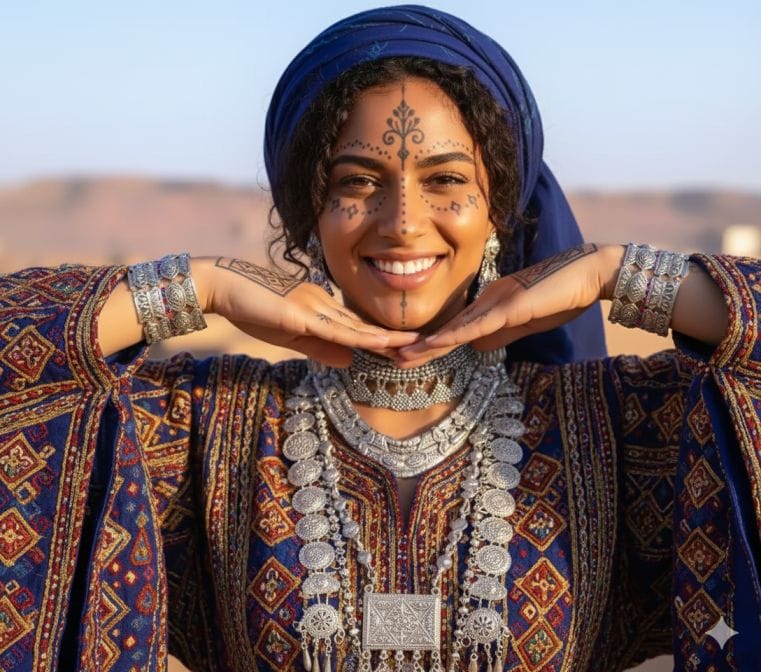
The Amazigh (Berbers) are the indigenous population. They settled North Africa roughly 6,000 years ago and were here long before Arabs, Romans, or Phoenicians arrived. Amazigh means “free people” in their own language. Depending on how you measure it, between 30 and 80 percent of modern Moroccans carry Amazigh heritage. Many identify culturally as Amazigh, while others have been fully Arabized and speak only Darija.
The Arabs arrived in two main waves. The first came with the Islamic conquests of the 7th and 8th centuries, bringing Islam and the Arabic language. The second wave came with the Banu Hilal tribes in the 11th century, who spread deeper into the countryside and changed rural life across the Maghreb. Intermarriage has been so complete over the last thousand years that pure Arab or pure Berber ancestry is genuinely rare.
The Andalusians came from Muslim Spain (Al-Andalus), especially after the 1492 Reconquista pushed Muslims and Jews out of Iberia. They settled in northern cities like Tetouan, Chefchaouen, Fes, and Rabat, bringing Moorish architecture, cuisine, and music with them.
The Haratin and Gnawa are Moroccans of sub-Saharan African descent, mostly in the south and in the Sahara. The Haratin traditionally worked as farmers and laborers in oasis communities. The Gnawa are descendants of enslaved West Africans brought north through the trans-Saharan trade, and their spiritual music has become one of the country’s most recognized cultural exports. The Gnaoua Festival in Essaouira draws hundreds of thousands each June.
Moroccan Jews were a distinct community for over 2,000 years, with 250,000 living in the country as recently as 1948. Most emigrated to Israel, France, or North America between 1948 and 1967. Fewer than 5,000 remain, mostly in Casablanca, but the Jewish quarter (mellah) is still visible in almost every old city.
The Amazigh (Berber) heritage
The Amazigh are the oldest continuous inhabitants of Morocco. Their language, Tamazight, has its own script (Tifinagh, which you will see on official signs and in tourist markets), its own musical traditions, and its own regional identities across three main areas.
Rif Berbers live in the northern mountains behind Tangier and Al Hoceima. They speak Tarifit and have a reputation for independent-mindedness. Many Rifians have historically emigrated to the Netherlands, Belgium, and Germany for work.
Middle Atlas Berbers live around Ifrane, Khenifra, and Beni Mellal. They speak Tamazight (the language shares its name with the broader Berber family), often keep flocks of sheep, and are known for their carpet weaving and cedar wood craft.
High Atlas and Souss Berbers live in the villages around Toubkal, Ourika, and down into the Souss valley near Taroudant. They speak Tashelhit and traditionally worked as farmers and traders. Many now run guesthouses, restaurants, and trekking businesses that serve travelers coming through Marrakech.
Amazigh culture went through decades of official neglect after independence in 1956, when the state prioritized Arab identity. That changed with the 2011 constitutional reform, which recognized Tamazight as an official language alongside Arabic. Amazigh New Year (Yennayer, in mid-January) is now a public holiday, and Tamazight is taught in schools.
10-day Morocco family tour
Imperial cities · High Atlas · one night under Saharan stars. Family-paced, private driver, kid-tested stops.
Traveling through Amazigh regions is often the highlight of a first Morocco trip. The pace slows down. Berber families in the mountains open their homes to travelers, cook you couscous on Fridays, and let your kids help feed the goats. It is the most direct way to meet the people of Morocco outside the tourist circuit.
Arab influence and Islamic history
The Arab influence on Morocco is inseparable from Islam. The first Arab armies arrived in 683 CE, and by the early 700s, most of the Maghreb had converted to Islam. What we call “Arab-Berber” identity is really the result of that religious integration plus a thousand years of intermarriage.
The most defining Arab dynasty in Morocco was the Alaouites, who took power in 1666 and still rule today under King Mohammed VI. The current royal family traces its lineage directly to the Prophet Muhammad through his daughter Fatima, which gives the throne a religious authority most Middle Eastern monarchies do not have.
Moroccan Islam has a distinctive character. It is predominantly Sunni, follows the Maliki school of jurisprudence, and is heavily influenced by Sufi mysticism. Every Moroccan city has zawiyas (Sufi lodges) and shrines dedicated to local saints. The moussems (annual festivals) held at these shrines mix religion, folk tradition, and community celebration in ways that are unique to North Africa.
The Arabic language spread through the country not just through conquest but through trade, education, and daily religious practice. The five daily calls to prayer, the language of the Quran, and the intricate Arabic calligraphy that decorates mosques and public buildings shaped daily life for centuries.
Today, the people of Morocco carry Arab and Amazigh identity in ways that are impossible to separate cleanly. Ask a Moroccan whether they are Arab or Berber and you often get a shrug and the answer “both”, or “it depends on who my grandmother was”. The country has largely made peace with its double origin, and increasingly celebrates it rather than fighting over it.
Moroccan diversity: what do people from Morocco look like?
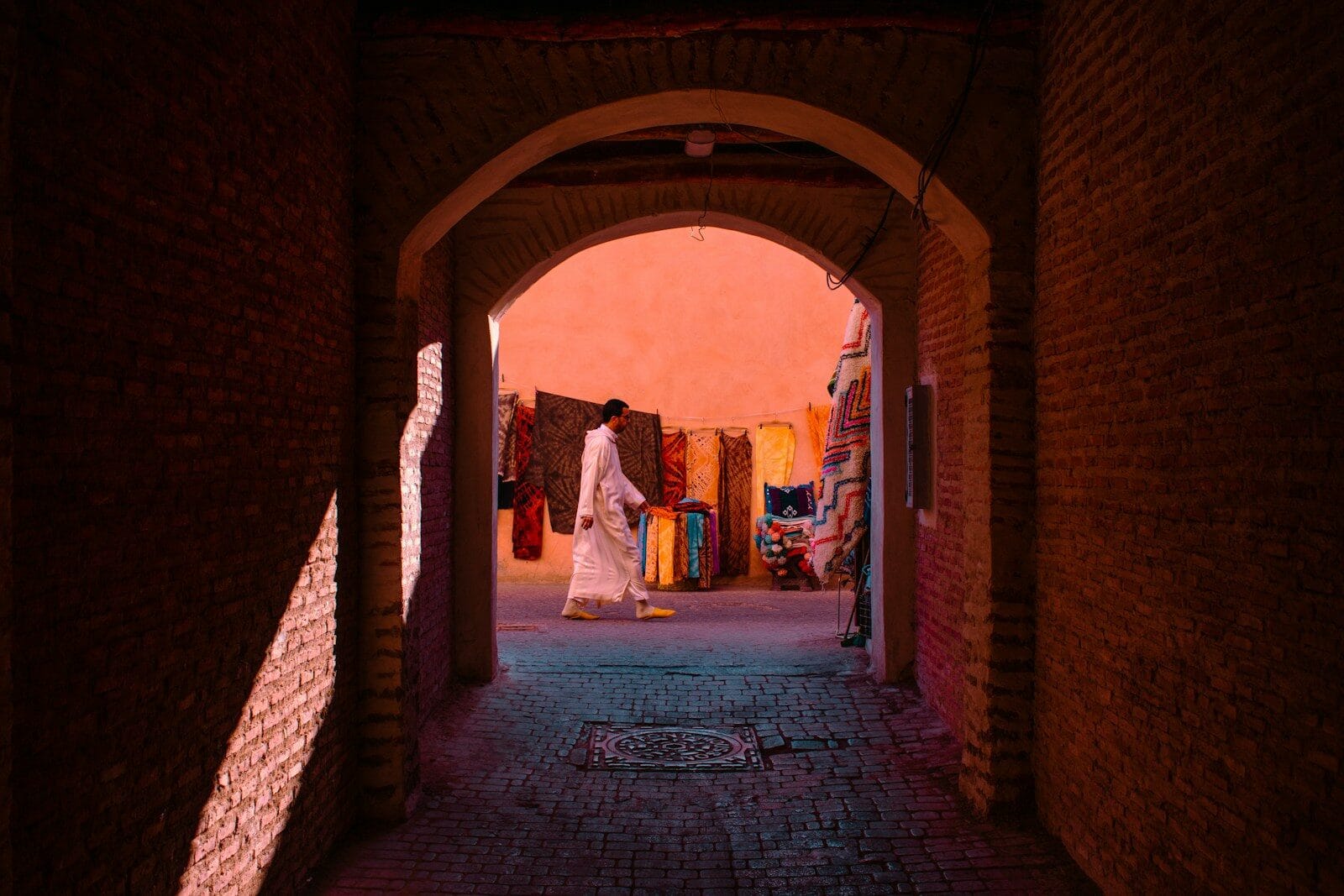
There is no single Moroccan appearance. The people of Morocco span the visual range you would expect from a country that sits between Europe, sub-Saharan Africa, and the Middle East.
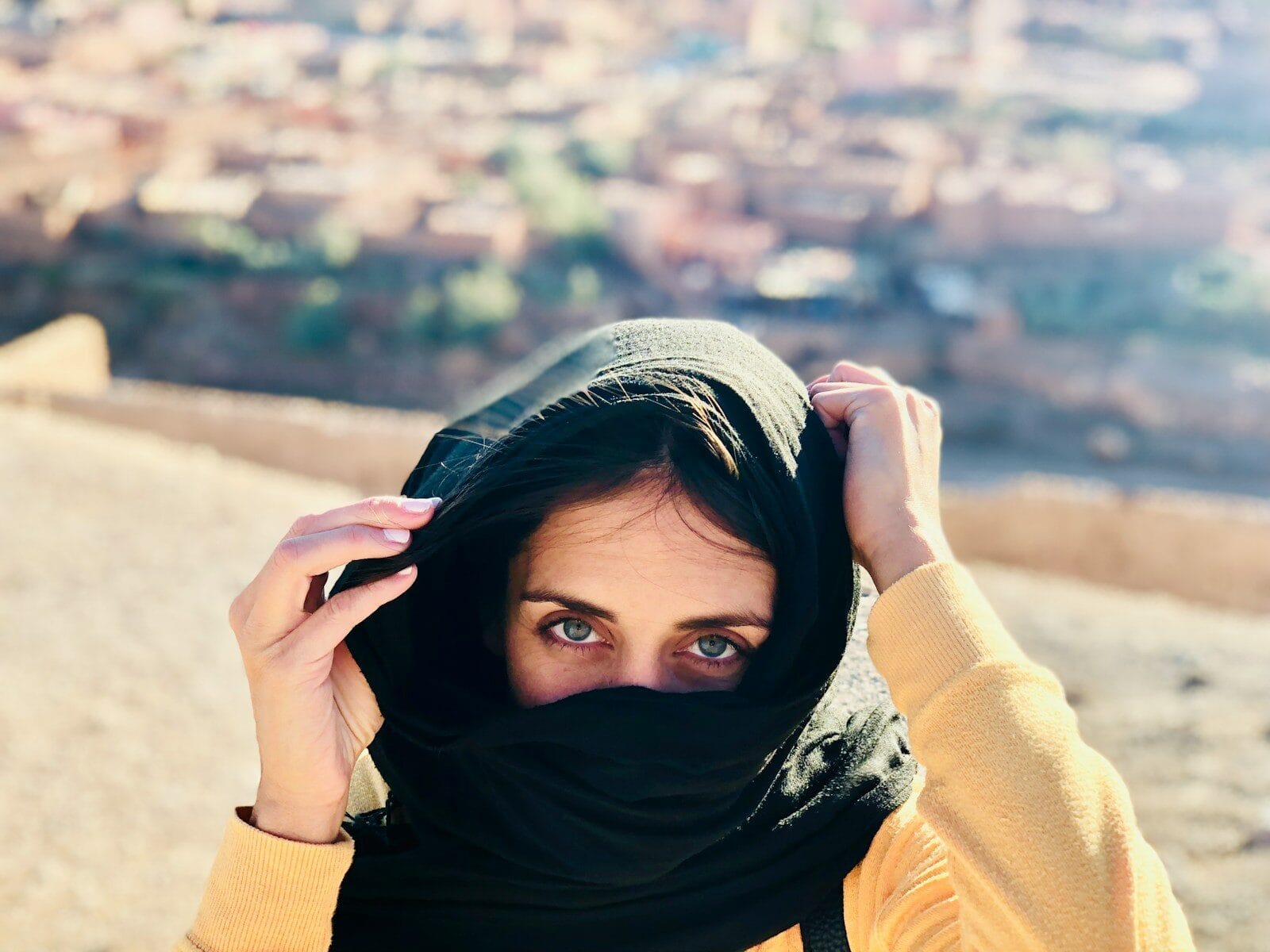
In the north, particularly in Tangier, Tetouan, and the Rif, you meet Moroccans with light complexions, light hair, and green or blue eyes. The Iberian influence from centuries of contact with Spain and the arrival of Moorish and Jewish refugees after 1492 shows clearly.
In the Middle Atlas and the coastal cities like Rabat and Casablanca, most Moroccans have olive or light brown skin, dark hair, and dark eyes. This is the appearance most guidebooks show, and it fits the broad Arab-Berber majority.
In the south, especially in Ouarzazate, Zagora, Merzouga, and the villages of the Draa and Ziz valleys, complexions are noticeably darker. This is the traditional territory of the Haratin and the Gnawa, whose ancestry connects Morocco to West Africa through centuries of trade and migration.
The Sahrawis of the Sahara have their own distinct appearance and dress, with the men wearing loose blue or white robes (deraa) and the women in colorful wraps (melhfa). Their heritage combines Arab, Amazigh, and West African elements.
So when travelers ask are Moroccan people Black or what race are Moroccan people, the honest answer is that Morocco is not a single race. Officially, most Moroccans are counted as Arab-Berber, but the population includes light-skinned northerners, dark-skinned southerners, and every shade in between. Dressing modestly and being polite gets you the same warm welcome regardless of what you look like as a visitor.
Religion and daily life
Islam shapes daily life in Morocco in ways that even secular families notice. About 99 percent of the people of Morocco are Muslim, mostly Sunni following the Maliki school. The rest is a small mix of Christian, Jewish, and Bahai communities.
The rhythm of the day follows the five prayer calls. In the medinas, you hear the muezzin from multiple mosques overlapping. Most shops close briefly for the Friday midday prayer, and Ramadan (which shifts by 10 or 11 days each year) changes life across the country: restaurants close during daytime, streets empty until sunset, and evenings become long family meals that stretch past midnight.
Alcohol is legal but not common in most social settings. Cities like Casablanca, Marrakech, and Agadir have bars and restaurants that serve it. Villages and small towns often do not. Buying alcohol in a Moroccan supermarket requires going to a specific section, usually curtained off, and it is considered polite to keep the bag out of sight.
Pork is not sold anywhere. If your family avoids pork for other reasons, Morocco is one of the easiest countries in the world to travel through.
The Jewish community, though small, is still visible. The Beth-El synagogue in Casablanca, the Jewish quarter in Fes (mellah), and Jewish cemeteries across the country are open to visitors and are worth including on any cultural tour.
Moroccan hospitality: how the people of Morocco welcome visitors
Hospitality in Morocco is not a marketing line. It is a cultural obligation with real weight. The people of Morocco treat guests as a gift from God, and refusing a cup of mint tea when offered is closer to insult than politeness.
The classic scene: you walk into a shop in the Fes medina, ask about a rug, and within three minutes you are sitting cross-legged on a cushion holding a small glass of tea while the owner explains where the pattern comes from. The tea is not a sales tactic. It is what happens whether you buy or not.
Home invitations happen fast. If you spend a few days chatting with the same shop owner, café waiter, or hotel manager, chances are they will invite you home for a Friday couscous. This is real, not a scam. Accept if you can, bring a small gift (pastries, a bag of fruit), and expect to eat more than you thought possible.
Need help with transportation in Morocco?
Book a reliable private driver for your Morocco family adventure today — personalised routes designed just for you.
What surprises first-time visitors
- The complete absence of judgment about how much you spend. A shop owner will treat you as generously if you buy a five-dirham keychain as if you buy a two-thousand-dirham carpet.
- The willingness of strangers to walk you across the medina to find an address, without expecting payment.
- The way children are folded into every social gathering. Kids run around the courtyard while adults eat, then eat what the adults leave.
Where hospitality gets tricky
- Some medina “guides” who insist on helping you find your riad will expect a fee at the end. Ask politely once whether they are official.
- Aggressive shop owners in the most touristed corners of Marrakech and Fes can get pushy. Genuine hospitality feels calm. Pressure is not it.
- Photography of individuals without asking is considered rude. Always ask, and expect to pay a small fee for a portrait in the souks.
Food, family, and social life
Food in Morocco is central to social life. The people of Morocco eat late, share generously, and cook communally more often than not. The typical Moroccan lunch, especially on Fridays, is couscous served from a single large dish with the whole family gathered around it.
Tagine is the everyday dish. Slow-cooked meat or vegetables in a conical clay pot, seasoned with cumin, ginger, saffron, and preserved lemon. Every family cooks it differently. Marrakech tagines lean sweet, with prunes, apricots, and honey. Fes tagines lean savory. Southern tagines often include seven vegetables served over couscous.
Bread (khobz) is on every table, all day. It replaces cutlery. You tear a piece and use it to scoop the stew.
Mint tea is the national drink. Green tea steeped with fresh mint and heavy sugar, poured from height into small glasses. It is offered at every meeting, in every home, in every shop.
Family structure in Morocco is still largely three-generation. Grandparents, parents, and children often live under one roof or in adjacent apartments. Even in modern Casablanca, adult children moving out entirely is less common than in Europe or the US. Family decisions are made collectively. Weddings involve everyone from third cousins to the neighborhood butcher.
Children are welcome everywhere. Restaurants at 10 pm, cafes at midnight, family gatherings that last into the small hours. Moroccan kids do not have separate bedtimes at family events. Yours will be treated the same way, which is one of the reasons the country works so well for family travel.
Famous people from Morocco
Some of the most influential Moroccans across a thousand years of history are still household names.
Ibn Battuta (1304 to 1369), born in Tangier, is one of history’s greatest travelers. He covered around 75,000 miles across Africa, Asia, and Europe over three decades, writing a detailed account (the Rihla) that remains a foundational text of medieval geography. His portrait is on the 20 dirham note.
Ibn Khaldun (1332 to 1406), though born in Tunisia, spent significant time in Fes and Marrakech. His Muqaddimah is considered one of the founding texts of sociology, economics, and historiography.
Nawal El Moutawakel (born 1962), from Casablanca, became the first African, Arab, and Muslim woman to win an Olympic gold medal, taking the 400-meter hurdles at the 1984 Los Angeles Olympics. She has since served on the International Olympic Committee.
Hicham El Guerrouj (born 1974) held the 1,500-meter and mile world records for years and is widely considered one of the greatest middle-distance runners in history.
Fatema Mernissi (1940 to 2015) was a leading sociologist and feminist writer whose books, including Dreams of Trespass, remain widely read in Arabic, French, and English.
Achraf Hakimi (born 1998) and Hakim Ziyech (born 1993) are the two most famous current Moroccan footballers, both key players in the country’s historic run to the 2022 World Cup semifinals in Qatar, where Morocco became the first African and Arab team to reach that stage.
King Mohammed VI (born 1963) has ruled Morocco since 1999. The current king is a descendant of the Prophet Muhammad through the Alaouite dynasty.
RedOne (Nadir Khayat, born 1972), from Tetouan, is a Grammy-winning music producer behind hits for Lady Gaga, Jennifer Lopez, and Enrique Iglesias.
These names span sports, science, art, and politics, and they give a sense of how the country punches above its weight culturally for its 38 million population.
Meeting the people of Morocco with kids
Traveling with children opens more doors in Morocco than traveling alone ever will. The people of Morocco genuinely light up when kids are around, and family travelers get invited into homes, wedding parties, and rural celebrations that solo backpackers rarely see.
A few specific things that help:
Bring small gifts for host families. Notebooks and colored pencils for children, a small bag of tea or nuts for the adults. Nothing expensive. The gesture matters more than the value.
Let your kids play with local kids. Language is not a barrier at seven years old. A ball, a soccer game in a village square, or a shared laugh over a lost sandal builds bridges faster than any adult conversation.
Learn a few Berber phrases if you are heading to the mountains. “Azul” (hello), “tanmirt” (thank you), and “manikal” (how are you) go a long way in Amazigh villages where French and English are less common.
12 & 14-day grand family tours
Add Chefchaouen, the Atlantic coast, or two nights in the dunes. Slow mornings, shorter drives, room for grandparents and toddlers.
Slow down. Moroccan family life is not efficient. Meals stretch. Conversations wander. Kids appear and disappear. Trying to schedule tightly with local families breaks the rhythm that makes these encounters meaningful.
Homestays and rural experiences
For families who want deep contact with local people, homestays in Amazigh villages in the Atlas Mountains are the best option. Places like Imlil, Ouirgane, and Aroumd have families that host travelers in traditional houses with shared meals and shared tea. Prices are modest, the food is real, and kids often remember these nights more clearly than the fancy riads.
Morocco Vacation Planner organizes these homestay days as part of longer itineraries, matching families to hosts based on kid ages and interests. It is the closest most travelers can get to the country’s private life.
Cultural etiquette to know before visiting
A few practical points make encounters with the people of Morocco smoother and more meaningful.
Dress modestly in medinas and rural areas. Knees and shoulders covered for both men and women. This is not required by law, but it earns instant respect and avoids the awkwardness of stares. In coastal resorts and beach areas, normal beachwear is fine.
Use your right hand for eating, greeting, and passing items. The left hand is traditionally used for personal hygiene and is considered impolite for these purposes.
Take off your shoes when entering a home. Almost always expected. Watch what your host does.
Do not photograph women without permission. In many families this is a strict line. Older men also usually prefer to be asked. Kids and shopkeepers are more relaxed but ask anyway.
Learn the greeting rituals. “Salam alaikum” (peace be upon you) is answered with “walaikum salam” (and peace to you). Handshakes are common between men. Between men and women who do not know each other, wait to see if the woman extends her hand first.
Ramadan awareness. If you visit during Ramadan (dates shift by 10 days each year), do not eat, drink, or smoke in public during daylight hours. Restaurants often close, but hotel restaurants and some tourist-focused places stay open.
Small talk before business. In Morocco, going straight to a transaction is considered cold. Ask about family, comment on the weather, share a joke, then start the actual conversation. This applies to shops, taxis, and government offices.
Tipping. Small amounts are expected in restaurants, cafes, and for services. Ten percent at restaurants is generous. A dirham or two for a bathroom attendant. A small note for a helpful shop assistant.
Final thoughts: understanding the people of Morocco
The people of Morocco are the reason so many travelers come back a second time. The buildings and desert dunes photograph well, but it is the conversations at cafe tables, the invitations to Friday couscous, the shopkeeper who walks you to a rival’s stall because they carry the item you actually need, that stay with you.
Morocco is not a single culture. It is a stack of them, layered by four thousand years of Amazigh continuity, Islamic history, Andalusian refugees, sub-Saharan trade, and Jewish presence. Understanding that stack changes how you see everything else: the food, the music, the architecture, the way three languages can sit next to each other in a single conversation.
For families, the country is one of the most welcoming on the planet. Kids get treated like extended family. Adults get treated like guests. Both get invited into more homes than they can accept in a single trip.
Morocco Vacation Planner designs Private Family Tours in Morocco for Kids, Teens & Toddlers. Plan your perfect family trip to Morocco with custom private tours built for families traveling with toddlers, kids, and teens. You get family friendly experiences, trusted local guides, and handpicked comfortable stays from the medinas all the way to the Sahara.
FAQs
How many people live in Morocco?
Around 38 million people live in Morocco as of 2024. The population has been growing steadily, with about 60 percent living in cities and 40 percent in rural areas. The largest urban centers are Casablanca (around 3.7 million), Rabat (the capital), Fes, Marrakech, and Tangier. Nearly a quarter of the country is under 15 years old, which makes it a young population.
What language do people in Morocco speak?
Most Moroccans speak Moroccan Arabic (Darija) at home, plus Tamazight (Berber) in about 25 percent of households. French is used widely in business, education, and media. Modern Standard Arabic is the official written language, and Spanish is common in the north. English is growing quickly among younger Moroccans, especially in tourist areas.
Are Moroccan people Black?
Moroccans are a mix of ethnicities. The majority are of Arab-Berber origin with olive to light brown skin, but there are also communities of sub-Saharan African descent (the Haratin and Gnawa) with darker skin, mostly in the south. Northern Moroccans, especially in the Rif and around Tetouan, often have light skin and sometimes light eyes because of centuries of contact with Iberia. The people of Morocco span a wide visual range.
What is Morocco famous for besides its people?
Morocco is famous for its walled medinas (Fes and Marrakech are UNESCO World Heritage sites), the Sahara desert, the Atlas Mountains, Moroccan tea and tagine cuisine, Gnawa and Amazigh music, argan oil production, and its hospitality culture. The country was the first to recognize the independence of the United States in 1777.
Are Moroccan people friendly to tourists?
Yes, generally very friendly. Hospitality is a cultural cornerstone, and travelers are often surprised by how quickly locals invite them for tea or a meal. There are aggressive touts in the most touristed corners of Marrakech and Fes, but the vast majority of Moroccans treat visitors with warmth and curiosity. Learning a few phrases in Arabic or Tamazight is welcomed everywhere.