How to say hello in Morocco
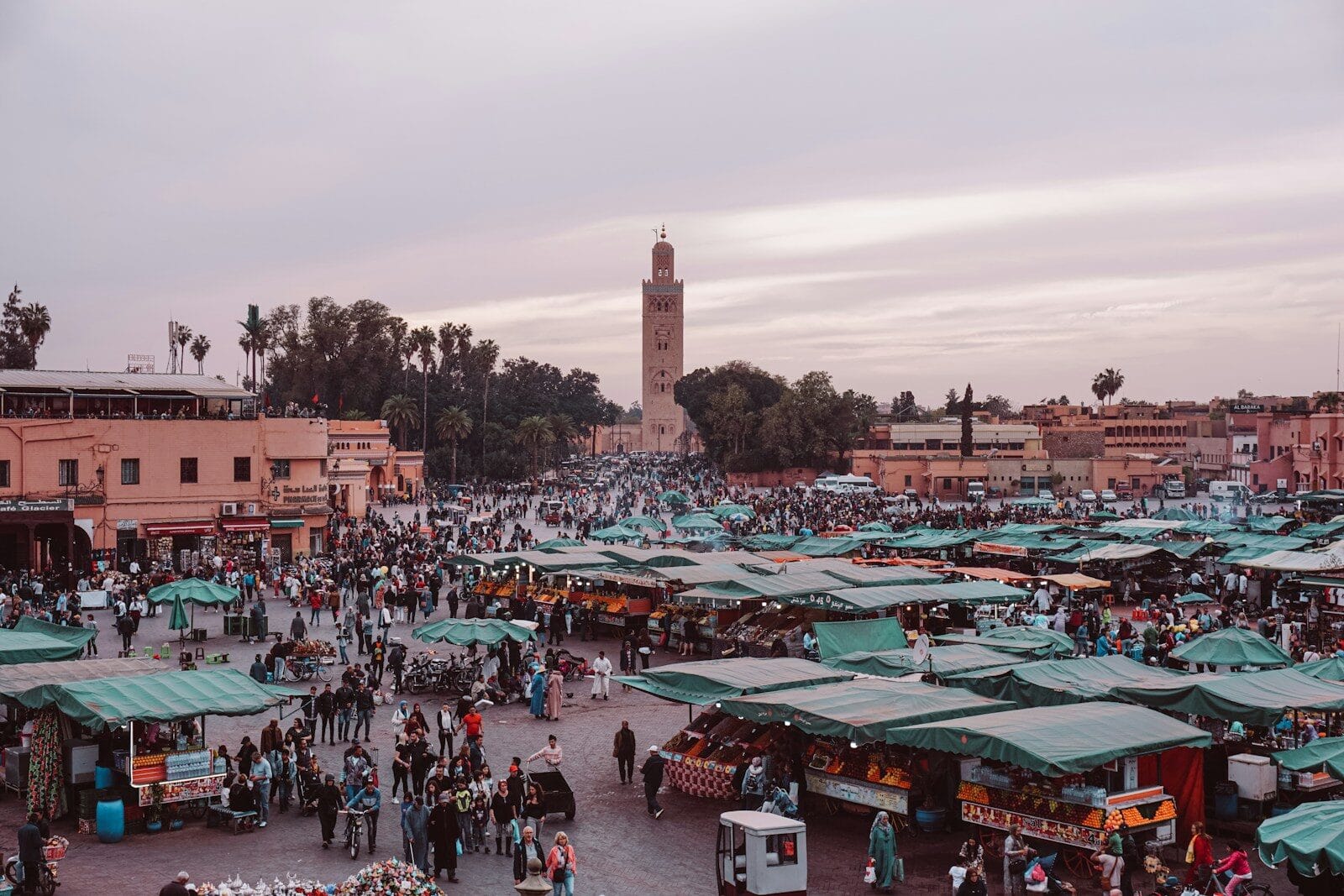
The moment you say “salam” to a Moroccan shopkeeper instead of “hello”, something shifts. The expression, the tone, the whole rhythm of the conversation opens up. Prices soften a little. Tea appears faster. Directions get more detailed. Learning how to say hello in Morocco is not just about being polite. It changes the trip.
This guide covers how to say hello in Morocco in every situation you will run into, from a quick nod in the medina to a full three minute greeting exchange with a Berber host in the Atlas Mountains. You will get the main Arabic phrases in Darija (the Moroccan dialect), the Amazigh (Berber) equivalents, time based greetings, the correct responses when someone greets you first, the physical gestures that go with them, and the small mistakes travelers make that give them away as first timers.
Whether you are traveling with kids, teens, or on your own, one hour spent on this before you fly makes a bigger difference than anything else you can prepare.
Quick takeaways
- How to say hello in Morocco most commonly: use “Salam” (سلام) or the full “As-salamu alaykum” (peace be upon you) for a warmer, more formal version.
- The response is “Wa alaykum salam” (and peace be upon you), a set exchange that never changes.
- In Berber areas of Morocco, “Azul” (ⴰⵣⵓⵍ) is the equivalent, and it literally translates as “from the heart”.
- Add “labas?” meaning “how are you” (literally “no harm?”) after your salam. Locals do this every time.
- Say “shukran” for thank you and “bslama” for goodbye. These four words carry most everyday interactions.
- Physical greetings vary by gender and familiarity. A right hand handshake works everywhere; cheek kisses only between same gender friends or family.
- Kids can join in. Even a toddler saying “salam” gets a big smile from shopkeepers, restaurant staff, and guides across the country.
What is a greeting in Morocco?
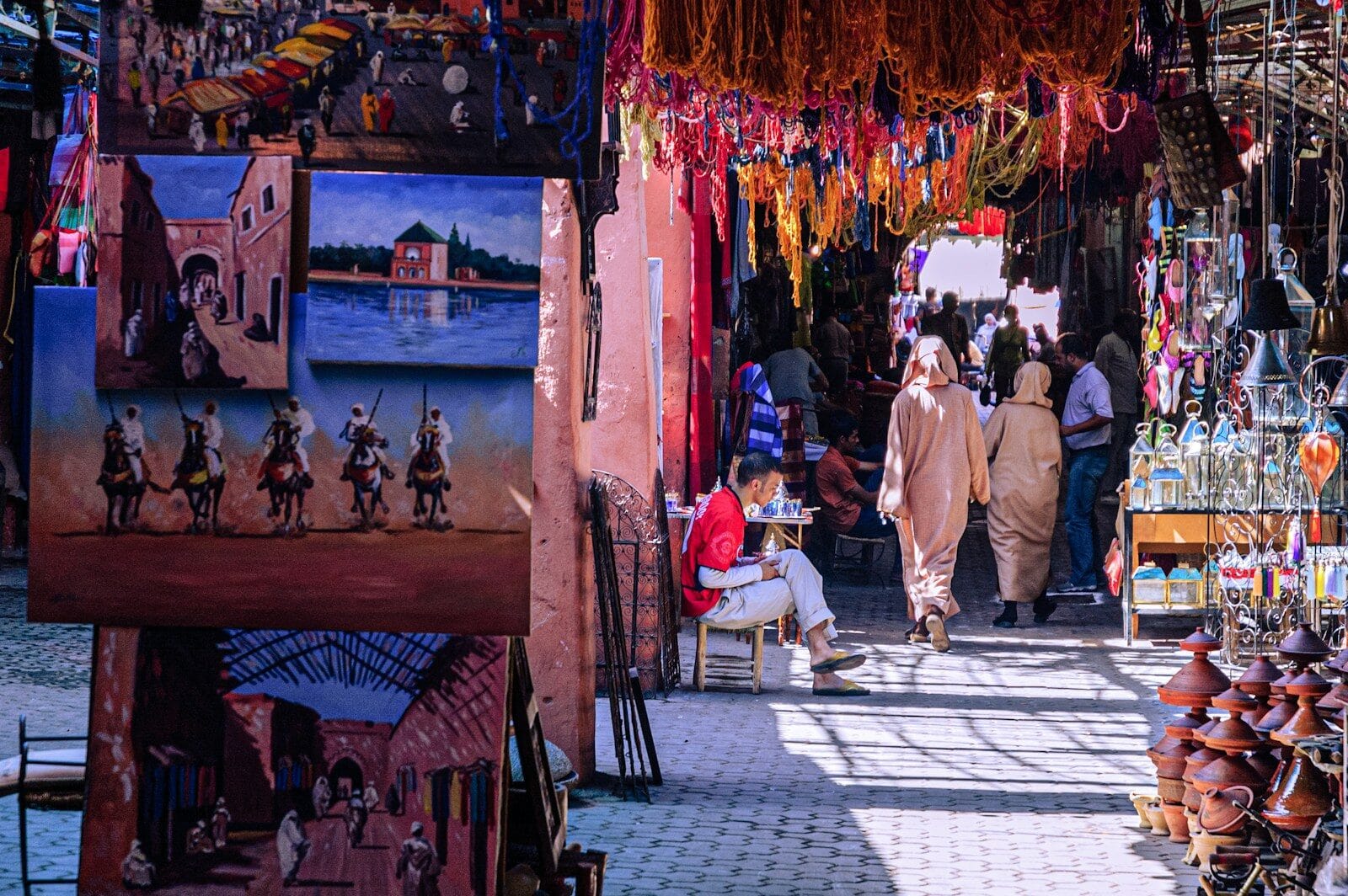
A greeting in Morocco is Salam, short for As-salamu alaykum, which means “peace be upon you” in Arabic, and it is the standard hello used across the whole country. The response is Wa alaykum salam, meaning “and peace be upon you”.
Morocco has several languages in daily use, including Moroccan Arabic (Darija), Amazigh (Berber, in three regional variants), French, and increasingly English. Salam is understood by nearly everyone regardless of which language they speak at home. In Berber areas of the Atlas Mountains and the Rif, you will also hear “Azul” as a native greeting, which many locals appreciate when travelers use it in their region.
Greetings in Morocco are longer and more layered than a Western hello. A shopkeeper will say salam, then labas (how are you), then kolshi bikhir (everything is well), then maybe alhamdulillah (praise God) as a response, all before starting the actual conversation. Skipping the greeting exchange to jump straight into “how much is this?” reads as rude. Even in a two minute market transaction, the greeting takes twenty seconds.
However, if you are traveling with young children or in a hurry, a short “salam” and a smile is completely acceptable. Nobody expects tourists to master the full exchange. Any attempt at Arabic or Berber phrases opens doors that pure English or French does not.
Practical takeaways:
- Salam works everywhere, urban or rural, formal or casual
- Add Wa alaykum salam when responding to someone who greets you
- Try Azul in Berber regions like the Atlas Mountains
- Say salam even in shops before starting a transaction
- Smile and make eye contact. The nonverbal side matters as much as the words
For families visiting the country, Morocco Vacation Planner trips include kid friendly language coaching in the first day, so even young children can greet locals confidently by day two.
How to say hello in Morocco: the main phrases
Learning how to say hello in Morocco starts with three or four core words. Master these, and you can navigate almost any first encounter comfortably.
Salam (سلام) is the everyday hello. Short, universal, works morning to night. Pronounced “sah-lahm” with equal stress on both syllables. Use it walking into a shop, greeting a driver, saying hi to your riad host.
As-salamu alaykum (السلام عليكم) is the fuller, more respectful version. It literally means “peace be upon you” and comes from the Islamic tradition. Use it when meeting someone older, in formal contexts, or when you want to show extra respect. Pronounced “as-sah-LAH-moo ah-LAY-koom”. Locals shorten it in speech to “salamu alikom” at conversational speed.
Ahlan (أهلا) is a softer, warmer hello. Closer to “welcome” in feel. You will hear it from restaurant staff greeting you, from friends meeting friends, from guides welcoming you to a site. You can use it back.
Marhaba (مرحبا) is used less often in Morocco than in other Arab countries, but it means “welcome” and works. Moroccans use it more often to say “you’re welcome” after a thank you.
The correct response depends on what was said to you:
- If someone says “Salam” to you, reply with “Salam” or “Wa alaykum salam”
- If someone says “As-salamu alaykum” to you, always reply “Wa alaykum salam” (never just “salam”)
- If someone says “Ahlan”, reply “Ahlan bik” (welcome to you)
- If someone says “Marhaba”, reply “Marhaba bik”
This matching pattern is important. Moroccan greetings are pair based. Missing the response part is a small mistake that natives will notice, even when they say nothing about it.
Salam alaikum and how to respond
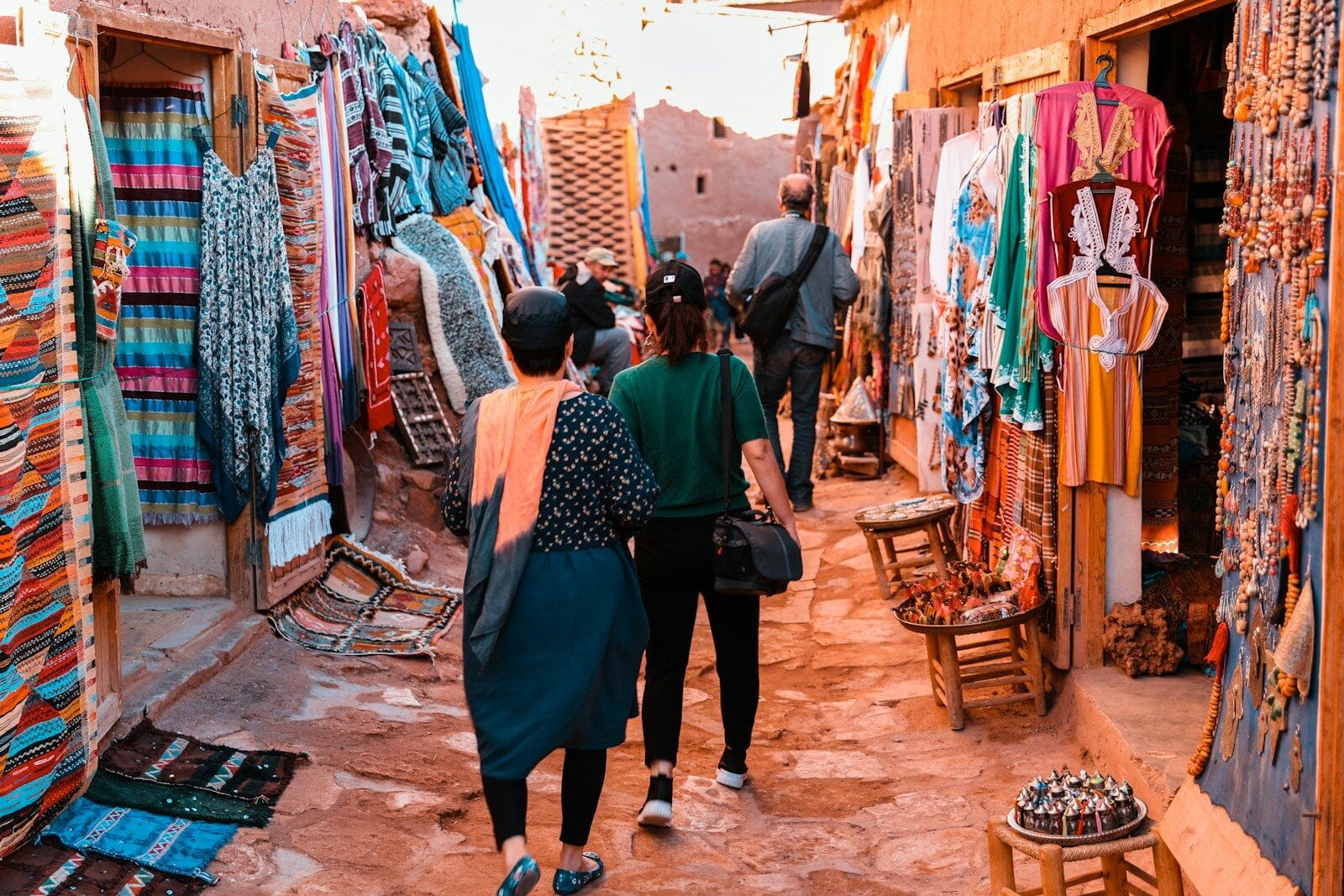
The full greeting exchange around salam alaikum is worth learning properly. When someone says “As-salamu alaykum” to you, the response is “Wa alaykum salam” (وعليكم السلام), which means “and peace be upon you”. This is not optional in the same way that saying “you too” back to “have a nice day” is not optional. It is the expected pair.
Sometimes the greeting extends further with religious framing:
- Full: “As-salamu alaykum wa rahmatullahi wa barakatuh” (peace, mercy, and blessings of God be upon you)
- Response: “Wa alaykum as-salam wa rahmatullahi wa barakatuh”
You will hear the full version between friends who have not seen each other in a while, or on religious occasions like the end of Friday prayer. Travelers do not need to use the extended form, but recognizing it helps you understand what is happening around you.
10-day Morocco family tour
Imperial cities · High Atlas · one night under Saharan stars. Family-paced, private driver, kid-tested stops.
If you get lost in the middle of a longer exchange, a smile and a repeated “Salam” is a fine fallback. Moroccans are generally warm about language mistakes, and they read effort as respect.
One nuance for travelers: “Salam alaikum” is a Muslim greeting rooted in Islamic tradition, but it is used across all Moroccan communities as a cultural greeting, not only a religious one. Christians, Jews, and secular Moroccans all use it. You do not need to be Muslim to say it. Using it does not imply anything about your faith. When travelers ask how to say hello in Morocco properly, this exchange is what they usually mean.
Time based greetings in Morocco
Salam works any time, but adding a time based greeting shows more effort. Moroccan Darija has specific words for morning and evening hello that fit the hour.
Morning (before noon):
- Sbah lkhir (صباح الخير) = Good morning, literally “morning of goodness”
- Response: Sbah nour (صباح النور) = literally “morning of light”
Evening (after sunset):
- Msa lkhir (مساء الخير) = Good evening
- Response: Msa nour (مساء النور)
Night:
- Layla saida (ليلة سعيدة) = Good night, used when saying goodbye at the end of the evening
You can combine these with salam. Walking into a café at 8 am, “Salam, sbah lkhir” reads as friendly and effortful without going overboard. Walking in at 8 pm, “Salam, msa lkhir” does the same.
Time based greetings are especially common in shops, hotels, and homes. Your riad host will almost always say sbah lkhir when you come down for breakfast, and layla saida before you go up to bed. Learning to respond in kind takes ten minutes and pays back for the whole trip. This is one of the fastest ways to level up how to say hello in Morocco beyond the basic salam.
Regional variations
The Rif region in the north uses slightly different pronunciations, with “sbah lkhir” sometimes sounding closer to “sbah leekhir”. The southern Souss region often blends Arabic and Amazigh, so you may hear “azul” alongside “sbah lkhir” in the same conversation. Do not stress about matching regional accents. Any pronunciation close to the standard version will be understood and appreciated.
How to say hello in Morocco’s Berber languages
If you are traveling into the Atlas Mountains, the Rif, or the deep south, learning how to say hello in Morocco’s Berber (Amazigh) languages carries real weight. About a quarter of Moroccans speak an Amazigh language as their first language, and Amazigh has been an official language of the country since 2011.
The word for hello is Azul (ⴰⵣⵓⵍ), pronounced “AH-zool”. It literally translates as “from the heart” or “beside my heart”, which is a warmer greeting than most Western equivalents. When speaking to one person you can say “Azul flak” (to a male) or “Azul flam” (to a female). To a group, say “Azul flawn”.
The response is simply Azul back.
Morocco has three main Amazigh languages, each with slight variations:
- Tashelhit (Tachelhit) in the Souss valley and Anti Atlas, around Marrakech, Agadir, and Taroudant
- Tamazight in the Central Atlas and Middle Atlas, around Ifrane, Azrou, and Beni Mellal
- Tarifit in the Rif Mountains in the north
Azul is understood across all three regions. Beyond that:
- Manik antgit? = How are you? (Tamazight)
- Labas = I am well / no harm (borrowed from Arabic, used across both languages)
- Tanmmirt (ⵜⴰⵏⵎⵎⵉⵔⵜ) = Thank you
- Ar tufat = See you tomorrow
A note on the word Berber
Many Moroccans prefer “Amazigh” (plural: Imazighen), meaning “free people”, over “Berber”, which comes from a Greek and Latin root meaning “foreign speaker” or “barbarian”. Both terms are used in tourism writing. If you are speaking directly with people in these communities, using “Amazigh” is the safer, more respectful choice.
How to say hello and how are you together
In Moroccan practice, hello never comes alone. It almost always joins with a “how are you?” as one continuous exchange. This is the main thing that separates travelers who “get it” from those who do not.
The typical greeting sequence:
Person A: Salam alaikum
Person B: Wa alaykum salam
Person A: Labas?
Person B: Labas, alhamdulillah. Wa nta? (or Wa nti? to a woman)
Person A: Labas, alhamdulillah
Translated:
Person A: Peace be upon you
Person B: And peace be upon you
Person A: How are you? (literally “no harm?”)
Person B: I’m well, praise God. And you?
Person A: I’m well, praise God
This exchange happens whether you have known someone for twenty years or twenty seconds. It is the frame around any interaction, and skipping it feels abrupt. Even a taxi ride starts with this before anyone talks about destinations or fares.
You do not have to use every line. A basic exchange looks like:
You: Salam, labas?
Them: Labas, wa nta?
You: Labas, shukran
That is thirty seconds of Arabic. Nobody expects more. Nobody minds if your pronunciation is not perfect. What matters is that you did the sequence.
If someone answers “labas” and adds “kolshi bikhir” (everything is fine), the polite move is to say the same back. “Kolshi bikhir, alhamdulillah” closes the exchange warmly.
Need help with transportation in Morocco?
Book a reliable private driver for your Morocco family adventure today — personalised routes designed just for you.
Alhamdulillah, meaning “praise God”, is used constantly in Morocco regardless of religious background. It has become a cultural filler word closer to “great, thanks” than a religious statement. Using it does not require religious belief. Getting the exchange right is the second half of learning how to say hello in Morocco.
Body language and handshakes
Words are only half the greeting. Body language carries the other half, and it varies by gender, age, and setting.
Handshake: Universal for meeting someone new. Right hand only. Left hand is considered unclean for greeting or eating. A soft to medium grip, brief, with eye contact. Some Moroccans place their right hand on their heart after shaking, which is a sign of warmth. You can do the same. It reads well.
Cheek kisses: Between same gender friends and family, two to four cheek kisses (starting on the right cheek, alternating) are common. Between opposite gender relations, cheek kissing is generally avoided unless the two people are family or close friends. As a traveler, wait for locals to initiate. Never assume.
Hand to heart: When passing an acquaintance on the street without stopping, or when greeting someone from across a room, placing your right hand on your heart is a graceful acknowledgment. It works instead of a handshake in situations where you cannot physically reach the person, or between opposite genders where a handshake might feel too forward.
No handshake with a religious woman: Some Muslim women prefer not to shake hands with men outside their family for religious reasons. If a woman does not extend her hand, do not extend yours. A hand to heart gesture with a small nod is the correct response.
Eye contact: Direct but not intense. Prolonged staring can read as challenging. A steady, warm gaze during the greeting exchange is standard.
Physical distance: Moroccans generally stand closer during conversation than Northern Europeans or Americans. This is not aggression. It is normal social distance.
Kids and greetings
Moroccan adults are warm with children of all ages. A shopkeeper will often reach out to shake a small child’s hand, offer them a sweet, or ruffle their hair. Preparing your kids for this in advance helps them respond with a smile rather than shrink away. Teach them “salam” and let them use it. The reaction is always positive.
How to say goodbye in Morocco
Saying goodbye works the same way as saying hello. Learning how to say hello in Morocco is only useful if you can close the conversation cleanly too.
The main goodbye is Bslama (بسلامة), which literally means “with peace” or “safely”. Pronounced “bess-lah-mah”. It works in every setting, formal or casual. The response is either “Bslama” back or “Allah ihafdek” (may God protect you).
Other options:
- Msalama (مع السلامة) = a slightly more formal version, “go with peace”
- Nshoufek ghadda (نشوفك غدا) = “See you tomorrow”
- Ila liqa (إلى اللقاء) = “Until we meet again”, more formal
- Layla saida (ليلة سعيدة) = “Good night”, used when parting for the day
- Tsbah ala khir (تصبح على خير) = “Wake up well”, used before someone goes to bed
In Berber, goodbye is:
- Ar timlilit or Ar tufat = See you again / See you tomorrow
The exchange is usually longer than a Western goodbye. It runs something like:
You: Bslama, shukran bezzaf (goodbye, thank you very much)
Them: Bslama, Allah ihafdek (goodbye, may God protect you)
You: Allah ikhalik (may God preserve you)
You can shorten this to just “Bslama, shukran” and it is fine. If you have spent an hour with a host or a guide, the longer exchange feels appropriate.
Small farewell customs
When leaving someone’s home after a meal, a common phrase is “Allah irham lwalidin” (may God have mercy on your parents) as a thank you for the hospitality. It sounds intense to Western ears but functions as a warm “thank you for having me” in Moroccan culture. Even secular guests use it.
Essential Moroccan phrases beyond hello
Once you have the greetings down, a small vocabulary of five more words carries most everyday interactions.
Shukran (شكرا) = Thank you. Universal. Pronounced “SHOO-krahn”.
Response: La shukran ala wajib = “No thanks needed, it was a duty” (formal)
Or simply: “Bla jmil” = “No problem”
Afak (عافاك) = Please, to a man. Pronounced “ah-FAHK”.
Afkum (عفاكم) = Please, to a group.
Afik (عافيك) = Please, to a woman.
La (لا) = No.
Naam (نعم) = Yes, formal.
Iyeh (إيه) = Yes, casual.
Smehli (سمح لي) = Excuse me / sorry, to a man.
Smehli-a = Excuse me / sorry, to a woman.
Mashi mushkil (ماشي مشكل) = No problem, it’s okay. This is one of the most useful phrases in the country. Someone bumps into you: mashi mushkil. Someone spills tea: mashi mushkil. Someone is late: mashi mushkil. Using it back to a Moroccan who apologizes to you shows generosity and cultural fluency.
Bezzaf (بزاف) = A lot / very much. Used to intensify. “Shukran bezzaf” = “thank you very much”.
12 & 14-day grand family tours
Add Chefchaouen, the Atlantic coast, or two nights in the dunes. Slow mornings, shorter drives, room for grandparents and toddlers.
Mezyan (مزيان) = Good. Response to “how are you” or general approval.
Wakha (وخا) = OK / fine / alright. Used constantly. It works like “sure” or “okay, got it”.
These twelve or so words plus the greetings will get you through 90 percent of daily traveler interactions in Morocco. Add “kifash?” (how?) and “shhal?” (how much?) and you can also ask for directions and prices.
Teaching kids how to say hello in Morocco
Kids pick up greetings faster than adults do, and their attempts get rewarded more warmly than yours will. Teaching them how to say hello in Morocco before the trip is one of the highest return preparation activities you can do as a family.
The three words to start with:
- Salam = Hello
- Shukran = Thank you
- Bslama = Goodbye
Even a two year old can manage salam. Kids around age five can add shukran and bslama easily.
Practice ideas before the trip
- Watch YouTube pronunciation videos together for one week before you fly
- Play a “greeting game” at dinner where everyone has to salam before eating
- Role play a shop visit with a parent playing the shopkeeper
- Teach them the response: if someone says salam to you, say salam back
What to expect once you arrive
Moroccan adults will engage warmly with kids who try local phrases. Expect:
- Shopkeepers offering free sweets after your child says salam
- Restaurant staff kneeling to be at eye level with a greeting child
- Older women in the medina reaching out to touch a child’s cheek with a smile
- Guides teaching your kids new phrases throughout the trip
Older kids and teens sometimes feel self conscious about attempting a foreign language. The workaround is to make it a game. Challenge them to collect five new Moroccan words a day. Kids who buy into this often come home with a small vocabulary that impresses their friends.
Words kids often love
- Habibi (حبيبي) = “My darling”, used affectionately across the region. Teens sometimes hear it used toward them by restaurant staff and shopkeepers.
- Yalla = “Let’s go”, useful and fun to say
- Inshallah = “God willing”, used constantly for future plans
- Alhamdulillah = “Praise God”, used as a general “great, thanks”
Common mistakes travelers make with greetings
A few small missteps come up repeatedly with visitors. Fixing them takes minutes.
Mistake 1: Skipping the greeting to ask a question
Walking up to a stranger and asking “where is the mosque?” reads as rude. Always start with salam. Even a rushed “salam, please, mosque?” beats a rushed “where is the mosque?”
Mistake 2: Using left hand for handshake or eating
The left hand is considered unclean for social use. Always use right hand for handshakes, giving items, eating, and receiving items. This matters more than people expect.
Mistake 3: Missing the response half of the exchange
If someone says “As-salamu alaykum” to you, do not just smile and nod. Say “Wa alaykum salam” back. If someone says “labas”, say “labas, alhamdulillah”. The response completes the exchange.
Mistake 4: Assuming everyone speaks French
French is common in the north and in tourist areas. Rural south, Berber regions, and older generations often speak only Darija or Amazigh. Starting with salam works everywhere. Starting with “bonjour” can work in Rabat and Casablanca but not in a Sahara village.
Mistake 5: Using overly familiar terms too fast
“Habibi” and “hayati” mean “my love” and “my life”. They are affectionate terms. Moroccans use them warmly with friends, family, and often with foreigners as a welcoming gesture. But do not use them back to strangers on day one. Wait until someone uses them with you first.
Mistake 6: Interpreting long greetings as time wasting
The three minute greeting exchange at the start of a shop visit is not delaying your transaction. It is the transaction, in a sense. Building the small human moment is what makes the rest of the interaction go well.
Final thoughts on how to say hello in Morocco
Learning how to say hello in Morocco does more than smooth over small daily interactions. It shifts the whole tone of the trip. Salam plus a smile is the shortest, most useful sentence any traveler can carry. Add labas, shukran, and bslama, and you can move through the country with warmth and confidence.
None of it needs to be perfect. Nobody expects tourists to master Darija or Amazigh in a week. What locals notice is the try. A shopkeeper who hears you attempt salam will respond with more patience, more eye contact, and often a better price than the traveler who skipped it. A guide in the Atlas Mountains who hears you say azul in the right region will spend the next hour teaching you five more Berber words.
The words are only the start. The gestures, the pauses, the alhamdulillah after a thank you, the hand to heart when you cannot shake, these small pieces of choreography are what make the trip feel less like tourism and more like being invited in.
Morocco Vacation Planner designs Private Family Tours in Morocco for Kids, Teens & Toddlers. Plan your perfect family trip to Morocco with custom private tours built for families traveling with toddlers, kids, and teens. You get family friendly experiences, trusted local guides who help your kids pick up the phrases, and handpicked comfortable stays from the medinas all the way to the Sahara.
FAQs
How do you say hello and thank you in Moroccan?
The most common ways to say hello and thank you in Moroccan Arabic are “Salam” (سلام) for hello and “Shukran” (شكرا) for thank you. If you want to be a bit more formal, use “As-salamu alaykum” for hello and “Shukran bezzaf” for “thank you very much”. Learning how to say hello in Morocco properly starts with these two words. In Berber areas of the country, use “Azul” for hello and “Tanmmirt” for thank you.
Does Morocco say Habibi?
Yes, Moroccans use “habibi” (حبيبي), which means “my darling” or “my beloved”. It is common as a warm term for friends, family, and sometimes for foreigners in a welcoming way. Restaurant staff and shopkeepers often use it toward customers as a friendly gesture. Habibi is used less often in Morocco than in the Middle East. Moroccans have their own affectionate terms like “hayati” (my life) and “azizi” (my dear).
What does Salam mean in Morocco?
Salam (سلام) means “peace” in Arabic. In Morocco it is used as the standard hello, short for “As-salamu alaykum” which means “peace be upon you”. The response is “Wa alaykum salam” (and peace be upon you). It is the most common way how to say hello in Morocco across all regions and social situations.
How do you respond to Salam?
The correct response to Salam is Salam back, or the fuller “Wa alaykum salam” (وعليكم السلام), which means “and peace be upon you”. If someone greets you with the full “As-salamu alaykum”, always reply with the full “Wa alaykum salam” rather than just “salam”. This paired exchange is the standard for how to say hello in Morocco and cannot be skipped without seeming rude.
How do you say goodbye in Morocco?
The most common way to say goodbye in Morocco is “Bslama” (بسلامة), meaning “with peace”. Pronounced “bess-lah-mah”. You can also say “Msalama” or “Ila liqa” for slightly more formal contexts. In Berber regions, “Ar timlilit” or “Ar tufat” are used. Once you have learned how to say hello in Morocco with salam, adding bslama completes the basic conversation frame.