Riad Definition: What a Riad Is in Morocco

Riad definition in one sentence: a riad is a traditional Moroccan house built around an open inner courtyard with a garden, and the word is now also used for guesthouses set in restored houses of this type. The name comes from the Arabic word for gardens, and the courtyard is what makes a building a riad.
Riad definition becomes confusing because the word has two meanings. Historians and architects use it for a courtyard garden laid out in four parts. In everyday Morocco and in most travel writing, it means a guesthouse inside an old townhouse. This article explains both and how to tell them apart.
| Meaning | What it refers to |
|---|---|
| Architectural | The courtyard garden, classically divided into four sections, usually with a fountain at the center |
| Everyday and tourism | A guesthouse in a restored traditional Moroccan house |
What Is a Riad? The Definition in Plain Terms
A riad is a house that faces inward. Rooms open onto a central courtyard rather than onto the street, and the outer walls are plain, with few large windows. In its strictest sense, the definition of riad is the garden itself, not the whole house around it. Many people now use the word for the entire building, and that broader use is the one most readers mean when they ask for a riad definition.
Riad Definition in Moroccan Culture and Language
The word comes from the Arabic riyāḍ (رياض), the plural of rawḍa, which means gardens. Water and greenery were linked with paradise in Islamic tradition, which is one reason interior gardens became a feature of palace and house design. English spellings include riad and riyad.
Reference works on Islamic architecture list the garden meaning first. Searches such as “definition riad” or “riad definition Morocco” tend to return the guesthouse meaning instead, because tourism changed how the word is used in everyday Morocco.
Riad Architecture and the Role of the Courtyard
Riad architecture is built around privacy. Traditional Moroccan houses were inward-focused, with walls of rammed earth or mud brick and few large openings. That plan protected families from the weather and from outside view. It also followed social customs that kept family spaces separate from the areas where guests were received.
The riad courtyard is the center of the plan. In its classic form it is a rectangle divided into four sections by two paved paths that cross at the center, where a fountain usually stands. The planted beds often sit below the level of the paths, and orange and lemon trees were common choices. In larger houses and palaces, a gallery often runs around the garden.
10-day Morocco family tour
Imperial cities · High Atlas · one night under Saharan stars. Family-paced, private driver, kid-tested stops.
Not every courtyard house qualifies. A house with a courtyard but no garden is usually called a dar, the other main type of traditional Moroccan house. The riad definition depends on the planted courtyard.
Riad Interior and Decor
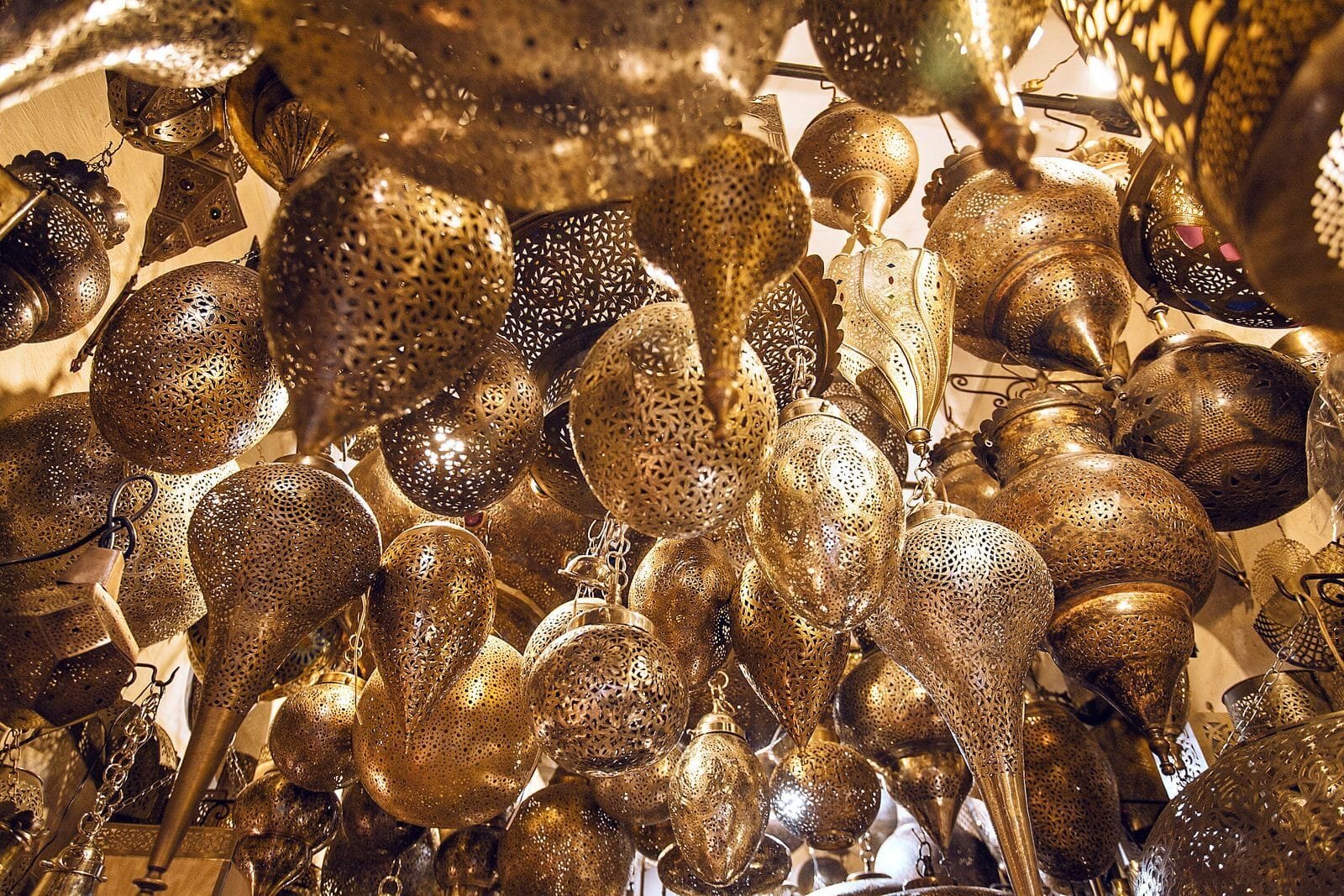
A riad interior usually shows craft before furniture. Walls may carry tadelakt, a polished lime plaster, along with carved stucco and zellij, the geometric tilework. Some houses add Arabic calligraphy, including quotations from the Quran.
Riad decor today draws on these same materials. Riad style has changed over the years, but the basic plan is still used in new designs.
What to Expect Inside a Riad
The riad definition describes a building, not a standard of service, so comfort varies from one property to the next. A few features of the building type are worth knowing:
- Stairs: many riads are multi-level, with narrow stairs and sometimes no lift.
- Weather and sound: the courtyard is open to the sky, so rooms can be cooler in winter, and sound can carry between rooms.
- Water: fountains and plunge pools need attention when small children are present.
- Access: many riads sit in narrow medina lanes that cars cannot enter, so the last stretch is often on foot from the nearest vehicle access point.
Riad History: From Palace Gardens to Guesthouses
Riad history starts well before Morocco. Interior gardens existed in the ancient Middle East and the Greco-Roman world, and the geometric garden used in Islamic architecture is generally traced to Persian gardens. Similar gardens appear in al-Andalus, including at the Alhambra. Scholars are unsure how much Moroccan riads were imported from al-Andalus and how much developed locally in parallel.
In Morocco, the earliest known true riad garden with a four-part symmetrical layout was found in an Almoravid palace in Marrakech, built in the early 12th century. Later royal palaces kept the form. The Badi Palace in Marrakech, from the late 16th century, was essentially one giant rectangular riad courtyard, and the Arsat an-Nil garden in the Royal Palace measures about 130 by 70 meters.
As a house type, riads belonged to wealthy merchants and courtiers. They were especially common in Marrakech. Fes adopted them more widely only in recent centuries, because its existing buildings and sloping terrain suited large gardens less well. Dar Batha, a late 19th-century palace in Fes that is now a museum, is a clear example.
Tourism then changed the word. Interest in traditional houses led to renovations in Marrakech, Essaouira and Fes, where many crumbling houses became guesthouses, hotels or restaurants. The riad definition used on booking sites grew out of that wave.
Traditional Riad vs Luxury Riads
A traditional riad keeps the historic layout: a plain exterior, inward-facing rooms, a planted courtyard that often has a fountain, and decoration in tile, plaster and carved wood. Today, a traditional riad that takes guests is usually a restored townhouse with private rooms and shared common areas.
Need help with transportation in Morocco?
Book a reliable private driver for your Morocco family adventure today — personalised routes designed just for you.
Luxury riads follow the same plan but are restored to a higher standard and often add facilities such as a pool, spa, hammam or restaurant. Luxury describes the level of restoration and service, not a different building type. Both fit the riad definition as long as the courtyard remains the center of the house.
A riad is also not the same as a standard hotel. It is a converted house, so the layout and number of rooms follow the old building rather than a hotel plan.
Riad FAQ
Are riads only found in Morocco?
The garden-courtyard form is historically linked to the Maghreb and al-Andalus, and palace gardens of this type existed in Tunis and Tlemcen too. As a guesthouse term, though, “riad” is tied to Moroccan medinas.
Does the riad definition require a fountain?
The fountain is typical of the classic form, but individual houses vary. Treat it as a common feature, not a rule.
Is it spelled riad or riyad?
Both spellings are in use. Riad is the common spelling in English.
Conclusion
The riad definition comes down to a courtyard garden at the heart of an inward-facing house. The word now covers both the garden and the guesthouse, so context matters when you read about riads.
For anyone looking up a riad definition while planning travel, the practical point is that the building type shapes the stay: the courtyard, the stairs and the medina location all come from the old house plan. Restoration for tourism has also been credited with reviving some traditional craft trades, and keeping the courtyard plan intact is what preserves the legacy of the riad.
Morocco Family Vacation designs private, customized trips across Morocco around each family’s needs and interests. If you are planning a trip and have questions, you are welcome to contact us.