August Weather in Morocco: A Family Traveler’s Guide to Planning the Perfect Trip
The dashboard in your rental car reads 44 degrees Celsius when you pull into Merzouga at 2 pm. Your kids’ water bottles are empty. The camel guide who was supposed to meet you sent a message saying “come back in October.” This is the classic first encounter with august weather in morocco, and it happens every summer to travelers who did not do their homework.
The country is not universally punishing in August. It is deeply split. Marrakech and the interior bake at 40 to 45 Celsius. The Atlantic coast stays around 24 to 28 Celsius with an ocean breeze. The Atlas Mountains at altitude sit at a comfortable 22 to 26 Celsius. The Sahara is off limits during the day. Northern towns like Chefchaouen and Tangier stay pleasant.
This guide covers the august weather in morocco region by region, what to pack, which festivals happen in August, where families can travel comfortably, and where to skip until the fall. If you plan around the heat rather than fighting it, August can still work.
Quick takeaways
- August weather in morocco is the hottest of the year. Marrakech averages 36 to 38 Celsius (97 to 100 Fahrenheit) with heat waves pushing past 45 Celsius (113 Fahrenheit).
- The coast is the escape valve. Casablanca, Rabat, Essaouira, Agadir, and Tangier stay 22 to 28 Celsius thanks to Atlantic breezes.
- The Atlas Mountains save your family trip. Ifrane, Imlil, and Ouirgane sit at 18 to 26 Celsius during the day, with cool nights.
- The Sahara is not viable during the day. Merzouga sand temperatures pass 70 Celsius. Save the desert for October through April.
- Almost zero rain falls. Less than 5 mm total for the whole month across most regions.
- August is Morocco’s beach high season for locals. Coastal hotels fill early, prices climb, and cities empty out on weekends.
- Family pacing is everything. Sightseeing before 10 am and after 6 pm, riad pool time in between. Skip this rhythm and you will burn out by day three.
Is it a good time to visit Morocco in August?
August is the most challenging month to visit Morocco, but it can still work if you build the trip around the coast and mountains rather than the interior cities and desert. European family travelers, especially from France, Spain, and the UK, come in large numbers because it lines up with school holidays.
The country splits into workable and unworkable zones. Coastal towns like Essaouira, Agadir, and Asilah stay in the mid 20s Celsius. Chefchaouen, at 660 meters elevation in the Rif Mountains, rarely goes past 30 Celsius. The Atlas peaks are actively pleasant. Marrakech, Fes, and Merzouga become tough to sightsee in during the day.
If you are traveling with toddlers or older relatives who struggle with heat, skip the interior cities entirely. Base yourself on the coast for a week, spend three or four days in the Atlas, and treat any Marrakech visit as an overnight rather than a base. If you have teenagers who can handle a slower schedule, Marrakech is still doable with early mornings and a riad pool.
Practical takeaways:
- Stick to the coast for beach days and cooler evenings
- Book any Marrakech riad with proper air conditioning and a real pool, not just ceiling fans
- Avoid Sahara desert tours entirely in August
- Add two to three days in the Atlas to reset the family energy mid trip
- Book everything early since August is peak season for both locals and Europeans
For families planning around the august weather in morocco, Morocco Vacation Planner designs summer itineraries that stick to comfortable regions and skip the punishing ones.
August weather in Morocco by region
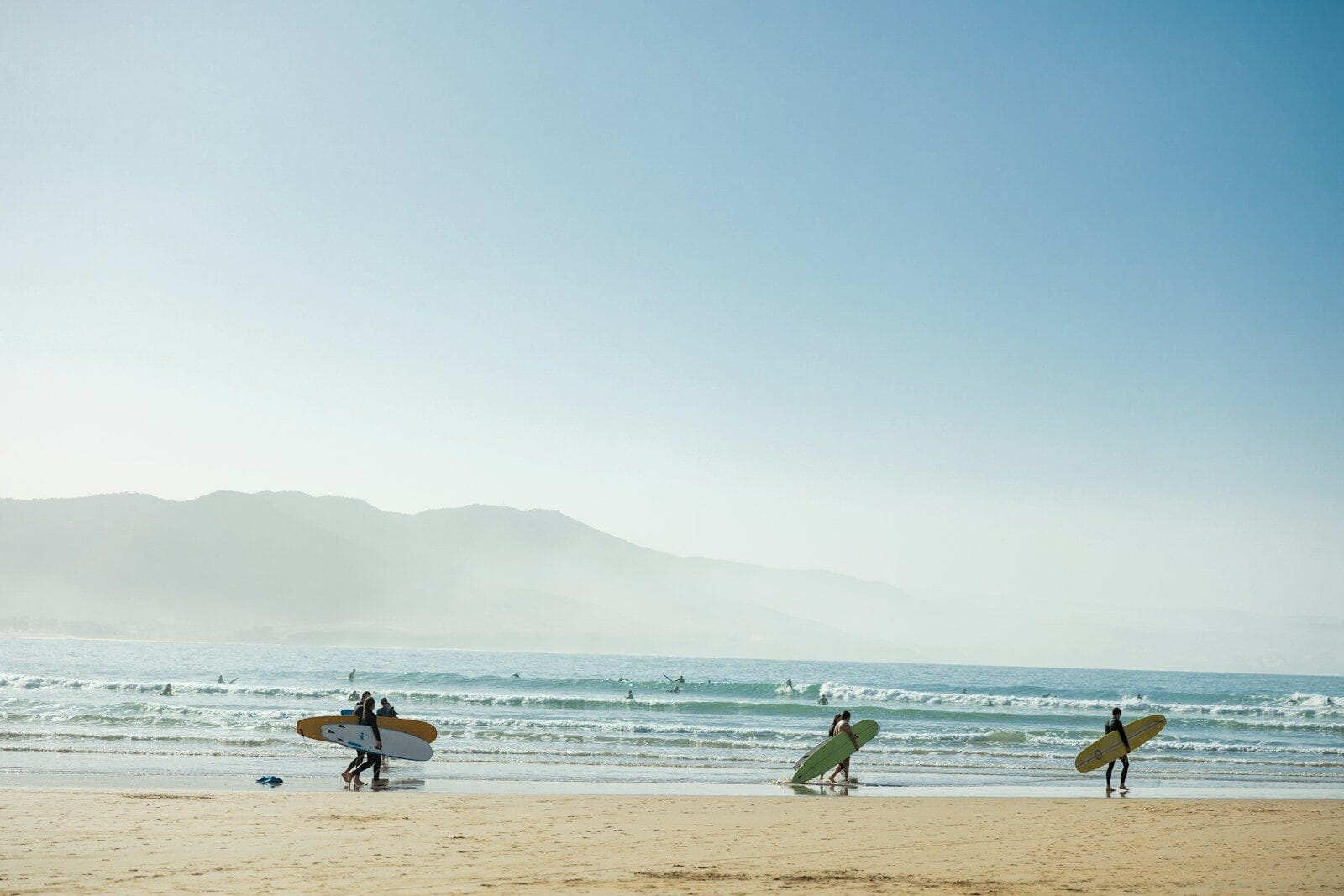
August weather in morocco breaks cleanly into four zones. Understanding which is which changes every planning decision you make.
The Atlantic coast (Casablanca, Rabat, Essaouira, Agadir, Asilah) sits at 22 to 28 Celsius (72 to 82 Fahrenheit). Sea temperature runs around 22 to 23 Celsius, the warmest of the entire year. Humidity is high in the mornings but the sea breeze picks up by afternoon.
The Mediterranean and northern coast (Tangier, Al Hoceima, Saidia) runs slightly warmer than the Atlantic side, around 25 to 30 Celsius, but with less wind. Chefchaouen, sitting at 660 meters in the Rif, stays around 22 to 28 Celsius.
Interior cities (Marrakech, Fes, Meknes, Beni Mellal) hit 35 to 42 Celsius (95 to 108 Fahrenheit) as the daily high, with heat wave days pushing past 45 Celsius. Overnight lows drop to 20 to 23 Celsius, which is where the shade in a good riad matters.
The Atlas Mountains (Imlil, Ouirgane, Ifrane, Azrou) stay 10 to 15 Celsius cooler than the lowlands. Daytime highs run 18 to 28 Celsius depending on elevation. Nights can drop into the single digits at altitude, so a fleece is not optional.
The Sahara and desert gateway towns (Merzouga, Zagora, Ouarzazate, Erfoud) hit 42 to 48 Celsius by day. Sand temperatures at Erg Chebbi reach 70 Celsius, hot enough to cause burns through thin shoes. Nights cool to around 24 to 28 Celsius, which is bearable in a proper canvas tent but not enjoyable.
Rainfall is almost non existent everywhere. Marrakech averages 10 mm for the whole month, usually in a single brief storm. Casablanca averages 0 to 1 mm. The Sahara sees no rain at all.
Sunshine hours vary less than you would think. Coastal cities get 10 to 11 hours per day. Marrakech and the interior get 12 to 13 hours. The Atlas gets around 11 hours. Sunset in early August sits around 8:30 pm, dropping to 7:45 pm by month end.
Marrakech weather in August
Marrakech is the hardest test of the whole country. Average daytime highs sit at 36 to 37 Celsius (97 to 99 Fahrenheit) at the start of the month and can push past 40 Celsius (104 Fahrenheit) by mid August. Heat waves in recent years have taken temperatures past 45 Celsius (113 Fahrenheit) for stretches of three to five days. The heat index, which factors in humidity, has been recorded at 43 Celsius (110 Fahrenheit) in typical conditions.
Overnight lows drop to 20 to 21 Celsius (68 to 70 Fahrenheit). That drop matters. Early mornings before 9 am and late evenings after 8 pm are the two windows when Marrakech is genuinely enjoyable.
The medina walls hold heat through the day and radiate it back into the alleys after sunset. Even at 10 pm, streets can feel warmer than the open air outside the walls. Wandering the souks at midday in August is not something local Moroccans do. Everything shuts. Shopkeepers nap in the back of their stalls.
A day plan that works:
- 7:00 to 10:00 am: Medina walks, Jardin Majorelle, Bahia Palace
- 10:00 to 18:00: Riad time. Pool, books, lunch on a shaded terrace, siesta
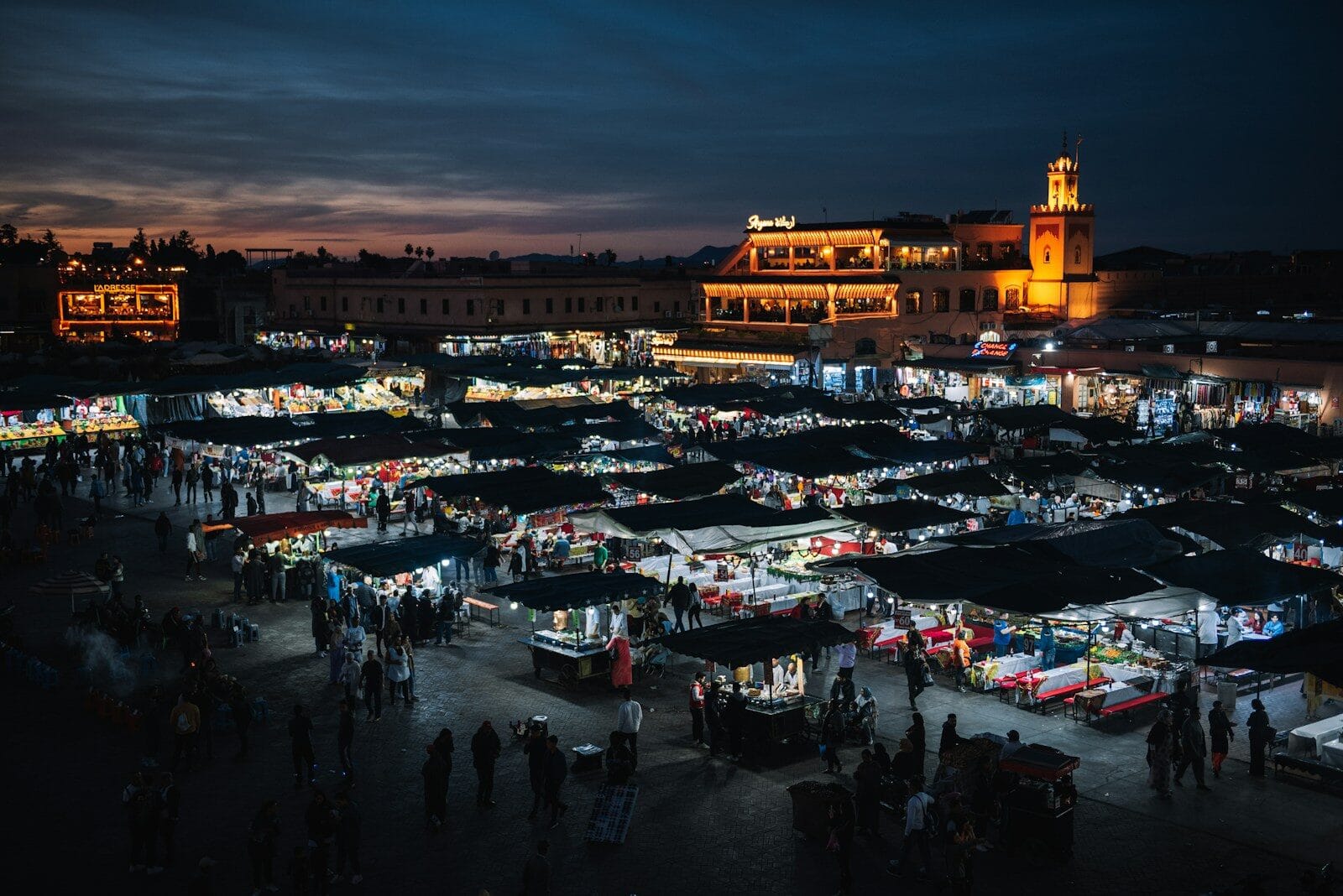
- 18:00 to 23:00: Roof terrace dinner, night in Jemaa el Fna
Break this rhythm and you will regret it. I have watched more than one family group melt down on day three because they tried to do a full medina tour at noon.
Riad selection matters more in August than any other month
The difference between a mid range riad with real air conditioning and a budget option with ceiling fans is the difference between a workable trip and a broken one. Look for:
10-day Morocco family tour
Imperial cities · High Atlas · one night under Saharan stars. Family-paced, private driver, kid-tested stops.
- Air conditioning in every bedroom, not just the main sitting area
- A plunge pool or full pool in the courtyard
- Thick walls (older riads insulate better than modern ones)
- A shaded rooftop for evenings
Expect to pay 30 to 40 percent more for a properly equipped riad in August than in November. It is worth every dirham.
Casablanca and the Atlantic coast in August
The Atlantic coast is where the august weather in morocco makes sense. Casablanca daytime highs sit around 25 to 28 Celsius (77 to 82 Fahrenheit). Nights drop to 18 to 20 Celsius. Sea temperature reaches its yearly peak at 23 to 24 Celsius, warm enough that even cold sensitive kids can swim without complaint.
The Corniche comes alive in the evenings. Families walk along the Atlantic wall, ice cream shops stay open until midnight, and the Hassan II Mosque lit up against the ocean is the postcard shot of the city. Casablanca is more of a business hub than a beach destination, but August turns the Corniche into an outdoor family space.
Essaouira, 175 km west of Marrakech, is the coastal escape that fixes a heat heavy Marrakech itinerary. Strong Atlantic winds hold daytime temperatures at 22 to 25 Celsius the whole month. The medina is walkable at midday. The wide crescent beach fills up in the afternoon. Kite surfers own the shoreline. Essaouira in August is one of the busiest months for domestic Moroccan tourism, so book a riad well ahead.
Agadir sits further south, with the longest beach in the country. Daytime highs stay around 25 to 28 Celsius. The big resort hotels with kids clubs, full sized pools, and beachfront lounge access make Agadir the easiest August destination for families who want minimal transfers and maximum pool time. Le Sofitel Royal Bay, Riu Tikida Beach, and the Robinson Club all pull European family bookings that fill six months out.
Rabat, 90 km north of Casablanca, runs slightly cooler with lower humidity. The capital is calmer than Casablanca. Kasbah of the Udayas and the old Chellah ruins are worth a slow afternoon. Most family travelers spend one night here as a break between Casablanca and Fes or Chefchaouen.
Asilah, north of Rabat on the Atlantic coast, hosts the Asilah Arts Festival throughout August, which is one of the strongest reasons to travel to the northern coast during summer. Whitewashed medina walls covered in murals, arts and music events, and comfortable weather in the mid 20s Celsius.
Tangier, Chefchaouen, and the northern escape
Northern Morocco offers the strongest late summer alternative to interior heat. Tangier, sitting on the strait between the Atlantic and Mediterranean, catches breezes from both. Daytime highs hover at 27 to 29 Celsius (80 to 84 Fahrenheit) through August, with reliable ocean cooling in the afternoons. The old medina, the Kasbah, and the ferry views to Spain make Tangier a proper city stop rather than just a transit hub.
Chefchaouen is the surprise star of August. The blue painted mountain town sits at 660 meters in the Rif, which drops the temperature 5 to 8 degrees below the coast. Daytime highs run 24 to 28 Celsius. Nights cool to 15 to 18 Celsius, cool enough for a sweater on a rooftop dinner. The August weather in Morocco’s blue city is the closest thing the country has to a European mountain summer.
What to do in Chefchaouen in August
- Walk the medina in the late afternoon when the light hits the blue walls
- Hike to the Spanish Mosque at sunset for the classic photo
- Day trip to Akchour waterfalls, 40 minutes east, for a swim in mountain pools
- Visit the local goat cheese producers in the surrounding villages
- Slow dinners on the rooftop of Casa Aladdin or Restaurant Beldi Bab Ssour
Al Hoceima and Saidia on the Mediterranean coast are the other northern options. Both stay warm at 27 to 30 Celsius during the day, with calm sea and family friendly beaches. Saidia in particular attracts Moroccan families from Fes and Meknes escaping the interior heat.
A common northern loop for August travelers: fly into Tangier, spend two nights, drive to Chefchaouen for three nights, continue south to Fes or Meknes for two nights, then back to the coast at Rabat or Casablanca. That route sidesteps the worst of the heat and covers the strongest cultural sights of the north.
Fes and the imperial cities in August
The Fes medina is one of the hardest places to enjoy in August. The narrow alleys, the steep hills, the tanneries that smell stronger in the heat, and the crowds of European tour groups all combine into a challenging day for anyone not physically fit. Daytime highs hit 34 to 37 Celsius (93 to 99 Fahrenheit) with lower humidity than the coast but stronger direct sun.
Nights drop to 17 to 19 Celsius, which is cooler than Marrakech and makes the rooftop dinners a genuine relief. The Batha district, with wider streets and better ventilation, works better than the deep medina for family stays.
Meknes, an hour west, runs one or two degrees cooler thanks to slightly higher elevation. The Bab Mansour gate and the old palace grounds are easier to walk than Fes, and the crowds are much thinner. A one day stop in Meknes with lunch at a riad is a reasonable break between longer Fes and coast stays.
Volubilis, the Roman ruins between Meknes and Fes, is brutal at midday in August. Open sun, no shade, temperatures hitting 38 Celsius. If you go, arrive at 7 am. Most tour buses roll in at 10 am which is exactly the wrong window. Even at 7 am, water, hats, and sunscreen are essential.
The Fes tanneries in August require careful timing. Go early, take the mint sprigs the tannery guides offer (you hold them under your nose to blunt the smell), and keep the visit to 20 minutes. Kids under eight often hate the tanneries in summer heat.
For families, one to two nights in Fes plus one night in Meknes is the standard imperial cities dose in August. Longer stays start to feel punishing.
The Atlas Mountains as a summer refuge
The Atlas Mountains are the honest answer to escaping the heat of interior Morocco in August. Temperatures at altitude drop 10 to 15 degrees Celsius below Marrakech or Fes. Daytime highs at Imlil, Ouirgane, and the Ourika valley sit at 22 to 28 Celsius. Nights fall to 10 to 15 Celsius, cool enough for a fire in the evenings.
Ifrane, in the Middle Atlas near Fes, is the coolest of the mountain towns. Highs rarely pass 28 Celsius even in mid August. The cedar forest walks around Azrou are pleasant all day. Barbary macaques in the trees give kids a wildlife experience that beats any medina walk.
Imlil in the High Atlas, at 1,800 meters, is the trailhead for Toubkal and a fine base for shorter Berber village walks. Kasbah du Toubkal has one of the best mountain terraces in the country. Kasbah Tamadot, further down at Asni, offers luxury with a full spa and pool for parents who want mountain temperatures and hotel comfort.
The Ourika valley, 90 minutes from Marrakech, is the classic summer day trip. Setti Fatma at the end of the valley has small waterfalls and mountain stream pools that Moroccan families use as picnic spots throughout summer. Kids splash for hours. Adults nap under the trees.
Hiking in August in the Atlas
- Toubkal summit is possible, but requires a guide and proper gear. August is popular for the climb because snow has cleared
- Ourika valley day hikes are family friendly, especially with kids over five
- Imlil to Aroumd is a gentle two hour walk suitable for casual walkers
- Ait Bouguemez valley in the central High Atlas offers longer trekking with fewer other tourists
- Cedar forest walks near Azrou are flat and shaded, good for older relatives
Two or three nights in the Atlas breaks a Morocco summer trip into two halves and lowers the temperature stress substantially. Most family travelers who add Atlas time to an August itinerary say it was the best decision of the trip.
The Sahara in August: why to skip
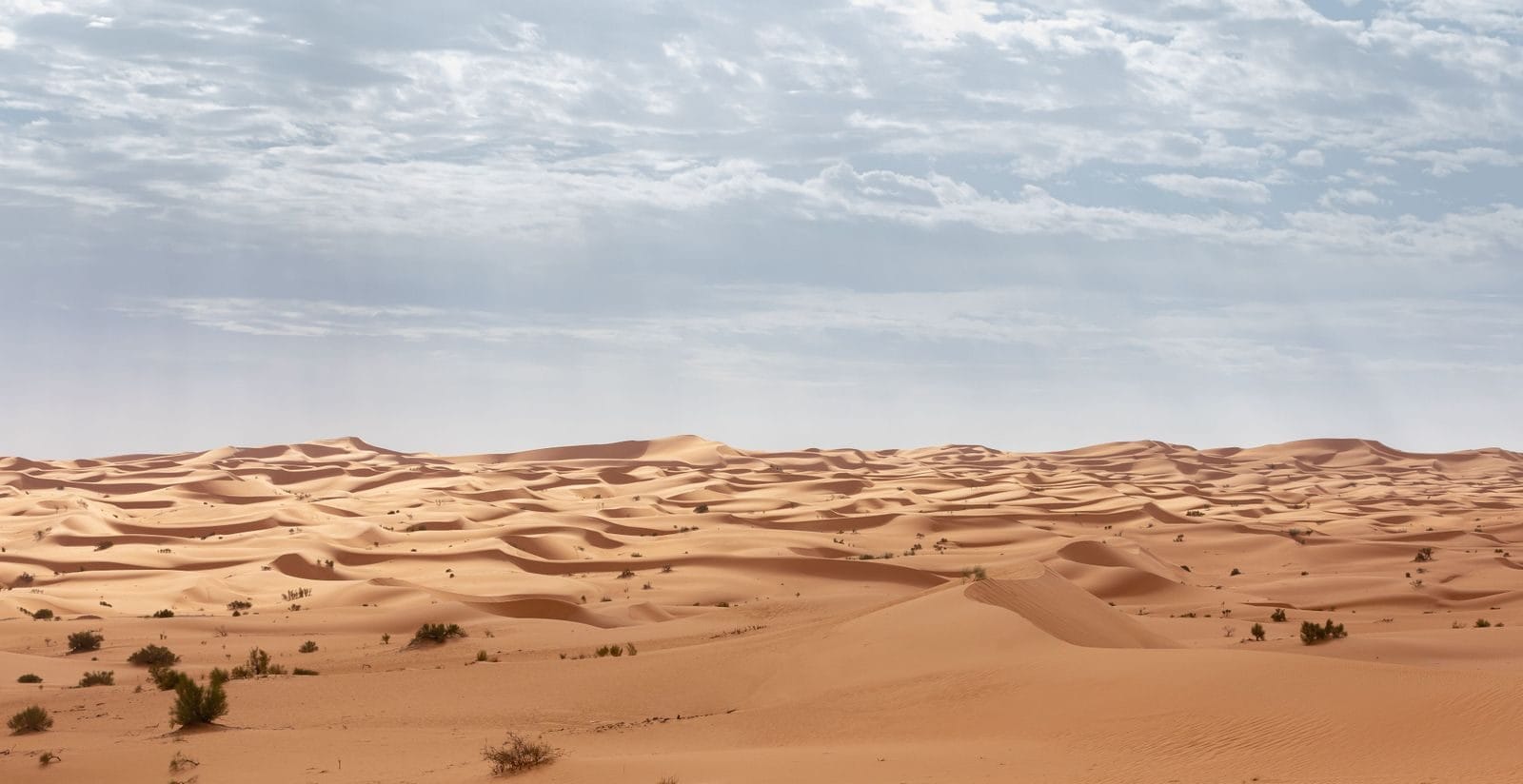
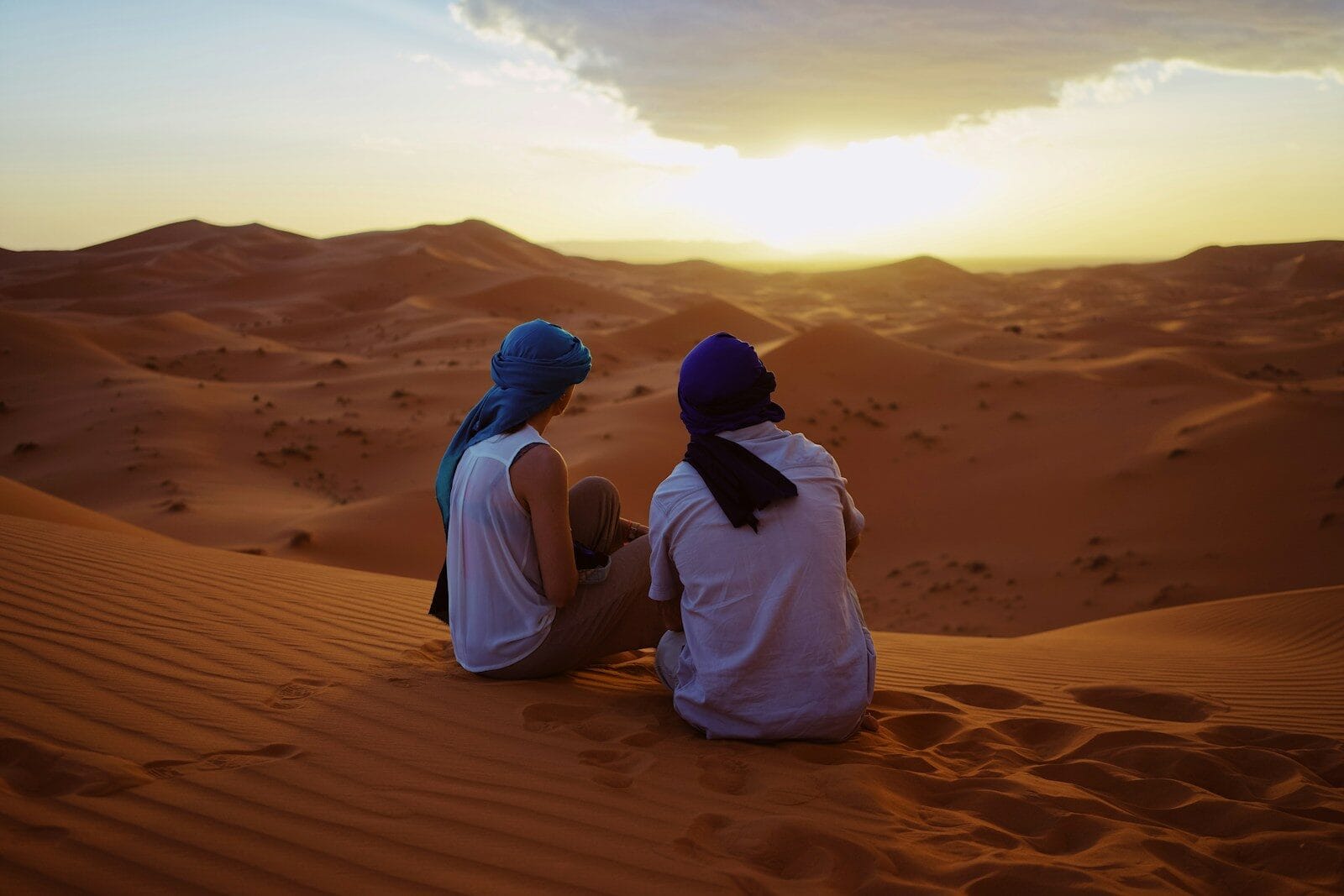
The Sahara under august weather in morocco is not a viable family destination. Daytime temperatures in Merzouga and Erg Chebbi run 42 to 48 Celsius. Sand surface temperatures pass 70 Celsius, which is hot enough to burn feet through thin sandals and cause blisters on camels that skip their overnight rest. Camel operators reduce or cancel rides during the peak weeks of August, and any operator running full daytime tours in this heat is not one you want to book with.
Need help with transportation in Morocco?
Book a reliable private driver for your Morocco family adventure today — personalised routes designed just for you.
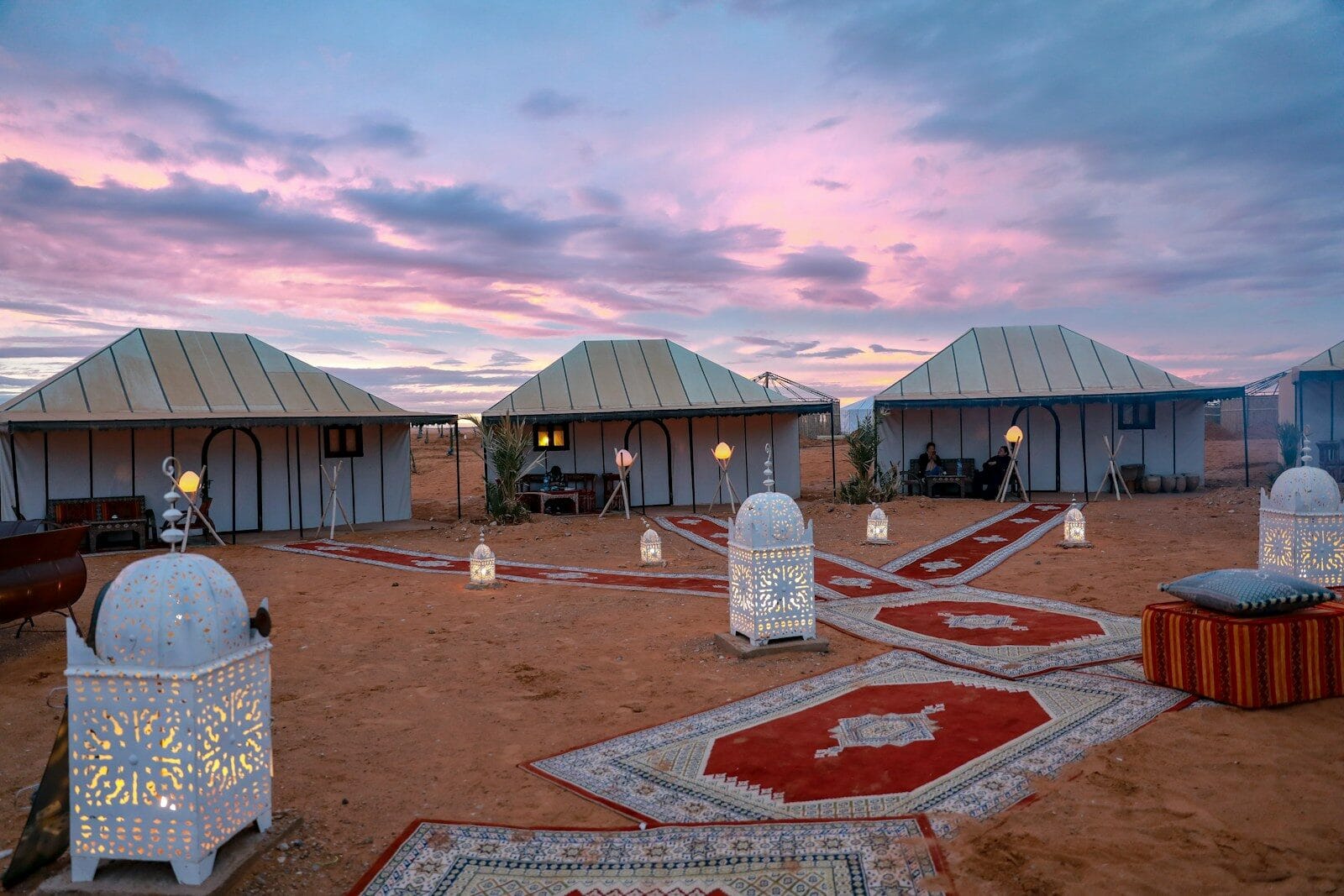
Nights in the Sahara cool to 24 to 28 Celsius. That is bearable, not comfortable. Even in a well built luxury camp with proper canvas and cross ventilation, sleeping in August in the dunes feels warm.
Water consumption doubles. A person needs 4 to 5 liters per day just to stay hydrated in Sahara August conditions, and even more if walking on dunes. Salt intake matters too.
Traveler advice from Moroccan tour guides:
- If you must go in August, keep it to a single night at a proper luxury camp
- Ride camels only at sunrise (around 6 am) and sunset (around 7:30 pm)
- Do all daytime activity indoors under canvas
- Do not attempt daytime dune walks
- Consider skipping the desert entirely and saving it for a fall or winter return
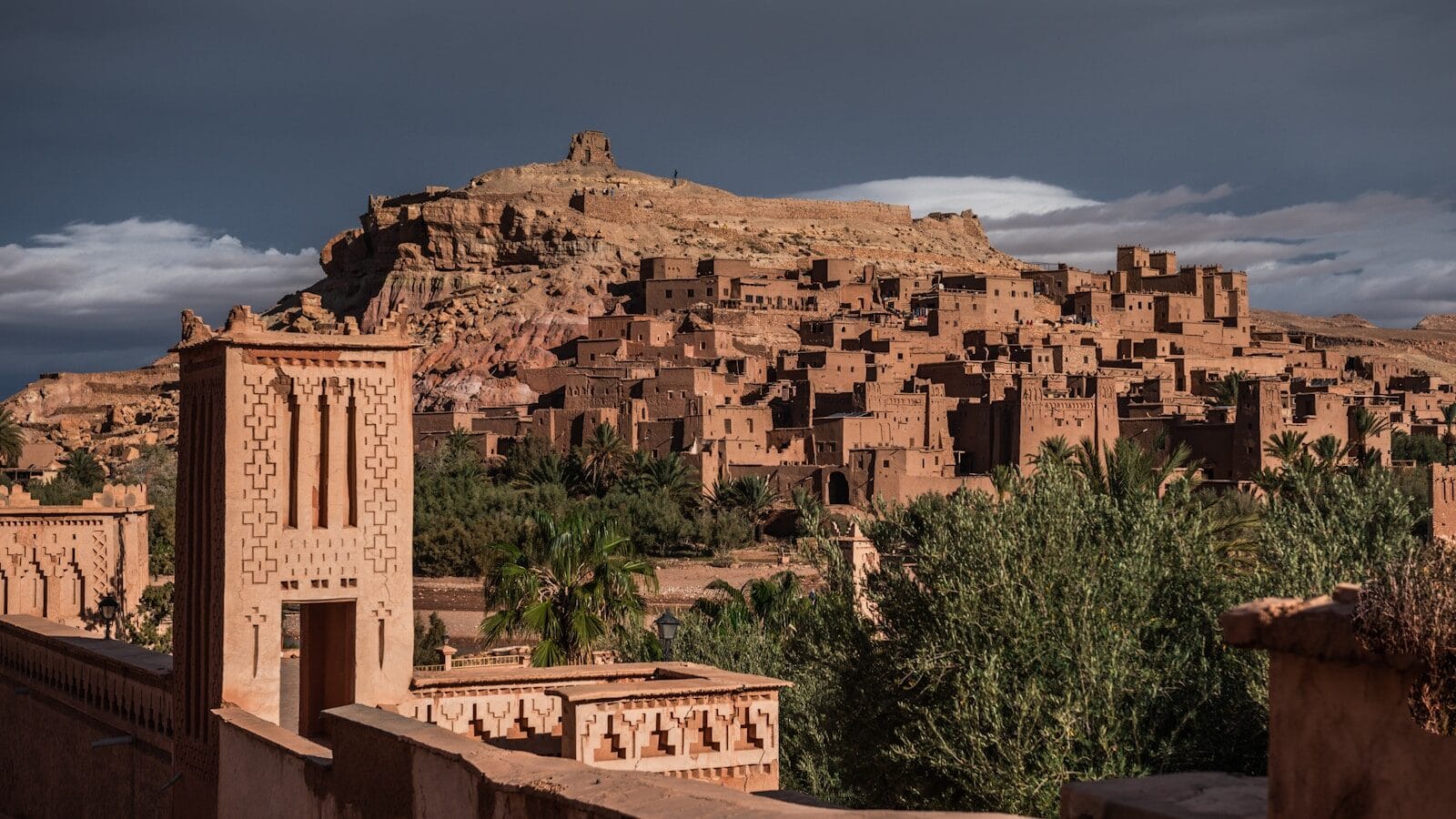
The trade for skipping is often obvious once you see it: add three more nights on the coast or in the Atlas, and the whole trip flows better. Ouarzazate and the Kasbah of Ait Ben Haddou, on the way to the Sahara from Marrakech, also become hard to sightsee at midday, so cutting the desert leg often means cutting the Ouarzazate stop too.
What to pack for August weather in Morocco
Packing for august weather in morocco is different from any other month. The heat is the dominant fact, but you also need mountain layers, beach gear, and modest medina clothing all in the same suitcase.
For the cities (Marrakech, Fes, Meknes):
- Loose cotton or linen shirts, long sleeves preferred for sun protection
- Loose linen pants or long skirts. Jeans become miserable above 35 Celsius
- Wide brimmed sun hat (a baseball cap does not protect ears and neck)
- Sunglasses with strong UV filtering
- Closed toe walking shoes for medina alleys plus sandals for evenings
- A light scarf for women, useful for religious sites and dusty afternoons
For the coast (Casablanca, Essaouira, Agadir, Asilah, Tangier):
- Swimsuits and beach towels
- A light windbreaker for Atlantic evenings, especially in Essaouira
- Sandals that handle sand and saltwater
- Sunscreen at SPF 50, reapplied every two hours
For the Atlas Mountains:
- A fleece or wool sweater for evenings
- Long pants for trail walks
- Hiking shoes with ankle support
- Sun hat and sunglasses
For the Sahara (if you go despite the heat):
- Long, loose light colored clothing that covers arms and legs
- A chèche or long scarf for sun, dust, and evening cool
- Closed shoes, not sandals, for hot sand
- A headlamp for nighttime camp use
Local dress norms hold in August the same as any other month. Both women and men dress modestly in medinas, particularly in Fes. Knees and shoulders covered is the norm during daytime sightseeing. On the beach, swimwear is fine.
Things to leave home
- Heavy denim
- Anything synthetic that traps heat
- Full backpacks (small daypacks work better)
- Anything tight fitting
Water bottles with a filter are worth carrying. Public water in Morocco is safe to drink in most cities but not universally trusted by visitors. A GRAYL or LifeStraw bottle saves you from a week of buying single use plastic.
August festivals and events in Morocco
August is quieter for major music festivals than June and July, but the country still runs a strong set of events for travelers on the coast and in the north.
Asilah Arts Festival: The strongest cultural event of the month. Held in Asilah on the northern Atlantic coast throughout much of August. Artists paint murals directly onto the whitewashed medina walls each year, and the festival includes poetry readings, music performances, and evening street events. Temperatures in Asilah stay at 24 to 28 Celsius, which makes evening outdoor events genuinely comfortable.
Moussem Moulay Abdellah Amghar: A traditional Berber tribal gathering held in August at Moulay Abdellah, south of El Jadida. Horse riders in traditional costume, fantasias (horse charging displays), tent encampments, camel markets, and thousands of local visitors. This is a local event rather than a tourist one, which is exactly what makes it interesting.
Mawlid (Prophet’s Birthday): Falls on approximately August 15 in 2026 (dates shift each year with the Islamic calendar). Mosques hold special prayers. Families prepare traditional sweets. Sufi brotherhoods hold dhikr ceremonies in Fes and Meknes with chanting and music. Not a public spectacle, but a quiet religious moment worth understanding if you are in the country during it.
Anniversary of the King and the People’s Revolution: A national holiday on August 20. Public buildings close, some shops close. Not disruptive to travel plans but worth knowing about.
Fete de la Jeunesse (Youth Day): August 21, marking the king’s birthday. Celebrations and fireworks in some cities.
Setti Fatma Moussem: A traditional festival in the Ourika valley near Marrakech, usually held in mid August. Local Berber celebration with music, dance, and food. Good pairing with an Atlas day trip.
For families, the Asilah Arts Festival is the standout. Coastal weather, family friendly outdoor art events, and enough beach nearby to fill the daytime hours.
Traveling with kids in August in Morocco
Traveling with kids in august weather in morocco requires more planning than any other month. The heat compounds every logistical decision. What works in April becomes miserable in August. What is fine for adults becomes dangerous for young kids in the Sahara.
A few rules from families who have made this trip work:
Book everything with air conditioning and a pool. Not one or the other. Both. Ceiling fans do not cut it in Marrakech in August.
Hydration is essential. Every kid gets a water bottle. Refill hourly. Even kids who are not asking for water need it.
Sunscreen is a daily ritual. SPF 50, reapplied every two hours, even on cloudy days. UPF rated sun shirts are worth the extra suitcase space.
Pace by region. Coast and Atlas can run normal family schedules. Interior cities need the early morning, midday off, evening out rhythm.
Prepare for illness. Sun sickness, dehydration, and stomach upset are all more common in August. Bring oral rehydration salts (Dioralyte or Pedialyte packets) and infant paracetamol.
An August family itinerary that works
- Days 1 to 3: Casablanca and Rabat as a soft landing on the Atlantic
- Days 4 to 6: Chefchaouen for cooler mountain air and family walks
- Days 7 to 9: Essaouira for beach days and one night in the Gnaoua district
- Days 10 to 12: Ouirgane or Imlil in the Atlas for stream walks and cooler nights
- Day 13: One overnight in Marrakech for medina exposure with morning souks and afternoon riad pool
- Day 14: Fly out from Marrakech
Skip the Sahara. Skip long daytime drives through the Middle Atlas at midday. Skip Fes if you do not have older kids who can handle heat.
Ages matter
- Toddlers under three: Stick to the coast entirely
- Kids four to seven: Coast plus Atlas, brief city stops
- Kids eight and up: Full itinerary minus the Sahara
- Teens: Full itinerary possible, with buy in for early mornings
Where to stay in Morocco in August
Accommodation choice in august weather in morocco determines whether the trip is enjoyable or exhausting. Booking a wrong riad in Marrakech in August can send you home ten days early.
12 & 14-day grand family tours
Add Chefchaouen, the Atlantic coast, or two nights in the dunes. Slow mornings, shorter drives, room for grandparents and toddlers.
Marrakech: La Mamounia, Royal Mansour, and Selman Marrakech for higher end. Riad Kniza and Riad Yasmine for mid range with real air conditioning and pools. Skip anything advertising “ceiling fans” or “cross ventilation only.”
Fes: Palais Faraj Suites and Spa or Riad Fes on the higher end. Riad Fes Maya for mid range. Ask specifically about air conditioning in each bedroom.
Chefchaouen: Lina Ryad and Spa, Dar Echchaouen, and Casa Hassan all handle August comfortably given the cooler mountain air. No pool required.
Essaouira: L’Heure Bleue Palais or Villa Maroc in the medina. Le Medina Essaouira Thalassa for a beachfront option with pool and spa. The Diabat district has apartment rentals with pools for families.
Agadir: Sofitel Agadir Royal Bay Resort, Robinson Club Agadir, and Riu Tikida Beach all cover the resort family segment. Kids clubs, direct beach access, and multiple pool zones.
Tangier: Hotel Nord Pinus Tanger for design lovers, or Villa Josephine for a quieter garden setting.
Atlas Mountains: Kasbah Tamadot in Asni or Kasbah Bab Ourika above the Ourika valley for higher end. Domaine de la Roseraie in Ouirgane for mid range with a great pool.
Booking timing in August is aggressive. European family bookings for Essaouira, Agadir, and Chefchaouen fill by April or May. Marrakech riads with good air conditioning book two to three months out for the second half of August. Coastal hotels raise prices 30 to 50 percent above shoulder season rates.
Prices explain why people ask why Morocco is cheap in August. It is not, on the coast. It is cheaper in the interior cities like Marrakech and Fes where locals and Europeans avoid the heat, creating a two tier hotel market. Marrakech riads can drop rates in mid August to fill rooms.
Photography in Morocco in August
If you are bringing a camera, the august weather in morocco gives you long days, harsh midday light, and dramatic golden hours at each end of the day. Sunrise around 6:15 am and sunset around 8:00 pm to 8:30 pm give two extended golden hour windows.
Best light windows:
- 5:45 to 8:30 am: Coastal fishermen at Essaouira port, medina walks, Atlas mornings
- 6:30 pm to 8:30 pm: Marrakech rooftops, Chefchaouen blue walls, coastal sunsets
- After dark: Milky way in the Atlas, though not the Sahara (skip in August)
Spots worth scouting for August specifically:
- Chefchaouen at dawn, before tour groups arrive
- Essaouira ramparts at sunset
- Asilah medina murals during the arts festival
- Atlas cedar forests near Azrou with Barbary macaques
- Casablanca Corniche and the Hassan II Mosque at blue hour
- Marrakech rooftops looking at the Atlas Mountains in the far distance (rare but visible on clear evenings)
Dust becomes a photography factor in the interior in August. Wind picks up in the afternoons and lifts dust that clings to lenses and sensors. A sealed camera bag and simple lens cloth handle most of it. Sand at the coast is finer and stickier than most travelers expect.
Drone use requires a permit from the Ministry of the Interior. Very few travelers get one, and customs can confiscate drones on arrival. Skip the drone unless you have documented paperwork.
Final thoughts on august weather in Morocco
August weather in morocco is a challenge to plan around, not a reason to skip the country entirely. Travelers who match their itinerary to the temperature end up with strong trips. Those who fight it end up broken by day four.
The formula that works most often for families: two days on the Atlantic coast to land softly, three days in Chefchaouen or the Rif for cool mountain air, three days in Essaouira for beach and Atlantic breeze, three days in the Atlas Mountains at Imlil or Ouirgane, and one overnight in Marrakech to see the medina without setting up camp there. Skip the Sahara until October at the earliest.
Book everything early. August is peak season on the coast, and the good riads with real air conditioning and pools in Marrakech book two to three months out. Insurance matters more in August than other months because heat related illness is a real risk.
Pack light layers, sun protection, and modest medina clothing. Drink twice as much water as you think you need. Move at the Moroccan pace, which is early and late, not middle of the day.
Morocco Vacation Planner designs Private Family Tours in Morocco for Kids, Teens & Toddlers. Plan your perfect family trip to Morocco with custom private tours built for families traveling with toddlers, kids, and teens. You get family friendly experiences, trusted local guides, and handpicked comfortable stays from the medinas all the way to the Sahara.
FAQs
What is the hottest month in Morocco?
August is the hottest month in Morocco, followed closely by July. The august weather in morocco pushes Marrakech and Fes past 40 Celsius (104 Fahrenheit) on multiple days per month, and Sahara towns like Merzouga can hit 48 Celsius (118 Fahrenheit). Coastal cities and the Atlas Mountains stay much cooler, which is why locals migrate to the coast during August.
How hot is Casablanca in August?
Casablanca is one of the coolest major cities in Morocco during August. Daytime highs sit at 25 to 28 Celsius (77 to 82 Fahrenheit) thanks to the Atlantic Ocean and sea breezes. Nights drop to 18 to 20 Celsius. Sea temperature reaches its yearly peak at 23 to 24 Celsius, making it the best month for family beach swimming in the city.
Is Marrakech unbearable in August?
Marrakech in August is challenging but not unbearable if you plan around the heat. Average highs sit at 36 to 38 Celsius (97 to 100 Fahrenheit) with heat waves pushing past 45 Celsius. The trick is early morning sightseeing before 10 am, a full midday break at a riad with a pool and air conditioning, and evening returns to the medina after 6 pm. The august weather in morocco rewards visitors who follow the local rhythm.
Why is Morocco so cheap in August?
Morocco is not universally cheap in August. Coastal hotels in Essaouira, Agadir, and Tangier hit their yearly price peaks because European family holidays fall in August. Interior cities like Marrakech and Fes drop prices because heat drives most tourists away. Interior riads with proper air conditioning can be found at 30 to 40 percent off shoulder season rates.
What clothes should I pack for Morocco in August?
Pack loose, lightweight cotton or linen clothing in light colors. The august weather in morocco calls for long sleeves and pants for sun protection, a wide brimmed hat, strong sunglasses, closed shoes plus sandals, a swimsuit, and one warm layer for cool Atlas nights or Atlantic evenings. A scarf helps in religious sites and dusty afternoons.