Weather in Morocco in July: A Region-by-Region Guide for Travelers
The weather in Morocco in July is the country at full summer volume. Marrakech at 4 pm in early July: 41 Celsius, medina walls radiating heat, cats sleeping in shaded doorways. Casablanca the same afternoon, 200 kilometers to the northwest: 26 Celsius, a light Atlantic breeze, families walking the Corniche in short sleeves. Same country, same day, a fifteen degree gap.
This guide walks you through what July looks like region by region, with real temperatures in Celsius and Fahrenheit, how to plan a family trip around the heat rather than through it, which festivals land this month, what to wear, and where to stay so the summer works in your favor.
July is the hottest month of the year for most of the country. It is also one of the most rewarding months to visit if you make two decisions correctly: which regions to include and which pace to follow. The travelers who get those right leave loving Morocco. The travelers who try to power through a Marrakech medina at noon come home swearing they will never come back.
Quick takeaways
- Weather in Morocco in July is hot inland, mild on the coast. Marrakech and Fes hit 38 to 43 Celsius (100 to 109 Fahrenheit), while Casablanca and Essaouira stay around 24 to 28 Celsius (75 to 82 Fahrenheit).
- The Sahara is essentially off limits. Merzouga and Erg Chebbi run 42 to 46 Celsius (108 to 115 Fahrenheit) at midday. Save the desert for spring or autumn.
- Rain is nonexistent. Most of the country sees less than 5 mm for the entire month, with 10 to 13 hours of sunshine per day.
- The coast is the smart move. Essaouira, Casablanca, Agadir, and Tangier stay comfortable thanks to Atlantic breezes and sea temperatures of 20 to 23 Celsius.
- The Atlas Mountains stay cool. Daytime highs sit at 18 to 26 Celsius at altitude, making July one of the best hiking months of the year.
- Festivals fill the calendar. Timitar in Agadir, Jazzablanca in Casablanca, and the Marrakech Popular Arts Festival often land in July, depending on the year.
- Pacing beats packing. Early morning sightseeing, midday pool retreat, evening return. Skip that rhythm and the trip becomes a slog.
Is July a good time to visit Morocco?
Yes, July can be a good time to visit Morocco, but only if you plan around the coast, the mountains, and the northern cities rather than the interior and the Sahara. The Atlantic coast is at its best in July, with Casablanca and Essaouira sitting comfortably in the mid 20s Celsius while much of Europe is roasting.
The reason July works when you match regions correctly is predictability. Rain almost disappears across the country. Sunshine runs 10 to 13 hours a day. Flights within Europe are frequent and often cheap. School holidays open up longer trips for families.
There are real reasons it may not work. Marrakech in July regularly hits 40 Celsius (104 Fahrenheit). Fes runs almost as hot. Sightseeing at midday becomes dangerous with kids or older travelers. The Sahara becomes an extreme heat zone where daytime temperatures push past 45 Celsius. If those places are the main reason you want to come, wait for April or October.
Practical takeaways:
- Pick the coast plus the mountains for the most comfortable July trip
- Limit Marrakech to two or three nights with pool access built in
- Skip the Sahara in July unless you are heat hardened and moving fast
- Move sightseeing to sunrise and sunset windows in inland cities
- Book flights and hotels early, July is peak European summer season
For families weighing the choice, Morocco Vacation Planner designs private July itineraries that prioritize coastal riads, mountain villages, and short inland stays, so kids stay happy.
Weather in Morocco in July by region
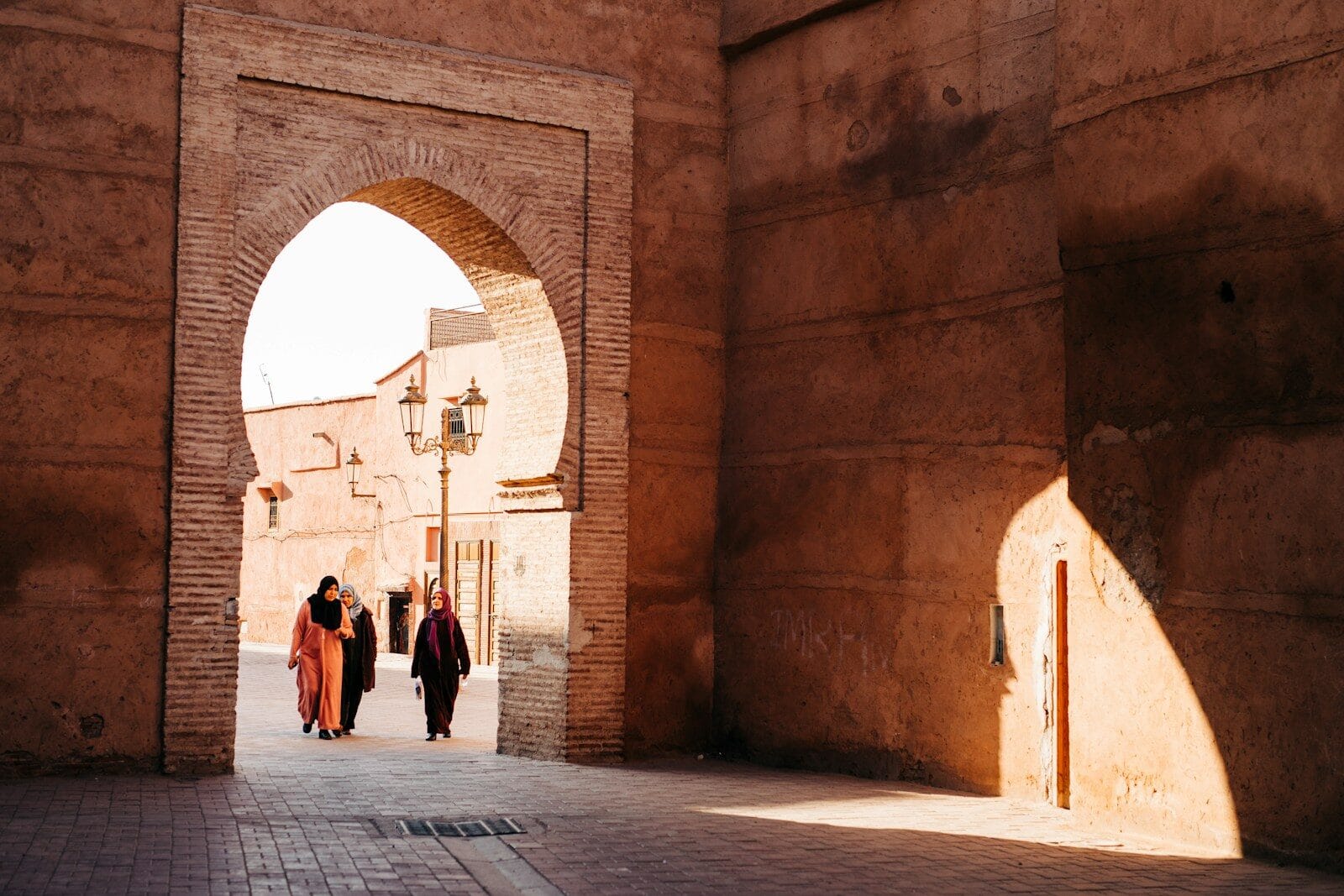
The weather in Morocco in July splits into four temperature zones, and picking the wrong one for the wrong days can ruin a trip. The Atlantic coast stays mild. The interior cities become brutal. The Atlas Mountains offer real relief. The Sahara turns into a heat dome.
Rainfall across the country totals under 5 millimeters for the entire month in most regions. Fes averages 2 days of any measurable rain. Casablanca often sees zero. You do not need to plan around weather in the traditional sense. You need to plan around heat.
Here is the practical breakdown.
Atlantic coast (Casablanca, Rabat, Essaouira, Agadir, Tangier): Daytime highs 22 to 30 Celsius (72 to 86 Fahrenheit). Ocean breeze steady. Sea temperatures 20 to 23 Celsius, swimmable for adults, refreshing for kids.
Interior cities (Marrakech, Fes, Meknes): Daytime highs 34 to 43 Celsius (93 to 109 Fahrenheit). Overnight lows 18 to 25 Celsius (64 to 77 Fahrenheit). Heat compounds through the week.
Atlas Mountains (Imlil, Ifrane, Ouirgane): Daytime highs 18 to 28 Celsius (64 to 82 Fahrenheit). Nights cool to 5 to 15 Celsius at altitude. Best hiking month of the year.
Sahara (Merzouga, Zagora, Ouarzazate gateway): Daytime highs 40 to 46 Celsius (104 to 115 Fahrenheit). Overnight lows 22 to 28 Celsius. Genuinely dangerous at midday.
Humidity varies more than most people expect. Casablanca and coastal cities run 65 to 80 percent humidity, which makes 26 Celsius air feel slightly warmer. Marrakech and interior cities sit at 25 to 35 percent humidity, which is why 40 Celsius in the dry heat is more manageable than it sounds. The shade drops the felt temperature by 10 degrees or more.
Wind picks up in the afternoons across most of the south. Essaouira is famous for it. The Alizés winds sometimes blow for weeks straight, which is why kite surfers love the coast in July. Marrakech gets the tail end, which brings brief dust storms during heatwaves.
Marrakech in July
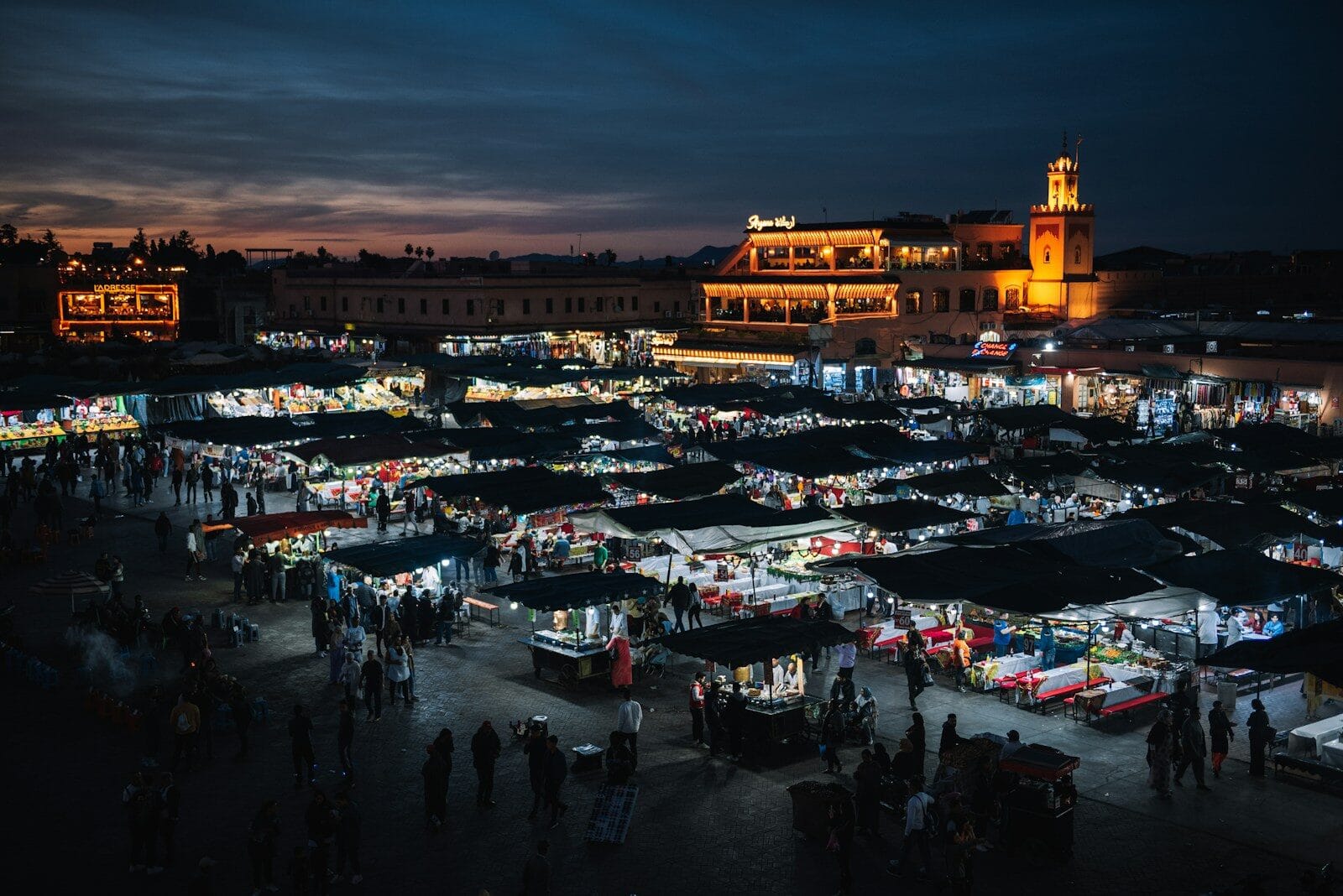
Marrakech is where most travelers meet the weather in Morocco in July at its most brutal. Average daytime highs sit at 38 Celsius (100 Fahrenheit) in early July and climb to 41 or 42 Celsius by mid month. Heatwaves push past 45 Celsius (113 Fahrenheit) every few summers. Nights drop to 20 to 25 Celsius (68 to 77 Fahrenheit), which is warm but survivable.
Sightseeing outside sunrise and sunset windows becomes physically unpleasant. The red medina walls store heat all day and radiate it into the alleys after dark. The souks stay busy in the evening but often close down during the afternoon peak.
A day that works:
- 6:30 to 10:00 am: Walk the medina, hit the souks before the heat and crowds arrive
- 10:00 to 17:00: Retreat to your riad. Read, swim, nap, eat lunch on a shaded terrace
- 17:00 to 22:00: Back out for Jemaa el Fna, gardens, dinner
The riad choice is everything in July. A budget riad with ceiling fans and no pool will make you miserable by day two. Real air conditioning and a plunge pool are worth the extra 100 to 300 dirhams per night. The Marrakech Popular Arts Festival often runs in July, with outdoor evening events at Bahia Palace and El Badi Palace, which is one of the few reasons to be out in the streets past 9 pm.
10-day Morocco family tour
Imperial cities · High Atlas · one night under Saharan stars. Family-paced, private driver, kid-tested stops.
Where to escape the Marrakech heat
The Ourika Valley sits 60 km southeast of the city at altitude. Temperatures drop 10 to 12 degrees. Setti Fatma is a village where kids splash in mountain streams while the city bakes. Round trip in a day, back to the riad pool for evening. A lot of families do this twice in a five night Marrakech stay.
Imlil and the High Atlas take longer to reach (90 minutes) but drop the temperature further. Overnight stays at Kasbah du Toubkal or one of the smaller Berber guesthouses run 15 degrees cooler than Marrakech at night, which is what turns a hot summer trip into a comfortable one.
Casablanca and the Atlantic coast in July
The Atlantic coast handles the weather in Morocco in July better than any other region. Casablanca sits at 22 to 28 Celsius (72 to 82 Fahrenheit) for most of the month. Rabat runs similar. Essaouira, thanks to the constant Atlantic winds, stays even cooler at 21 to 24 Celsius (70 to 75 Fahrenheit).
Mornings on the coast start foggy in early July as the cool ocean meets warm land. The marine layer burns off by 11 am and the rest of the day is sunny. Sea temperatures run 20 to 23 Celsius (68 to 73 Fahrenheit). Not tropical, but swimmable, and kids adjust to it faster than parents do.
Casablanca: The city itself is a working port more than a beach destination, but the Corniche is where locals live in July. Long stretches of restaurants, ice cream sellers, families walking after sunset. Hassan II Mosque at 6 pm during blue hour is one of the best photos you will get on the whole trip. Air conditioning is standard in most Casablanca hotels, which matters when the humidity climbs.
Rabat is 90 km north. Slightly cooler, calmer, easier to explore. One night here is enough for most itineraries.
Essaouira is 175 km west of Marrakech. The Alizés winds keep temperatures pinned in the low 20s and the walled medina is easy to walk even at midday. Beach, seafood grilled at the port, riads with rooftop terraces. If your trip is only inland cities plus Essaouira, you have almost solved the July heat problem.
Agadir further south is the resort answer. Long beach, big hotels with pools and kid clubs, average July highs at 27 Celsius. Families who want the least driving and the most pool time land here.
Tangier at the northern tip stays the coolest of the major cities. Average highs 25 Celsius (77 Fahrenheit). Looking across at Spain in the evening breeze, Tangier feels more Mediterranean than African.
Is Casablanca too hot in July? No, not by Moroccan standards. It is the most comfortable major city in the country during July heat, largely because the Atlantic keeps daytime temperatures 10 to 15 degrees below Marrakech.
Fes and the imperial cities in July
Fes sits in a wide basin at 410 meters elevation, and the weather in Morocco in July hits it hard. Average highs run 33 to 37 Celsius (91 to 99 Fahrenheit) with occasional pushes past 40. Nights cool to 17 to 21 Celsius (63 to 70 Fahrenheit), a bigger day night swing than Marrakech.
The Fes medina is challenging in July for one specific reason: the alleys are narrower and steeper than Marrakech, and there is almost no open square to catch a breeze. The tanneries smell stronger in the heat. If tanneries are on your list, go at 8 am, not 11.
Meknes is an hour west of Fes at slightly higher elevation. A degree or two cooler. Easier to walk. A better single day stop with younger kids than trying to add a full Fes day to a July itinerary.
Volubilis, the Roman ruins between Fes and Meknes, becomes brutal by 10 am. Open sun, no shade, no breeze. Sunrise visits are worth setting an alarm for. The site is at its most photogenic at 6:30 to 8 am, and empty. Tour buses start arriving after 10.
Which imperial city works best in July
If you can only pick one imperial city in July, Meknes with a Volubilis morning stop is the winner. Fes deserves a proper visit but works better in shoulder season. Marrakech is worth the heat if you plan the day right and pick a good riad. Rabat is more comfortable but has less to see for tourists.
The big Fes Festival of World Sacred Music is a June event, so July travelers will miss it. The Marrakech Popular Arts Festival, when it lands in July, is worth pairing with a Marrakech visit for evening cultural events in cooler courtyards.
The Atlas Mountains in July
The Atlas Mountains are the reason a lot of experienced Morocco travelers still love visiting in July. Daytime highs at 1,500 to 2,000 meters elevation sit at 20 to 26 Celsius (68 to 79 Fahrenheit). Nights cool to single digits above freezing at altitude. Bring a sweater. Bring a real jacket if you sleep above 2,500 meters.
The Toubkal trek peaks in July and August. Snow has fully cleared from the standard summit route, days are long, and the refuge huts are staffed and operating. A guide is required if you have not trekked at altitude before. Two to three day trips are the norm, with mountain guides available in Imlil at reasonable rates.
Day hikes from Imlil to villages like Aremd, Sidi Chamharouch, and the Toubkal refuge base are doable with kids over eight if you start at 7 am. Pack sun protection. The mountain UV at altitude burns faster than you would expect, even at 25 Celsius.
Ifrane in the Middle Atlas stays the coolest of the mountain towns, thanks to the pine and cedar forests around it. Daytime highs 22 to 28 Celsius. The cedar forest around Azrou is where the Barbary macaques live, and July is a good month to see them in the shade of the trees.
Ouirgane and the Amizmiz valley are the quiet Atlas base camps for families who want mountain scenery without a serious hike. Guesthouses with pools, walking trails, and lunch on shaded terraces. Two nights here plus one night in Imlil covers the mountain experience.
The catch is driving. Atlas roads wind, and July afternoons can bring dust or short thunderstorms in the higher elevations. Morning departures are safer than late day ones. If you are going up to Imlil, aim to arrive by 3 pm at the latest.
The Sahara in July: why most travelers should wait
Need help with transportation in Morocco?
Book a reliable private driver for your Morocco family adventure today — personalised routes designed just for you.
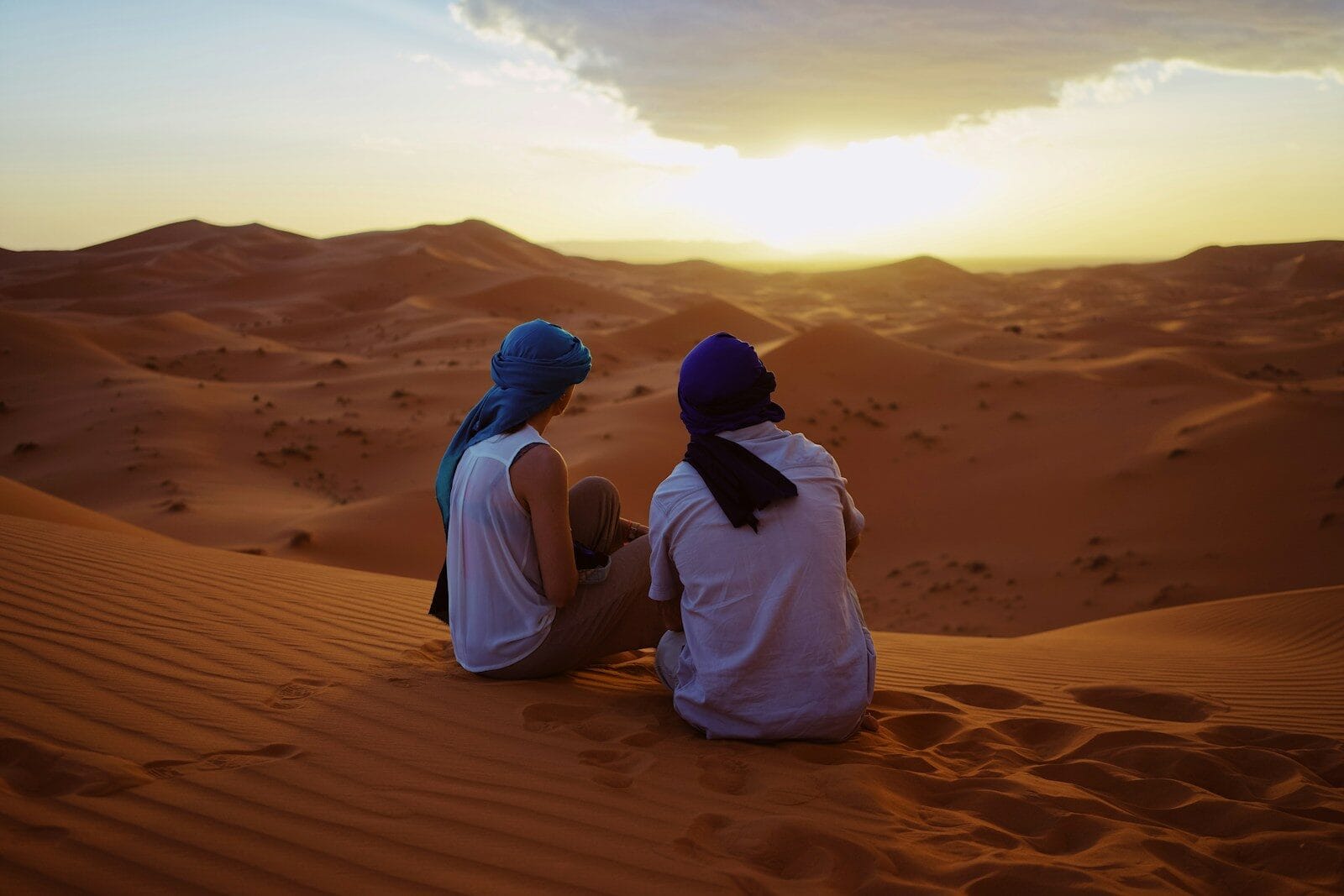
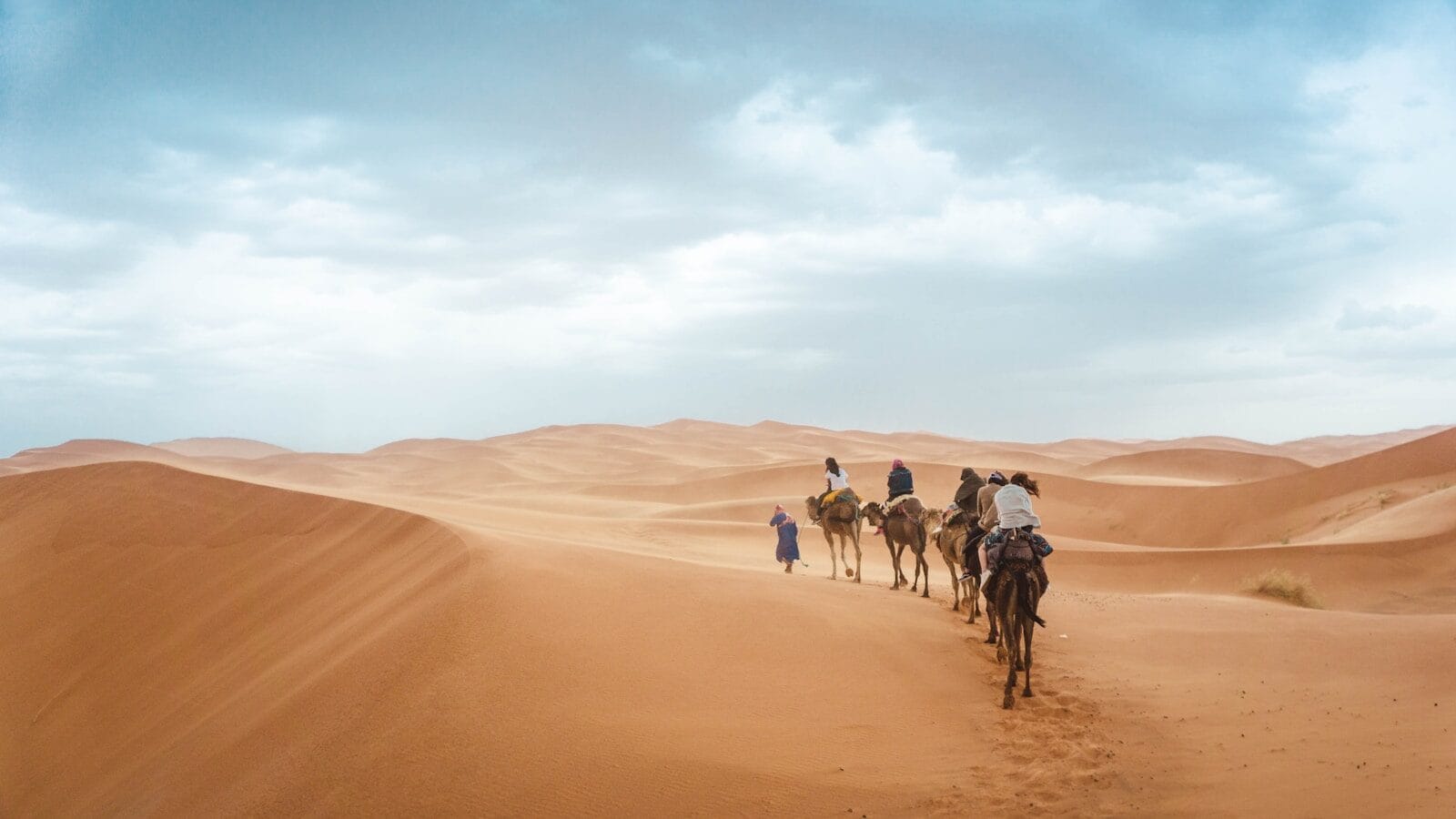
The Sahara during the weather in Morocco in July is the country at its most extreme. Merzouga and Erg Chebbi run daytime highs of 42 to 46 Celsius (108 to 115 Fahrenheit). Sand temperatures at midday reach 60 Celsius or higher, hot enough to blister bare feet through a sandal.
Most desert tour operators reduce their July programs significantly. Camel rides move to sunrise and sunset only. Overnight camps continue to operate, but they run on a reduced daytime schedule with siesta hours between 11 and 5.
If you insist on the Sahara in July, here is how to make it work:
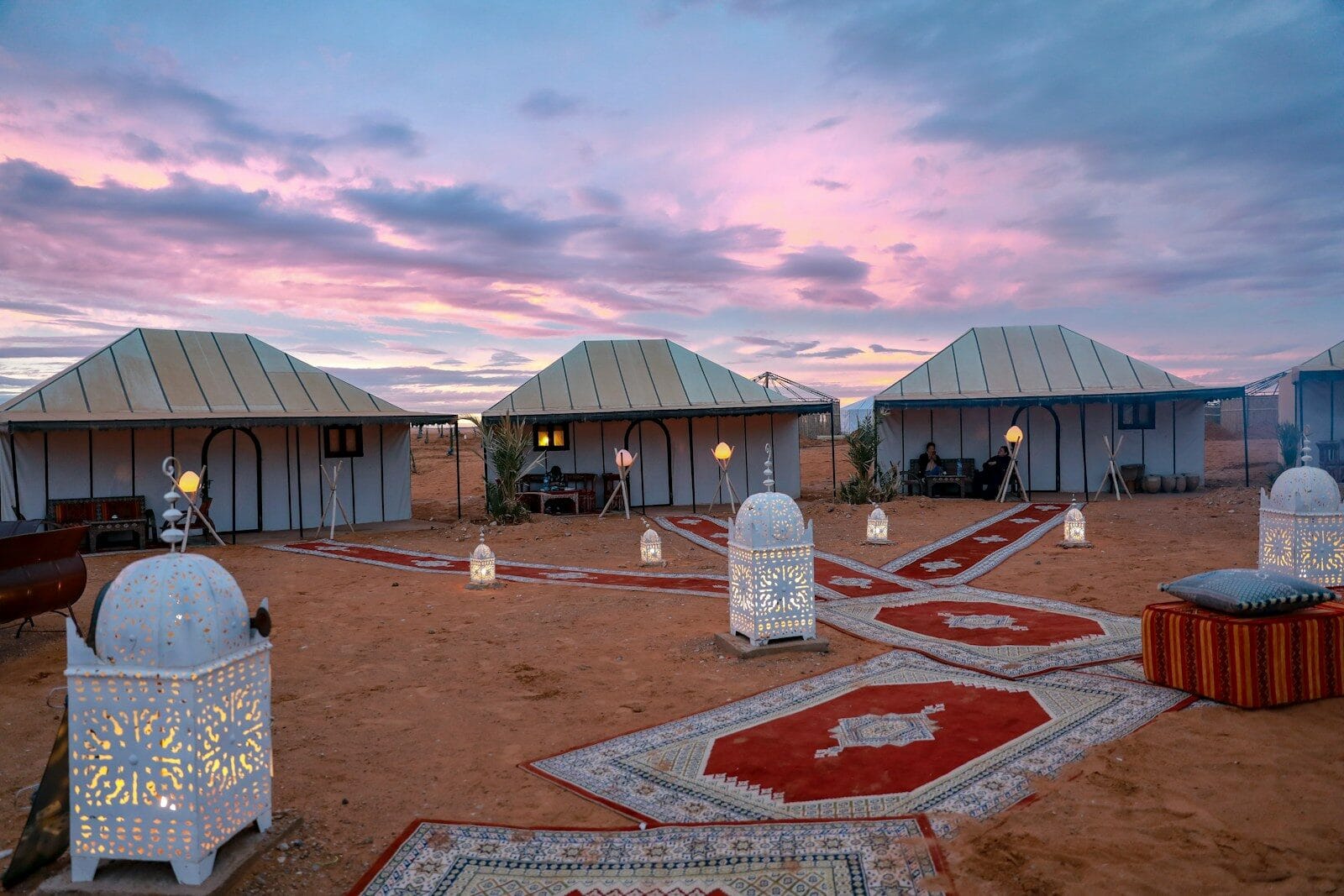
- Book a proper luxury camp, not a budget one. Better shade structures, better ventilation, real bedding
- Stay one night, not two. Two nights of that heat is one too many with kids
- Do a sunset camel ride, not a daytime one. Sunrise if you can wake up early enough
- Drink twice as much water as you think you need. Add electrolytes
- Skip the daytime dune walking. The photos are not worth the risk of heatstroke
- Bring a headlamp, not a phone flashlight. Camp lighting is minimal
For most families, the honest answer is to save the Sahara for October, when temperatures drop to a comfortable 25 to 30 Celsius by day and stars are still bright at night. The desert is one of the most memorable parts of a Morocco trip, and pushing kids through it in July heat can turn the experience negative.
If your trip window is fixed to July, replace the Sahara with a longer Atlas stay or a couple of extra nights in Essaouira. Both are more rewarding than pushing through Merzouga heat.
What to pack for the weather in Morocco in July
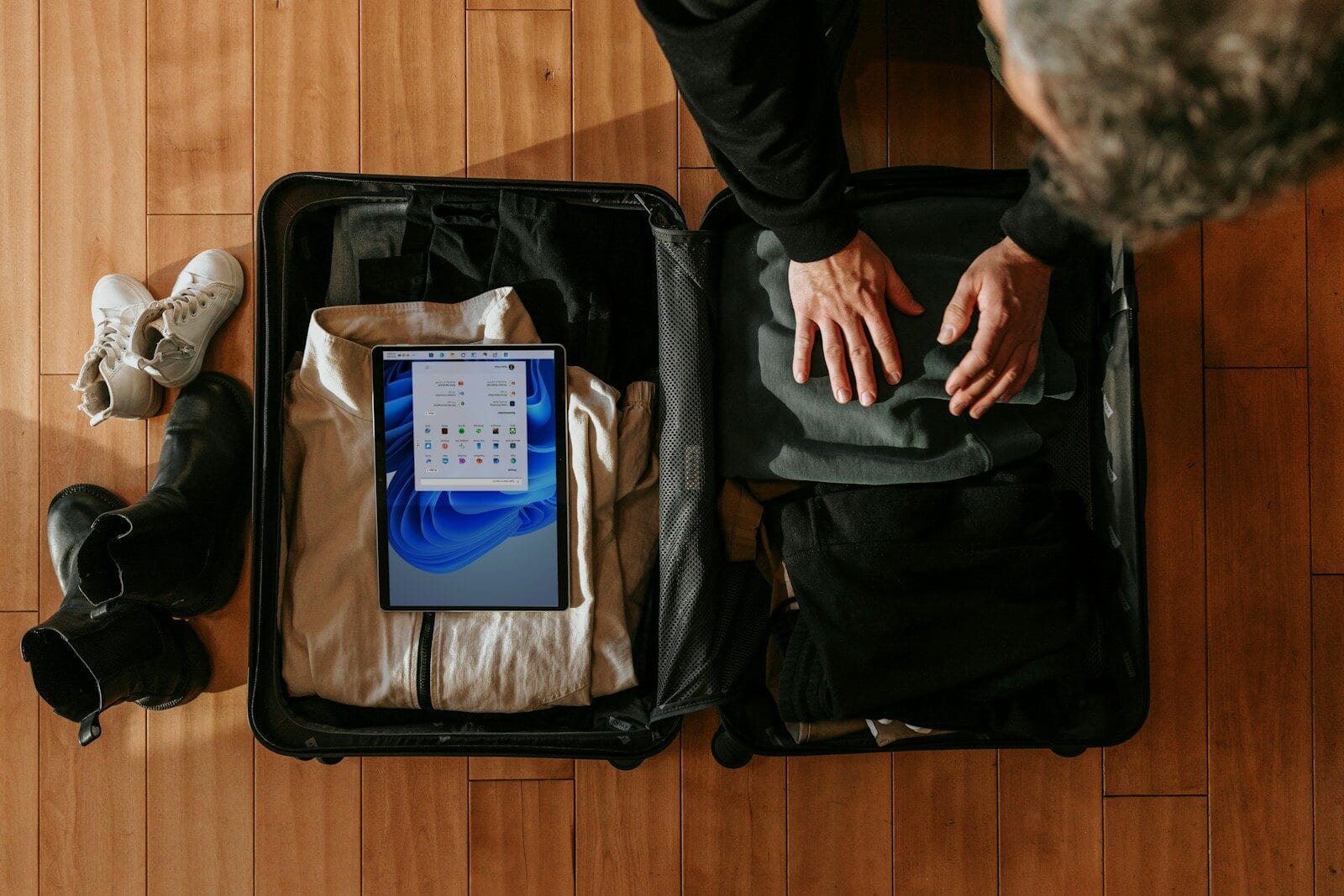
Packing for the weather in Morocco in July comes down to three principles: light colors, loose fits, breathable fabrics. Skip the polyester. Leave the denim mostly at home. The right suitcase makes the difference between an enjoyable trip and a sweaty one.
For the cities (Marrakech, Fes, Meknes):
- Loose cotton or linen shirts, long sleeves recommended for sun protection
- Lightweight linen or cotton pants, or long skirts for women
- Breathable underwear, merino wool or good synthetic
- Walking sandals plus one closed shoe for uneven medina stones
- Wide brimmed sun hat
- Sunglasses with strong UV filtering
- A light scarf, useful for sun and for religious sites
For the coast (Essaouira, Casablanca, Agadir, Tangier):
- Swimsuits and quick dry towel
- A light windbreaker for Atlantic evenings, the Essaouira wind is real
- Sandals that handle sand and saltwater
- Sunscreen at SPF 50, coastal sun is deceptive
For the Atlas Mountains:
- A proper warm layer for evenings, sometimes a fleece
- Hiking shoes for walks
- Long pants for trail brush
- Sun hat and sunglasses
For the Sahara (if you go):
- Long, loose clothing in light colors
- Closed shoes for hot sand
- A chèche or long scarf for sun and dust
- A small headlamp for camp use at night
- Electrolyte sachets for water bottles
Dress norms matter. Both women and men dress modestly in Fes and inland cities. Shoulders and knees covered is the standard for medina walking. On the coast and at resorts, swimwear is fine.
What to leave at home
- Heavy denim
- Synthetic athletic wear that traps heat
- Big hiking boots for city days
- Anything black outside the coast
Festivals in Morocco in July
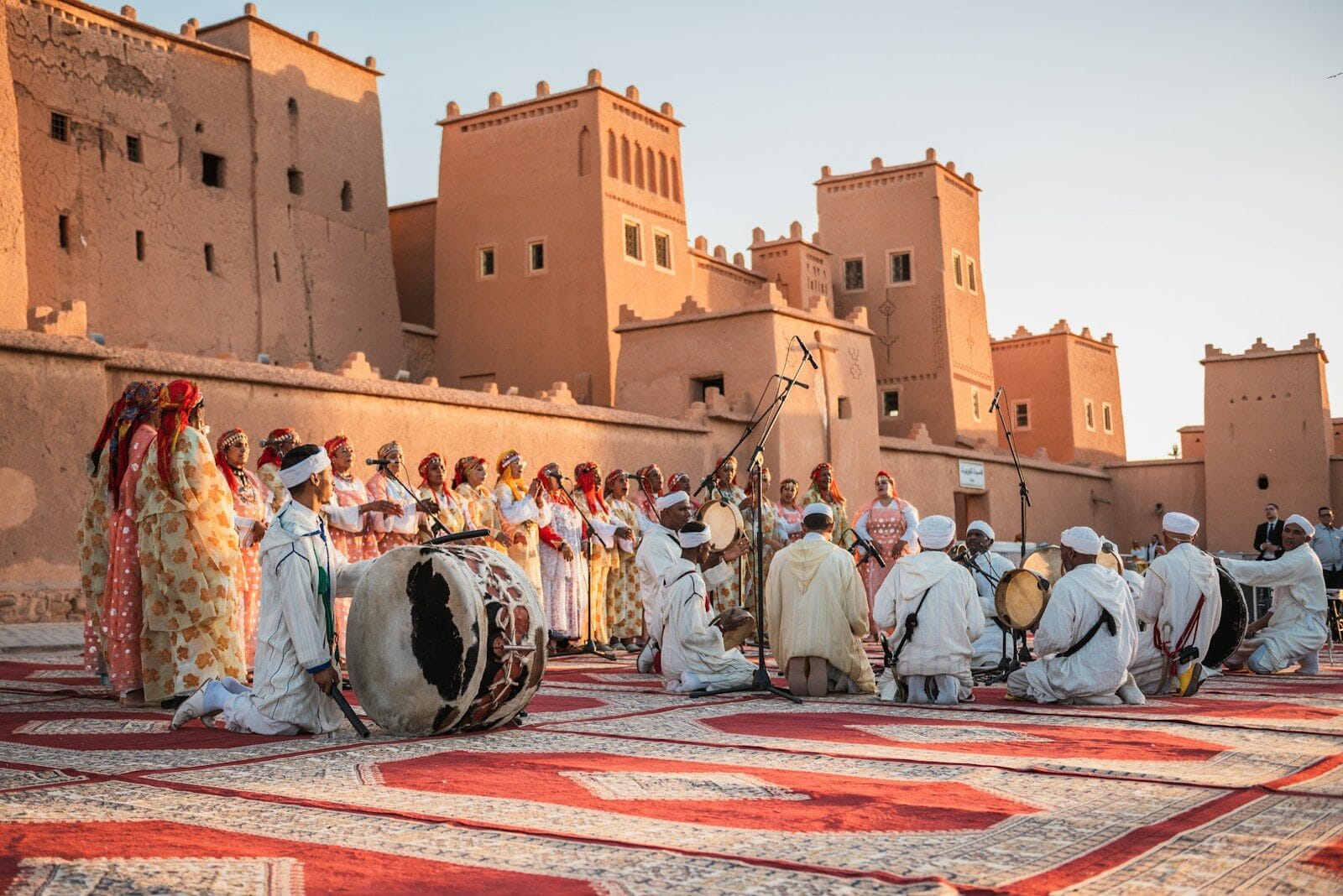
July is a heavy festival month, especially for music. Several of the country’s biggest cultural events land in this window.
Timitar Festival, Agadir: Usually held in early to mid July. Amazigh (Berber) music at its heart, with international artists rounded out for the main stages. Free concerts on the beachfront in the evenings. Family friendly with older kids. Agadir stays comfortable at 27 Celsius, so outdoor concerts run without heat problems.
Jazzablanca, Casablanca: Runs in early to mid July most years. International jazz, blues, and world music at Anfa Park and other Casablanca venues. Not free, but ticket prices are reasonable for a festival of this scale.
Marrakech Popular Arts Festival: Held in July in some years. Traditional Moroccan music, dance, and craft demonstrations at Bahia Palace and El Badi Palace. Evening events. Quieter than the big music festivals but strong on cultural depth.
Mawazine in Rabat: Sometimes bleeds into early July, depending on the calendar. One of Africa’s largest music festivals by attendance. Free outdoor concerts with international headliners.
For families, Timitar in Agadir is the best combined weather and cultural pick. Cool coastal evenings, free concerts, easy pace. Timitar plus a beach day plus a walk through the old kasbah of Agadir Oufella at sunset makes a strong July weekend. The weather in Morocco in July’s coastal cities pairs well with these outdoor evening events, since concerts run into the night without the inland heat problem.
Smaller regional Berber moussems (religious and cultural gatherings) happen throughout July in the Atlas and southern regions. These are local events, not tourist ones, and the best way to hear about them is by asking a Berber guide once you arrive in the mountains.
Family travel and the weather in Morocco in July
The weather in Morocco in July can make or break a family trip, depending on how you build the itinerary. Kids handle heat worse than adults, dehydrate faster, and lose sightseeing patience at 40 Celsius three hours before their parents do.
A few rules from families who have done this:
Build in real rest. Plan one full afternoon off per three travel days. A real pool afternoon, not a hotel room afternoon.
Hydration is essential. Water everywhere, refill from sealed bottles, encourage drinking even when no one is thirsty.
Sun protection from day one. A first day sunburn can wreck the next four. SPF 50, hats, light long sleeves for travel days.
Match pace to region. Marrakech and Fes need early morning plus midday off plus evening out. Coast is fine on a normal schedule. Mountains are fine on a normal schedule. Sahara is dawn and dusk only.
12 & 14-day grand family tours
Add Chefchaouen, the Atlantic coast, or two nights in the dunes. Slow mornings, shorter drives, room for grandparents and toddlers.
Activities kids love in July
- Atlas day trips with stream wading near Setti Fatma or Amizmiz
- Riad pools in Marrakech as the midday centerpiece, not the exception
- Essaouira windsurfing lessons for older kids and teens
- Camel rides on Agadir or Essaouira beach instead of the Sahara
- Cedar forest walks near Azrou for macaques and cool temperatures
- Sunset dinners on Marrakech rooftops when temperatures finally drop
What does not work in July with kids
- Marrakech medina walking between 11 am and 5 pm
- Long inland driving days without proper AC
- Sahara overnight stays for kids under seven
- Full day outdoor sightseeing without pool access
The pattern that works most reliably: two days on the coast, two in Marrakech with a serious riad pool, two in the Atlas Mountains, one flex day. A week feels comfortable. Ten days lets you add Fes for a night or Essaouira for a weekend around a Timitar visit.
Where to stay in Morocco in July
Accommodation choice changes how you experience the weather in Morocco in July more than any other decision. A bad pick amplifies the temperature. A good one makes 40 Celsius feel manageable.
Marrakech: Choose a riad with a real plunge pool, proper air conditioning (not just ceiling fans), and shaded courtyards. Mid range picks include Riad Dar Anika, Riad Jardin Secret, and Riad Kniza. Higher end options like La Mamounia and Royal Mansour have full sized pools and cold air conditioning.
Fes: Riads in the old medina with rooftop terraces and dipping pools. Riad Fes and Riad Laaroussa are solid mid range picks. Stay near Batha or Rcif for easier medina access.
Casablanca: Standard business hotels like Sofitel Casablanca Tour Blanche, Movenpick, or Four Seasons Casablanca. AC is uniform and reliable. Corniche hotels give you the sea breeze at night.
Essaouira: The medina riads work well but tend to be small. Villa Maroc and Heure Bleue Palais are the classic picks. For families with more gear, hotels in Diabat give you more space and easier parking.
Agadir: Big resort hotels are the answer here. Sofitel Royal Bay, Hyatt Place Taghazout Bay, Royal Atlas. Kid clubs, buffets, pool complexes. Easy for families that want minimal driving.
Atlas Mountains: Kasbah du Toubkal in Imlil, Kasbah Tamadot in Asni, Riad Dar Tassa in Ourika. All offer pool access and cool nights.
Sahara (if you insist): Erg Chebbi Luxury Desert Camp, Sahara Stars Camp, Nomad Palace. Basic camps run genuinely hot in July.
Book early. July is peak European summer holiday season. Beachfront hotels in Essaouira and Agadir fill up two to three months in advance. Marrakech riads have more availability but the good ones with pools go early.
Photography in Morocco in July
The July light gives photographers long days and dramatic contrasts, though the harsh midday sun is largely useless. Sunrise around 6 am and sunset around 8:30 pm are the golden hours, and both stretch longer than they would in winter. Blue hour after sunset can run past 9:30 pm in Marrakech.
Best shooting windows:
- 6:00 to 9:00 am: City medinas, dunes, mountain villages, souks
- 8:00 to 9:30 pm: Rooftops, coastal sunsets, mosques in blue hour
- After dark: Sahara stars are at their brightest in July
Spots worth scouting:
- Jemaa el Fna at 8:45 pm during blue hour, with lantern smoke rising
- Essaouira ramparts at sunset with waves breaking against the walls
- Hassan II Mosque, Casablanca, at blue hour
- Erg Chebbi dune crests at first light
- Cedar forests near Azrou in late afternoon
- Atlas village rooftops from above at sunset
The dust factor is real. Wind picks up in the afternoon across the south, and Essaouira runs windy all day. A sealed camera bag and a simple lens cloth handle most of it. Drone use requires a permit from the Ministry of the Interior, which most travelers do not have. Customs sometimes confiscates drones on arrival, so leave yours home unless you have arranged the paperwork in advance.
Final thoughts on the weather in Morocco in July
The weather in Morocco in July is the country at its most demanding and its most rewarding. Get the itinerary right and July delivers empty beaches, cool mountain hikes, and evening medinas that come alive after sunset. Get it wrong and you spend a week hiding from heat and wondering why anyone travels to Morocco in summer.
The formula that works is straightforward. Start on the coast for two or three days. Move inland for a short stretch, no more than three nights in Marrakech or Fes combined. Head to the Atlas Mountains for the cool days. Skip the Sahara and save it for a return trip in October or April. Time a festival if the calendar aligns.
For families, the pattern is: coast, mountains, one hot city with a good riad pool. Kids need pool time and cool nights. Adults need shade and early mornings. Both need patience with the pace change from home.
Morocco Vacation Planner designs Private Family Tours in Morocco for Kids, Teens & Toddlers. Plan your perfect family trip to Morocco with custom private tours built for families traveling with toddlers, kids, and teens. You get family friendly experiences, trusted local guides, and handpicked comfortable stays from the medinas all the way to the Sahara.
FAQs
What is the weather in Morocco in July like?
The weather in Morocco in July is hot and dry inland, mild on the Atlantic coast, and pleasant in the Atlas Mountains. Marrakech and Fes regularly hit 38 to 43 Celsius (100 to 109 Fahrenheit), while Casablanca and Essaouira stay around 24 to 28 Celsius (75 to 82 Fahrenheit). Rainfall is essentially zero, with 10 to 13 hours of sunshine per day.
Is July a good time to visit Morocco?
Yes, July can be a good time to visit Morocco if you focus on the coast, the Atlas Mountains, and the northern cities. The Atlantic coast and mountain regions are at their most comfortable, with mild temperatures and long sunny days. Marrakech and Fes are workable if you plan around early mornings and evenings. The Sahara is generally too hot in July, so save the desert for spring or autumn.
What is the hottest month in Morocco?
July is the hottest month in most of Morocco. The weather in Morocco in July’s interior cities regularly hits 40 Celsius (104 Fahrenheit) and the Sahara reaches 45 Celsius (113 Fahrenheit) at midday. August runs almost identical numbers. Coastal cities stay milder thanks to Atlantic breezes, with Casablanca and Tangier rarely climbing above 30 Celsius.
Is Casablanca too hot in July?
No, Casablanca is not too hot in July by Moroccan standards. Average July highs sit at 26 to 28 Celsius (79 to 82 Fahrenheit) thanks to the Atlantic breeze, making it one of the most comfortable cities in the country during the summer heat. Humidity can climb to 70 percent, which makes the air feel slightly warmer, but Casablanca stays 10 to 15 degrees cooler than Marrakech throughout July.
Is Marrakech in July too hot?
Yes, Marrakech in July is hot, with average daytime highs of 38 to 42 Celsius (100 to 108 Fahrenheit) and heatwaves that push past 45 Celsius. The weather in Morocco in July hits Marrakech hardest of any tourist city. That said, Marrakech is still workable if you plan sightseeing for sunrise and evening hours, stay in a riad with proper air conditioning and a pool, and take midday breaks. Two or three nights is the sweet spot in July.