Morocco weather in February: real temperatures & tips
The first time I landed in Marrakech in February, I made the mistake of wearing a T-shirt off the plane. The afternoon was fine. Then the sun dropped behind the medina walls around six, and I spent the rest of the evening shivering in a riad courtyard, drinking three pots of mint tea to stay warm. That gap between day and night is the thing nobody warns you about with Morocco weather in February.
The good news: once you know what to pack, this might be the smartest month of the year to visit. Daytime temperatures in most cities sit between 16 and 22°C, the crowds are thin, prices drop, and the light hits the red walls of Marrakech in a way you do not get in July. The desert is sunny by day and properly cold by night. The Atlas peaks are white with snow.
This guide covers what Morocco weather in February is like across regions, what to wear, where to go, what events are running, and how to plan a trip with kids without anyone getting cold or sick.
Quick takeaways
- Morocco weather in February: daytime temperatures across most of the country sit between 16 and 22°C, with cool evenings dropping to 5 to 12°C depending on region.
- Agadir and Taghazout are the warmest places, with daytime highs around 21 to 24°C and the only realistic beach weather on offer.
- Marrakech in February is mild and sunny most days, but mornings and evenings need a jacket, and a few nights drop close to freezing.
- The Sahara runs sunny and around 20 to 25°C by day, but nights at desert camps drop to 0 to 5°C, so warm gear is essential.
- Rain is light and rare, mostly in the north (Tangier, Chefchaouen, Fes) with about 6 to 12 rainy days across the country.
- Shoulder season pricing: hotels, riads, and tours run noticeably cheaper than in spring or autumn, with better availability.
- Pack in layers: a warm jacket, scarf, comfortable walking shoes, and a swimsuit if you are heading to Agadir or a hotel pool.
Is it a good time to visit Morocco in February?
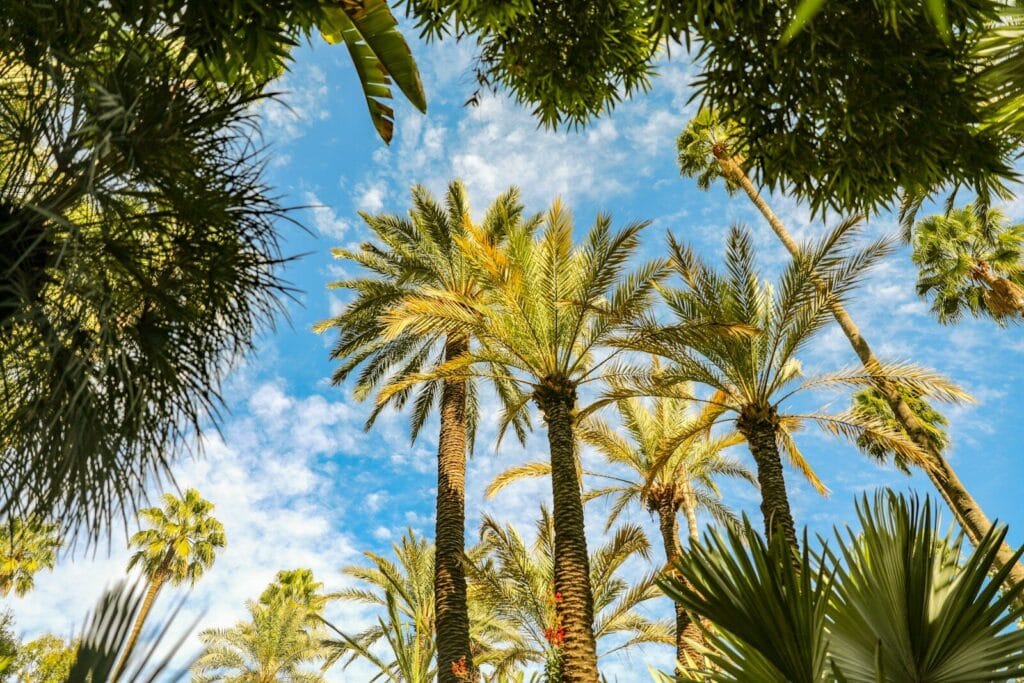
Yes, February is one of the best months to visit Morocco, especially if you want mild daytime weather, smaller crowds, and lower prices. Morocco weather in February gives you comfortable temperatures for walking medinas, exploring palaces, and taking desert tours without the heat that makes summer travel rough.
Most cities sit in the 16 to 22°C range during the day. That is jacket-on, sweater-off weather. Agadir and the southern coast are even warmer, often around 23 to 24°C, which is the closest you will get to beach weather in winter. The Sahara is sunny by day and cold at night, but the contrast is part of what makes a February desert trip memorable.
There are caveats. Evenings get cold fast, especially in Marrakech, Fes, and the desert. The Atlantic ocean sits around 17 to 18°C, which is too cold for most swimmers but fine for surfers in wetsuits. The Atlas Mountains and Ifrane are firmly in winter, with snow at altitude and freezing nights. If your idea of a holiday is sunbathing on a beach in summer clothes, February is not your month. If you want to see Morocco at its quietest with comfortable weather for sightseeing, it works very well.
Practical takeaways:
- Best regions in February: Marrakech, Agadir, the Sahara (Merzouga, Zagora), Essaouira, and the imperial cities
- Avoid if you want pure beach sunbathing or warm ocean swimming
- Book early for Valentine’s Day week and European school holidays, when families travel
- Pack layers: think mild spring days, cold winter evenings
- Build extra time into desert itineraries for cold nights and slow morning starts
If you want help building a February itinerary that handles the cold evenings and the warm afternoons without anyone getting miserable, our team at Morocco Vacation Planner designs private family trips around exactly that.
What Morocco weather in February feels like in practice
If you have only ever visited Morocco in summer, the February version of the country might surprise you. The country is warm enough at lunchtime to sit outside in a riad courtyard with just a sweater. By seven in the evening you will want a coat. The temperature swing across a single day can easily reach 15°C, which is more than most travelers expect from North Africa in winter.
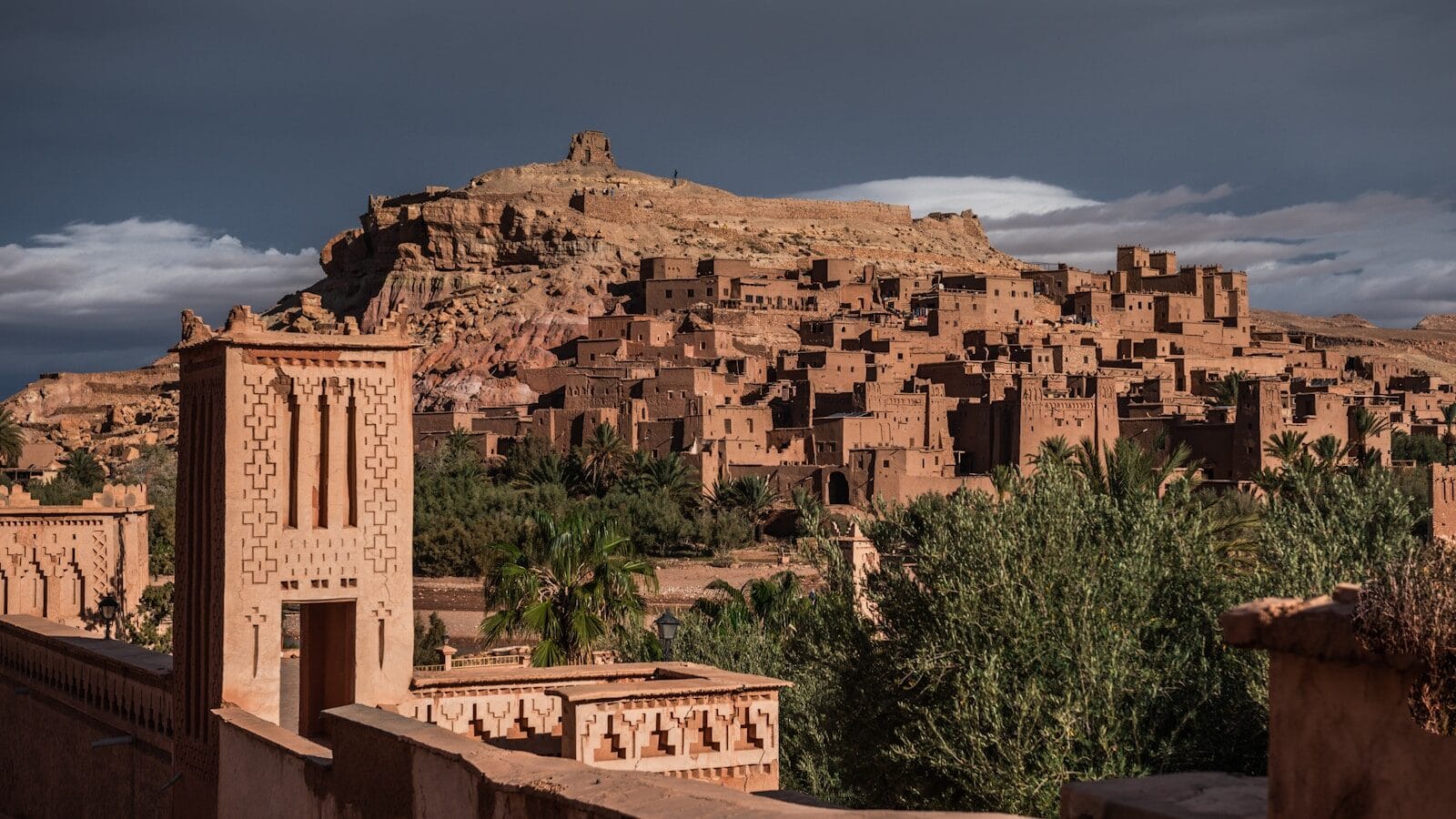
The light is different too. February sun is softer and lower in the sky, which is why photographers love this month. Long shadows fall through the medinas, pale gold settles on the old city walls, and you can see snow on the Atlas peaks from a Marrakech rooftop in February. None of that shows up in a July trip.
Rain comes in light, short bursts rather than long days of grey weather. Across the country, expect about 6 to 12 rainy days for the whole month, with most of the wet stuff falling in the north and very little in the south or the Sahara. Marrakech sees around 30 to 40mm of rainfall over six days on average, often as a quick afternoon shower that clears by sunset. The southern desert can go the whole month without a single drop.
Humidity is low, the air is dry, and the sun is strong even on cooler days, so sunscreen still matters. The wind picks up along the Atlantic coast (Casablanca, Essaouira, Agadir), where Atlantic gusts can make 18°C feel cooler than the number suggests. Inland in Marrakech and the desert, the air is calmer and the temperature feels closer to what the forecast tells you.
If you remember one thing about Morocco weather in February, it is the day to night gap. Pack as if you are traveling to two different climates: a cool spring afternoon and a cold winter evening. That one rule will keep you comfortable through almost any itinerary.
Morocco weather in February by region
Morocco has six distinct climate zones, and February shows the differences more sharply than any other month. The same week you are wearing a T-shirt in Agadir, you could be in a wool hat in the Atlas Mountains.
Marrakech and the central interior
Daytime highs in Marrakech in February run between 19 and 22°C, with overnight lows around 7 to 9°C. Some early February nights drop to 5 or 6°C. Rainfall is light, around 35mm spread across roughly six days. The sky is usually clear with about seven hours of direct sunshine per day. Fes and Meknes follow a similar pattern but tend to feel a degree or two cooler with slightly more rain.
The Atlantic coast (Casablanca, Rabat, Essaouira)
Coastal cities sit between 16 and 18°C during the day with overnight lows around 10 to 12°C. The Atlantic wind keeps things feeling fresher than the numbers suggest. Casablanca sees about a 17% chance of rain on any given day in February, with around 8mm of precipitation when it does fall. Essaouira is known for its wind year round, and February is no exception.
Agadir and the south coast
The warmest part of Morocco in February. Agadir runs 21 to 24°C in the afternoon with overnight lows around 10 to 12°C. The sun comes out almost every day. Sea temperature sits around 17 to 18°C, which is cold for most swimmers but fine for surfers in 3/2mm wetsuits. Taghazout, just up the coast, runs a touch cooler in the water but has the most consistent winter surf in the country.
10-day Morocco family tour
Imperial cities · High Atlas · one night under Saharan stars. Family-paced, private driver, kid-tested stops.
The Sahara (Merzouga, Zagora)
Daytime in the desert is glorious. Around 20 to 25°C in the sun, dry, calm. Nights are a different story. Temperatures drop fast after sunset and can reach 0 to 5°C in desert camps. The silence and the stars at that hour make the cold worth it.
The Atlas Mountains and Ifrane
Winter. Average highs in Ifrane sit around 8 to 12°C, with nights often below freezing. Snow is normal. Higher trekking routes around Mount Toubkal are for experienced winter hikers only. Day trips from Marrakech to villages like Imlil and Setti Fatma are still doable and give you snow in the distance without committing to a full mountain trip.
Northern Morocco (Tangier, Chefchaouen, Tetouan)
Cooler and wetter than the rest of the country. Daytime around 15 to 17°C, with more cloud cover and the highest chance of rain. Chefchaouen looks especially photogenic with damp blue walls and quiet streets.
What to pack for Morocco weather in February
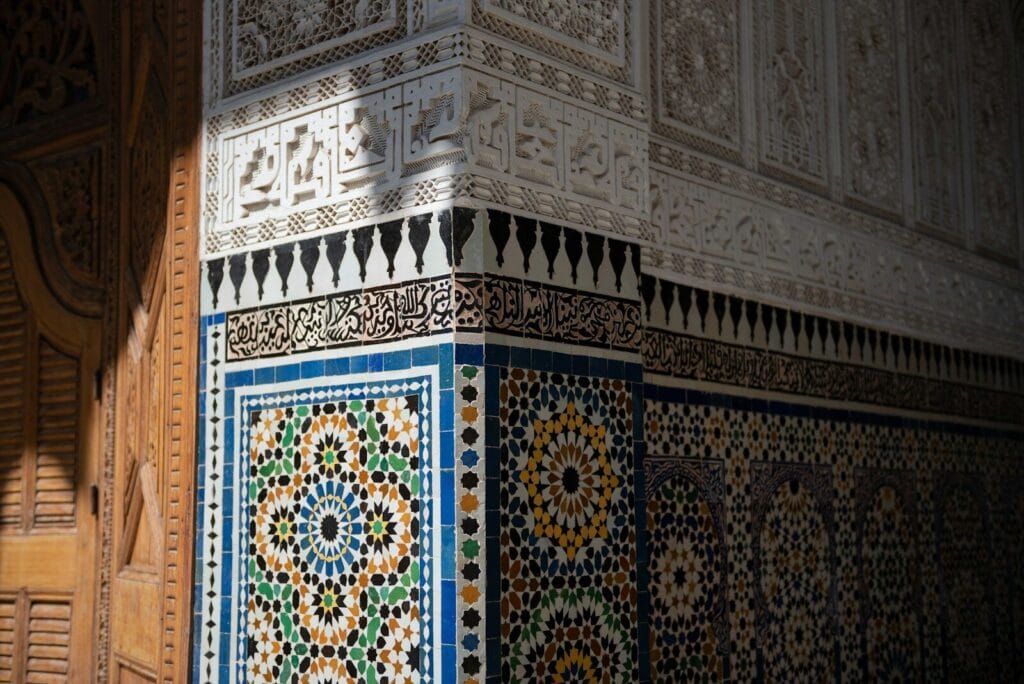
Forget the desert cliché of just packing sun gear. Morocco weather in February asks for layers across multiple climates. Here is what works after a few winter trips.
A warm jacket is essential. Not a parka, but something insulated. Mornings in a Marrakech riad courtyard or a Sahara camp can feel close to freezing. A fleece or wool sweater underneath gives you flexibility once the sun is up.
T-shirts and long sleeve shirts for daytime. The afternoon sun warms things up fast in Marrakech and the south. You will spend most days in two thin layers with a jacket carried over your arm.
A scarf and a beanie. The wind on the Atlantic coast and in the desert at night both call for these. A scarf is also a respectful option for women visiting mosques or rural villages.
Comfortable walking shoes with grip. Medina alleys are uneven, often wet in February rain, and tile floors get slick. Skip new shoes you have not broken in.
A swimsuit for hotel pools and Agadir or Taghazout. Some Marrakech riads have heated pools that work in winter. The ocean is too cold for most swimmers, but pool days are real.
Sun protection. Even at 18°C the African sun is strong. Sunscreen, sunglasses, a hat for desert days.
Thermals if you are going to the desert or the Atlas Mountains. Long sleeve thermal top and bottoms make sleeping in a desert camp tent much more pleasant.
A light rain jacket or compact umbrella if your itinerary includes the north (Tangier, Chefchaouen, Fes) where rain is more likely.
A few things travelers commonly get wrong
People who underpack are usually thinking summer Morocco. People who overpack are panicking about the desert at night. The right answer sits in the middle. Think shoulder season city break with one extra warm layer thrown in.
Morocco weather in February with kids
Traveling with children in February takes a little extra planning, but the weather works in your favor. Daytime temperatures are mild enough that kids do not get heat exhaustion walking through Marrakech souks or climbing Kasbah walls. The desert is sunny and dry. Crowds are thinner, which means more space in restaurants, museums, and hammams.
The two things that catch families out are cold evenings and chilly riad rooms. Many traditional riads have stone or tile walls and no central heating. Some use space heaters or fireplaces in winter, but bedrooms can still drop into the low teens at night. If you are traveling with toddlers or small kids, ask your accommodation about heating before you book, not after. Some places have done excellent winter renovations. Others have not.
For desert nights with kids, layer them up before bed in fleece pyjamas and ask the camp for extra blankets when you arrive. Sahara camps usually expect this and will set you up properly if you mention you have children. A hot water bottle slipped into a sleeping bag at bedtime makes a real difference.
Need help with transportation in Morocco?
Book a reliable private driver for your Morocco family adventure today — personalised routes designed just for you.
Daytime activities are easier than in summer. Camel rides, palace tours, garden walks, and cooking classes are all comfortable. The Jardin Majorelle in Marrakech is a great low energy stop for tired children. Agadir’s wide beach promenade is good for kids on scooters or bikes. The Atlas valleys around Imlil work for short family hikes with snow in the distance.
If you want a sample itinerary built around Morocco weather in February with kids, our family trip planners at Morocco Vacation Planner can pull one together that handles the warm afternoons and cold evenings without anyone getting miserable.
Things to do in Morocco in February
Once you understand Morocco weather in February, the activity list opens up in ways summer travelers miss.
City exploration in Marrakech, Fes, and Rabat
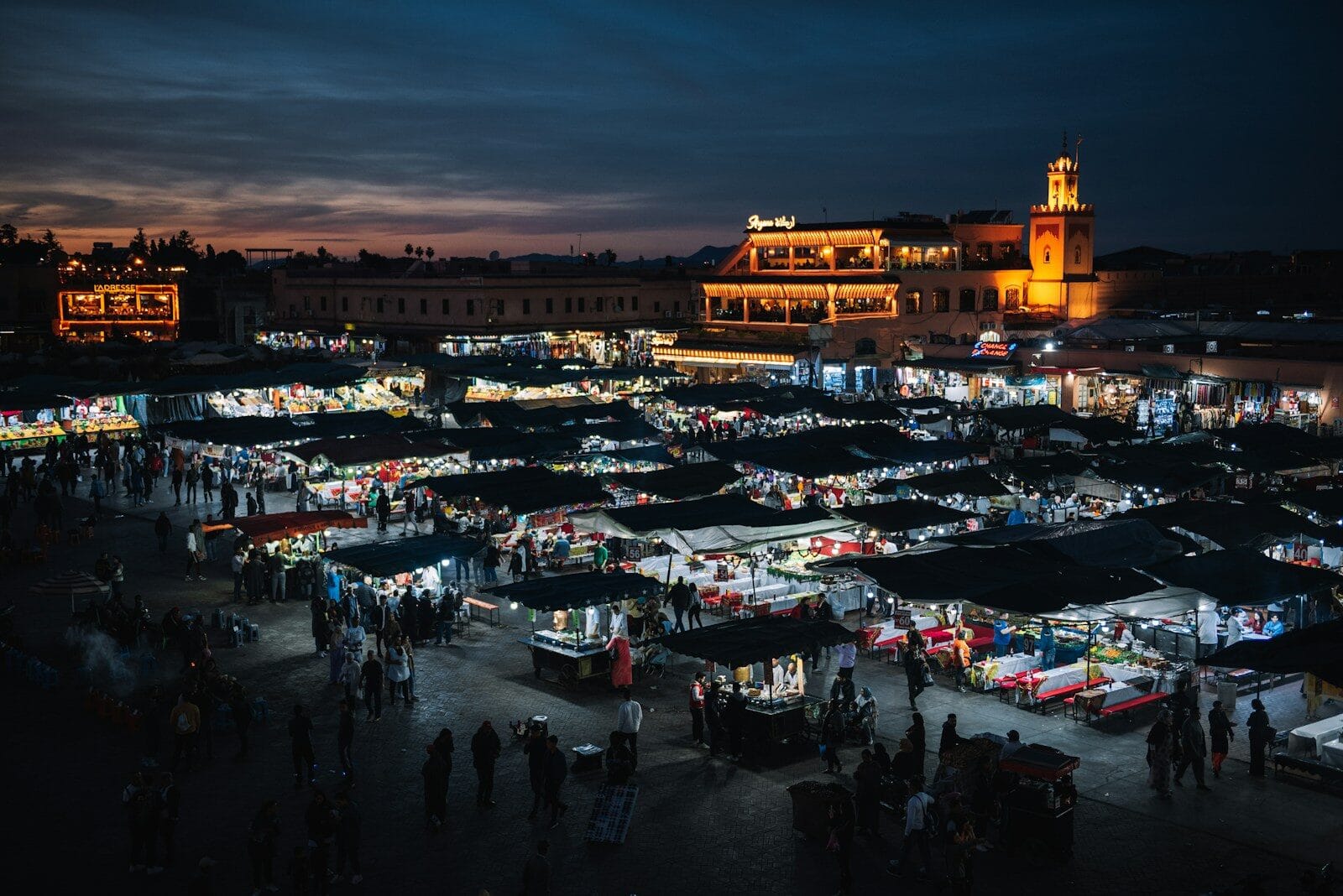
The imperial cities are at their best in February. Sightseeing is comfortable. Hammams feel especially good after a cool morning walk. Souks are quieter, which means better conversations with shopkeepers and better prices on rugs and lanterns. Riad courtyards with their orange and lemon trees are loaded with fruit this time of year.
Sahara desert tours
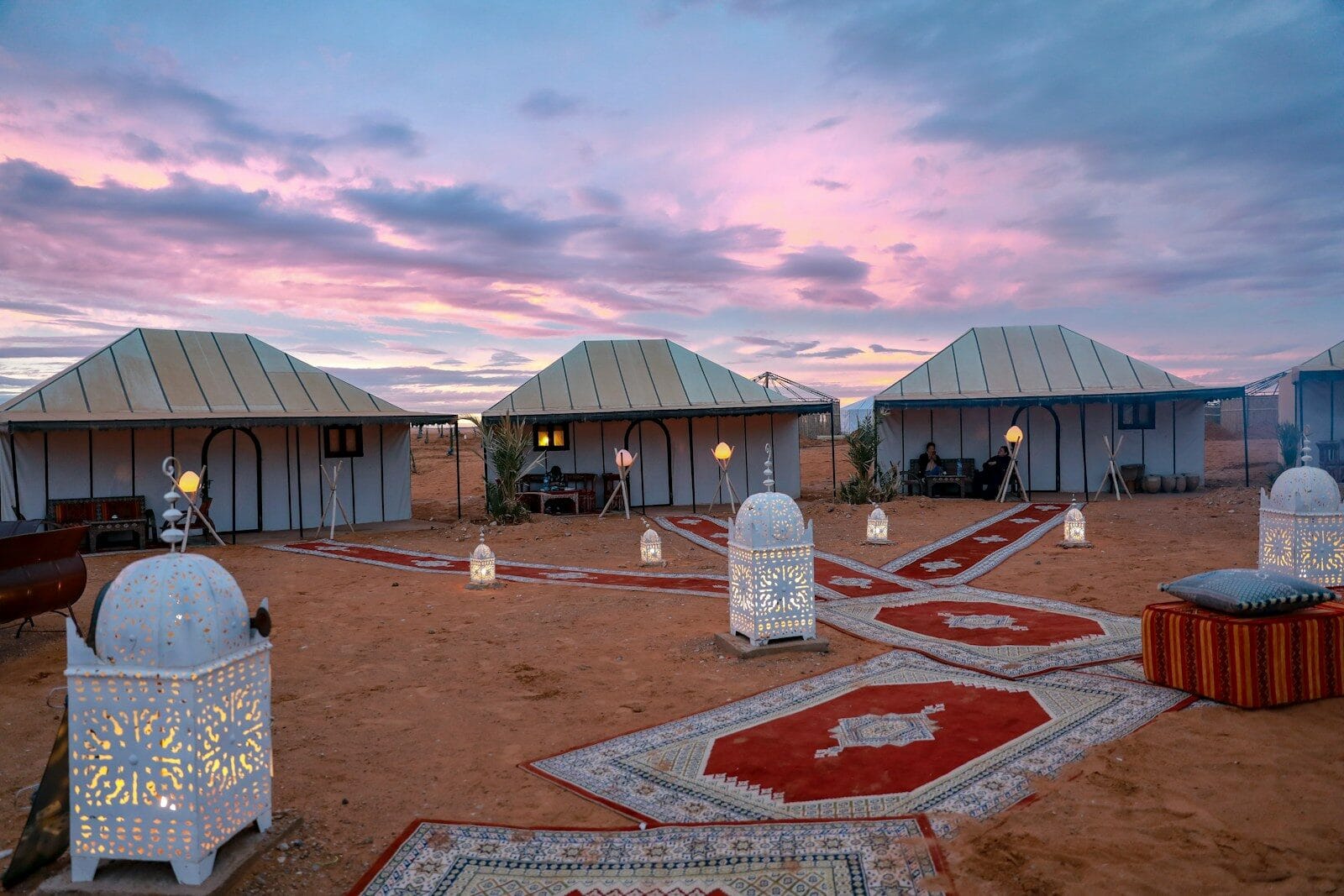
A two or three night desert trip from Marrakech or Fes is one of the most rewarding things you can do in February. Days are warm enough for camel rides and dune walks. Nights are cold enough that the stars look unreasonably bright. Most luxury desert camps now run heated tents or proper wood stoves, which removes the discomfort issue completely.
Surfing in Taghazout and Imsouane
Winter is peak season for surfing in Morocco. The best swells of the year roll into Taghazout, Anchor Point, and Imsouane between November and February. Water temperature is around 17 to 18°C, which means a 3/2mm wetsuit. Local surf schools run lessons for beginners and have gear to rent.
Atlas Mountain day trips
A day trip from Marrakech to Imlil or the Ourika Valley is easy in February. You get snow in the distance, warm mint tea in a Berber house, and a walk through villages without the summer crowds. Multi day winter trekking is for experienced hikers only.
Almond blossom drives
Late February is almond blossom season in southern Morocco, particularly the Tafraoute region in the Anti Atlas. The trees go pink and white across the valleys, and the drive through is one of those Morocco moments that does not get the press it deserves.
Festivals and events in February
February in Morocco is not the loudest festival month, but a few events are worth planning around.
Almond Blossom Festival (Tafraoute)
A regional celebration in the Anti Atlas town of Tafraoute, usually in mid to late February when the almond trees bloom. Music, food stalls, traditional Berber dance, and a beautiful drive through pink valleys. Locals open their homes to visitors during the festival, and small guesthouses fill up quickly.
Agadir Carnival
Held annually in February, with parades, live music, and dance performances along the Agadir promenade. Dates shift year to year, but the event has a relaxed, family friendly feel and is open to anyone wandering past. The carnival doubles as a winter highlight for local Moroccan families, so it is worth catching if you happen to be on the coast.
Valentine’s Day
Casablanca and Marrakech see Valentine’s events in restaurants, riads, and hammams. February 14 is a busy date for couples traveling, and some boutique riads run special menus and packages. Book early if your trip overlaps with the weekend closest to the 14th.
Smaller festivals and religious dates
Sufi music nights pop up in Fes throughout the month, and Marrakech hosts the occasional gallery opening or fashion event. Religious celebrations follow the Islamic calendar, so dates shift each year against the Gregorian calendar. Mawlid (the Prophet’s birthday) sometimes falls in February depending on the year. If it does, expect quieter streets in the evening and special sweets in bakeries.
Where to stay in February
Riads are still the favorite option for February in cities like Marrakech, Fes, and Essaouira, but you need to ask a few questions before booking that you would not bother with in summer.
Heating, hot water, and pools
Ask whether the riad has central heating, space heaters, fireplaces, or none of the above. Stone walls hold cold well, and a beautiful riad that looks like a magazine spread in summer can feel like a cave in February. Many riads have upgraded heating in the last few years and now run very comfortable in winter.
Hot water is rarely an issue at well run places, but worth checking. Some smaller guesthouses run on solar boilers that struggle with grey winter days.
Pools work in February at a few specific spots. Look for “heated pool” in the listing. Most outdoor pools without heating are too cold to use this month.
12 & 14-day grand family tours
Add Chefchaouen, the Atlantic coast, or two nights in the dunes. Slow mornings, shorter drives, room for grandparents and toddlers.
Desert camps
Luxury desert camps run year round, and many have heated canvas tents, wood stoves, and insulated bedding. Mid range and budget camps can be cold, so check before you book if you are traveling with children or anyone who runs cold.
Hotels in Agadir and Taghazout
Agadir hotels with sunny terraces and pool decks work especially well in February, since the sun comes out almost every day. Beachfront hotels often run February specials given that European beach tourists mostly come in summer.
Riads with courtyard fires
Some traditional riads light wood fires in the courtyard each evening in winter. If you can find one of these, book it. Sitting next to an open fire under a starry Marrakech sky with a glass of mint tea is one of the small pleasures of Morocco weather in February that almost nobody mentions in guidebooks.
Photography in Morocco in February
The light in February is the best light in Morocco. A lower sun angle gives long golden shadows in the medinas. Snow on the Atlas peaks gives you a backdrop you cannot get in summer. The Sahara dunes have a deeper red color in winter light. Almond blossoms appear in the south. Soft, even cloud light covers Chefchaouen.
Plan your day around the light: shoot the Marrakech medina first thing in the morning, head to gardens or palaces midday, and get back to the medina or up to a rooftop for the late afternoon. The blue hour in February lasts a little longer than in summer.
The thin crowds matter too. You can stand in the middle of a souk alley in February and compose a shot without a tour group walking through it. The Bahia Palace, the Saadian tombs, and the Hassan II Mosque in Casablanca are all easier to photograph cleanly this month.
For desert photography, the cold nights mean clearer skies and better Milky Way shots. Bring a tripod, a wide lens, and a warm coat. Sahara guides will help you find vantage points without other camp lights in the frame.
Photographers who understand Morocco weather in February build their itineraries around the soft afternoon sun and the cold dawn. Both are worth getting out of bed for.
Why February is one of the best months for Morocco
If you can handle a sweater in the evening, Morocco weather in February might be the best deal you find on a winter trip. Days are warm enough to walk medinas in a long sleeve shirt. Mornings are cool enough that hot mint tea is a real comfort. Snow holds on the Atlas peaks, desert nights are cold enough that the stars look sharper, surf rolls into Taghazout, almonds bloom in the Anti Atlas, and riad courtyards feel quiet again.
You will need to pack more carefully than you would in October. You will need to ask about heating before booking a riad. You will need to keep small kids in proper layers in the desert at night. None of this is hard once you know.
The biggest argument for going in February is the math. Prices are lower. Crowds are smaller. Service is calmer because nobody is overrun. And the weather, despite what some travel guides will tell you, is genuinely comfortable across most of the country for most of the month.
Plan your perfect family trip with Morocco Vacation Planner. Our team designs private family tours in Morocco for kids, teens, and toddlers, with family friendly experiences, trusted local guides, and handpicked comfortable stays from the medinas all the way to the Sahara. If you want a February itinerary that handles the warm afternoons and the cold evenings without anyone getting miserable, we will build it for you.
FAQs about Morocco weather in February
How hot is Marrakech in February?
Marrakech sits around 19 to 22°C during the day and 7 to 9°C at night in February. Some early February nights can drop to 5 or 6°C. The sun is out most days, and Morocco weather in February in Marrakech feels mild rather than warm. You can comfortably walk the medina in a long sleeve shirt at lunchtime, but you will want a coat by sunset. December weather in Marrakech runs slightly cooler still.
Can you sunbathe in Morocco in February?
You can sunbathe in Agadir, Taghazout, and some Marrakech hotel pools when the sun is out, but the air is usually too cool for most people to lie out for hours. Hotel pool decks with sun loungers work well in the south. Beach sunbathing is realistic in Agadir on the warmest February afternoons, less so on the windier Atlantic coast farther north.
What is the warmest place in Morocco in February?
Agadir and the surrounding south Atlantic coast (Taghazout, Tamraght, Aglou) are the warmest places in Morocco in February. Daytime highs reach 23 to 24°C on the best days, with sun almost every day and very little rain. This is where to go if you want winter sun rather than a city sightseeing trip.
Is there rain in Morocco in February?
Yes, but not much. Morocco weather in February runs mostly dry, with around 6 to 12 rainy days nationally. The north (Tangier, Chefchaouen, Fes) is the wettest part. Marrakech sees light showers a few times in the month. The Sahara is essentially dry. Pack a light rain jacket if your itinerary includes the north.
What month is the best weather for Morocco?
April, May, October, and November have the most reliable weather across Morocco, with mild temperatures and low rainfall. February is colder than these months but offers fewer crowds and lower prices. If your priority is weather alone, aim for spring or autumn. If you want value, quiet, and still acceptable conditions, Morocco weather in February is a strong choice.