Is Morocco safe for Jews? A traveler’s guide
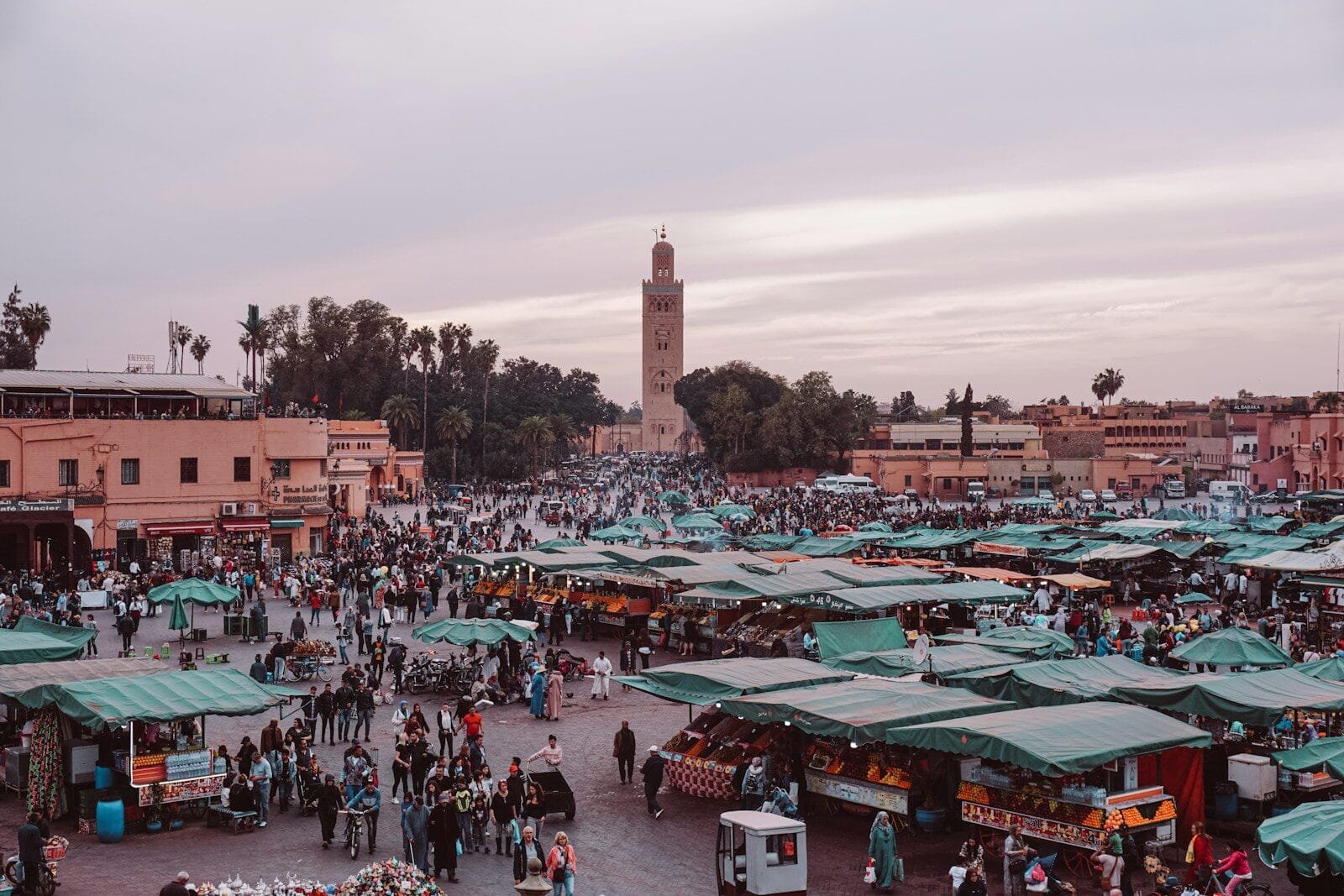
Walk through the mellah in Marrakech on a Friday afternoon and you will pass a working synagogue, a Jewish cemetery still cared for by a paid caretaker, and shops selling silver and spices that have been in the same families for generations. So, is Morocco safe for Jews visiting today in 2026? Yes, in almost every practical sense, and with more historical depth behind that answer than most travelers realize.
Morocco has one of the oldest continuous Jewish histories on the planet, roughly 2,000 years, and the country’s constitution names Hebrew heritage as part of the national identity. Since the Israel-Morocco normalization agreement in December 2020, Israeli passport holders can enter directly, direct flights connect Tel Aviv with Casablanca, and synagogues in Casablanca, Fes, and Essaouira operate openly.
This guide walks through what the safety picture actually looks like on the ground, where to find Jewish heritage sites, what to know about kosher food and Shabbat, how the current regional situation affects travel, and how families with Jewish roots plan meaningful trips to reconnect with ancestral cities.
Quick takeaways
- Morocco is welcoming to Jewish visitors. The US State Department places the country at Level 2 travel advisory, the same as France, Germany, and Spain.
- Active synagogues exist in Casablanca, Marrakech, Fes, and Essaouira. Casablanca has the largest remaining Jewish community, around 2,000 to 3,000 people.
- Israeli citizens can enter with an AEVM electronic visa valid for 30 days. Direct flights connect Tel Aviv and Casablanca.
- Kosher food is available, mainly in Casablanca, with a few restaurants, shops, and butchers serving the local community.
- King Mohammed VI protects Jewish heritage. The government funds restoration of synagogues, cemeteries, and mellahs across the country.
- Approximately 800,000 to 1 million Israelis trace their family origins to Morocco, and heritage tourism drives a large share of Jewish visits.
- Standard travel precautions apply. Use normal discretion in less touristed areas, watch for pickpockets, and follow the same safety advice you would in any European capital.
Are Jews accepted in Morocco?
Yes, Jews are accepted in Morocco, and the country stands out in the Arab and Muslim world for the depth of that acceptance, backed by centuries of coexistence and current government policy that treats Jewish heritage as part of Moroccan identity.
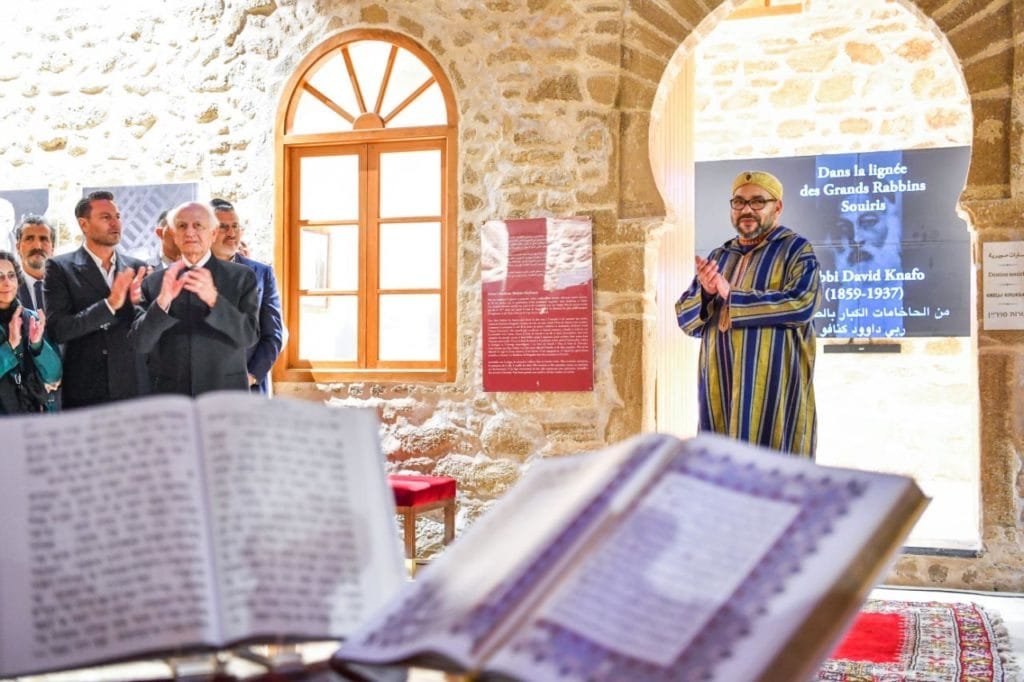
The Moroccan constitution, revised in 2011, names Hebrew heritage as one of the strands that shape national identity. King Mohammed VI regularly attends events at synagogues, funds restoration of Jewish cemeteries, and supports institutions like the Bayt Dakira Museum of Moroccan Jewish history in Essaouira. His father, Hassan II, protected the Jewish community during difficult decades and maintained quiet diplomatic ties with Israel long before formal normalization.
Public opinion is more mixed, particularly since the war in Gaza escalated in October 2023. Solidarity with Palestinians runs high on the street, and demonstrations have been common in the big cities. What has not happened is a rise in incidents targeting Jewish tourists or heritage sites in Morocco. Everyday safety at established Jewish sites in Marrakech, Casablanca, Fes, and Essaouira has held steady through the last three years of regional tension.
Practical takeaways for Jewish travelers:
- Visit synagogues and mellahs openly in the major cities without restriction
- Wear religious symbols in tourist areas and inside Jewish institutions; use normal discretion in rural or crowded political spaces
- Book heritage tours through Jewish run operators for the deepest access to community sites
- Speak with local rabbis or the Jewish community office in Casablanca to arrange synagogue visits during services
- Follow standard travel advisories which currently sit at the same level as Western European countries
For families planning ancestral visits or Jewish heritage tours, Morocco Vacation Planner designs private itineraries that include community contacts, kosher meal arrangements, and access to mellahs and synagogues in Fes, Marrakech, Meknes, and Essaouira.
Is Morocco safe for Jews right now?
The short answer is yes, based on both official travel guidance and reports from Jewish travelers on the ground in 2026. The question is Morocco safe for Jews came up more often after October 2023, when regional conflict raised concerns everywhere. What happened in Morocco is that Jewish tourism continued, heritage sites stayed open, and no notable incidents targeted Jewish visitors at established sites.
The US State Department places Morocco at Level 2 (Exercise Increased Caution), the same rating given to France, Italy, Germany, Spain, and the United Kingdom. A 2026 report from HelloSafe, a travel insurance provider, ranked Morocco as the safest African country to visit. Morocco welcomed 19.8 million tourists in 2025, a record.
Where discretion helps:
- During political demonstrations, which happen in central squares of big cities during periods of regional escalation. Avoid these areas on protest days, the same way you would in Paris or London.
- In rural areas far from tourist infrastructure, keep religious symbols under a jacket or shirt collar rather than displayed openly. This is prudence, not a sign of hostility.
- On social media while traveling, avoid publicly geotagging politically charged posts. Basic digital hygiene.
Inside synagogues, in the mellahs, in Jewish museums, and at cemeteries, the atmosphere is welcoming and often warm. Caretakers at heritage sites in Fes, Marrakech, and Essaouira are usually Muslim Moroccans paid by the government or the Jewish community. Many of them have worked at these sites for decades and greet Jewish visitors as returning family.
Kids traveling with Jewish families report the same experience as adults: friendly interactions, curiosity from locals, and no negative attention. Discussing Israel-Palestine politics with strangers is not recommended, in the same way you would not raise contested political topics with people you just met in any country. Beyond that, the day to day experience of Jewish travelers in Morocco is closer to visiting Spain or Portugal than to visiting anywhere else in the region.
A brief history of Jewish life in Morocco
Jewish presence in Morocco predates Islam by centuries. Some historians trace the community back to before the destruction of the Second Temple in 70 CE, when Jewish traders and refugees settled along North African coasts. Berber tribes converted to Judaism in the pre-Islamic period, and the Berber-Jewish blend gave Morocco a Jewish community unlike any other.
10-day Morocco family tour
Imperial cities · High Atlas · one night under Saharan stars. Family-paced, private driver, kid-tested stops.
The population grew substantially in 1492, when the Alhambra Decree expelled Jews from Spain. Many Sephardic families crossed to Morocco, settling in Fes, Marrakech, Tetouan, and Meknes. These new arrivals, called Megorashim (the expelled), joined the existing Toshavim (indigenous) community. Both groups kept distinct traditions for centuries, and the difference is still visible in synagogue architecture and liturgical practice today.
Morocco’s Jewish population peaked around 1948 at approximately 250,000, roughly 10 percent of the total population. After the founding of Israel and periodic incidents of anti-Jewish violence in the 1950s and 1960s, most emigrated. Today, about 2,000 to 3,000 Jews live in Morocco, concentrated in Casablanca. Meanwhile, roughly 800,000 to 1 million Israelis trace family roots to Morocco, making it one of the largest ethnic subgroups in Israel.
King Hassan II protected the Jewish community during regional wars and quietly maintained ties with Israel throughout his reign. His son, Mohammed VI, expanded these efforts publicly. The 2011 constitution named Hebrew culture as a component of Moroccan identity, and the 2020 normalization agreement made diplomatic relations official.
For many visitors, the mellahs are places where their own family history unfolded. Grandparents were born here. Great-grandfathers ran shops in these alleys. Walking these streets is often the most emotional part of the trip.
Jewish heritage sites worth visiting in Morocco
Jewish heritage sites in Morocco are spread across the country, with the strongest concentrations in Fes, Marrakech, Casablanca, Essaouira, Meknes, and Tetouan. Each city has a mellah (the historic Jewish quarter), one or more synagogues, and a Jewish cemetery. Many are open to respectful visitors during posted hours.
Fes
The mellah in Fes is the oldest in Morocco, established in 1438 next to the royal palace. The Ibn Danan Synagogue, restored in the late 1990s with support from the World Monuments Fund, opens for visits during the week. The Jewish cemetery on the edge of the mellah holds thousands of white washed tombs and is one of the most photographed Jewish sites in North Africa.
Marrakech
The Marrakech mellah, in the eastern part of the medina near the Bahia Palace, still has an active Slat Al Azama Synagogue with services on major holidays. The neighborhood streets, once entirely Jewish, now mix Muslim families and Jewish heritage sites. The Miaara Jewish cemetery has been restored and welcomes visitors.
Casablanca
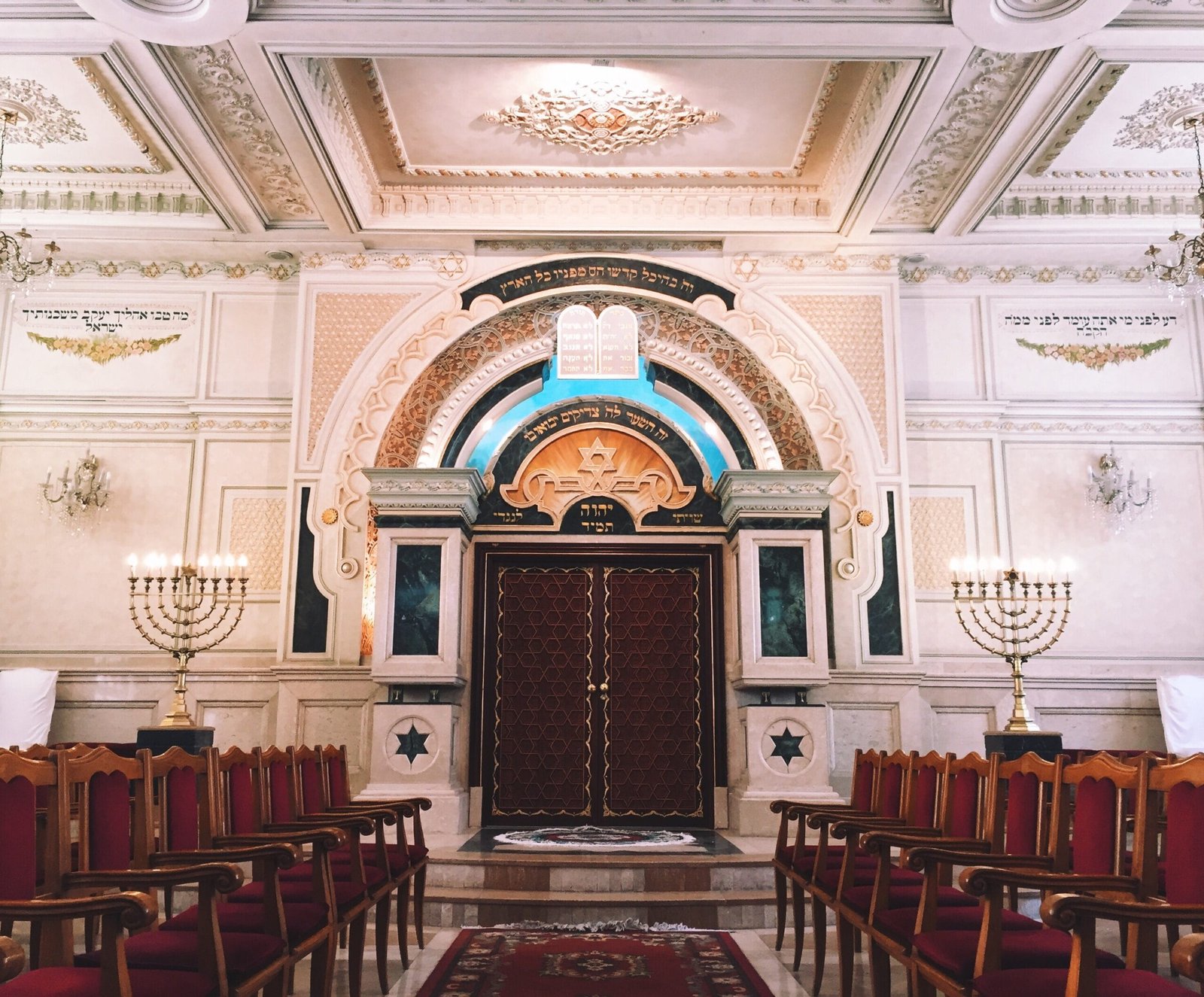
Casablanca is the center of contemporary Jewish life in Morocco. The Beth-El Synagogue is the main active congregation, with regular Shabbat services. The Museum of Moroccan Judaism, opened in 1997, is the only Jewish museum in the Arab world, and it holds a serious collection of ritual objects, textiles, and photographs. The Jewish Community Office in Casablanca can help visitors arrange synagogue attendance and community meals.
Essaouira
Essaouira had one of the highest Jewish population percentages of any Moroccan city in the 19th century, over 40 percent at one point. The Simon Attias Synagogue has been fully restored and now houses the Bayt Dakira Museum, opened by King Mohammed VI in 2020. It documents the history of Jewish Moroccans through photographs, music, and everyday objects. Free to visit.
Meknes
Meknes has the Tomb of Rabbi David Ben Barukh, a major pilgrimage site for Moroccan Jews. The mellah and its cemetery remain in good condition, and the Berdugo Synagogue in the mellah is open to visitors by arrangement.
Casablanca and Morocco’s living Jewish community
Casablanca is home to the vast majority of Morocco’s remaining Jewish community, around 2,000 to 3,000 people. The neighborhood of Gauthier and parts of the old medina still function as Jewish spaces. On any given Shabbat, several synagogues hold services and community members gather afterward for meals.
The active Jewish institutions in Casablanca include:
- Beth-El Synagogue: The main functioning synagogue, holds Friday night and Saturday morning services
- Neve Shalom Synagogue: Another active congregation
- The Casablanca Jewish Community Office: Coordinates community life, kosher supervision, and visitor arrangements
- The Museum of Moroccan Judaism: The only Jewish museum in the Arab world, located in a former Jewish orphanage in the Oasis district
- Chabad Casablanca: Runs a synagogue, kosher meals, and hosts travelers during Shabbat
For visiting families, the practical route is to email the community office at least two weeks ahead of your trip. Most requests to attend Shabbat services or arrange a Friday night dinner with a local family get answered. Chabad Casablanca is another reliable option and welcomes both observant and non observant Jewish travelers.
The community has shrunk drastically from the 1948 peak. Young Jewish Moroccans often leave for Israel, France, or Canada for university or work. Those who remain talk about the mix of pride in staying and pressure to leave, particularly since October 2023. Daily life for the community continues. Kids attend the Alliance Israélite Universelle school. Kosher butcher shops operate under community supervision. Weddings and bar mitzvahs still happen in the Casablanca synagogues.
If you are asking is Morocco safe for Jews in the sense of living safely as part of a small minority, the answer from the community itself is nuanced. Life is generally comfortable, protected, and normal. Regional politics make some periods harder than others. No member of the community I have spoken with over the last five years has said they feel unsafe walking to synagogue on Shabbat.
Kosher food and Shabbat observance
Kosher food is available in Morocco, though outside Casablanca the options thin out quickly. If keeping kosher matters for your trip, plan the Casablanca portion around it and arrange in advance for other cities.
Need help with transportation in Morocco?
Book a reliable private driver for your Morocco family adventure today — personalised routes designed just for you.
In Casablanca:
- Several kosher restaurants and take out spots operate near the Jewish community area
- The community has kosher butchers, bakeries, and grocery shops
- Some hotels can arrange kosher meals with two or three days notice
- Chabad Casablanca serves Shabbat meals and welcomes travelers
Outside Casablanca:
- Marrakech has a small kosher restaurant that operates on and off; check current status before relying on it
- Fes and Meknes have no active kosher establishments
- Some high end riads in Marrakech and Fes can arrange kosher friendly meals with advance notice, often bringing in food from Casablanca
- Vegetarian options are widely available across the country, including many fruit, salad, and grain dishes that make travel easier for those following kosher rules loosely
For Shabbat, Casablanca is the practical base. The community welcomes visitors at Friday night services, and both Chabad and independent families sometimes invite guests home for the meal. Arranging this a week or two in advance through the Community Office is standard practice.
For strictly observant travelers on longer trips, some heritage tour operators build itineraries around Shabbat in Casablanca, then travel to other cities during the week. This keeps kosher access and Shabbat observance manageable while still allowing time in Marrakech, Fes, and the desert.
Kashrut in Morocco has its own history. Moroccan Jewish cuisine draws from Berber, Arab, Andalusian, and Sephardic traditions, using tagines, couscous, harira, and preserved lemons in kosher adapted forms. Many families in Israel still cook these dishes today, and part of what draws diaspora Jews back to Morocco is tasting these foods in the country where the traditions began.
Israeli travelers in Morocco after normalization
Since December 2020, Israeli citizens can visit Morocco directly and legally. Before that, Israelis traveled on second passports (French, American, Canadian) or through third countries. The normalization agreement changed the mechanics of visiting.
Entry requirements for Israeli passport holders:
- AEVM electronic visa required, valid for 30 days, applied for online before travel
- Direct flights operate between Tel Aviv (Ben Gurion) and Casablanca, and between Tel Aviv and Marrakech
- Return flights need to be booked before entry
- Israeli passport stamped on entry and exit without issue
Some Israeli travelers still prefer to fly via Paris, Madrid, or Istanbul for cost or scheduling reasons. That is a legitimate personal choice, not a safety requirement.
Approximately 50,000 Israelis were visiting Morocco each year before 2020, and that number rose significantly after normalization. Numbers dipped in 2024 due to regional conflict but have partially recovered in 2025 and 2026. Most Israeli visits center on heritage tourism, Jewish sites, ancestral homes, and food.
Practical tips from Israeli travelers who have visited recently:
- Hebrew is not widely spoken outside Jewish community members, use English, French, or Arabic
- Some hotels ask nationality on registration, which is standard and administrative
- Political conversations happen, mostly friendly and curious, sometimes tense; use judgment
- Local Jewish tour guides who speak Hebrew are available in Marrakech, Casablanca, and Fes
- ATMs work with Israeli bank cards, and dollars or euros are exchangeable at any bank
The relationship between the two countries has held through periods of high regional tension. Direct flights have continued. Consular services have continued. Israeli tourists are visible in Casablanca hotels, at Jewish sites, and on desert tours to Merzouga and the High Atlas.
Jewish heritage tours for families
A Jewish heritage tour of Morocco with kids and teens works well because the country combines historical depth with plenty of non heritage kid interests: the medina souks, camel rides, the beach at Essaouira, the Atlas Mountains. Family trips built around Jewish sites typically run seven to twelve days.
A common family itinerary:
- Day 1-2 Casablanca: Museum of Moroccan Judaism, Beth-El Synagogue, Chabad for Shabbat if timing works, Hassan II Mosque exterior
- Day 3-4 Fes: The old mellah, Ibn Danan Synagogue, Fes medina souks, tanneries
- Day 5 Meknes and Volubilis: Meknes mellah, then Roman ruins at Volubilis
- Day 6-7 Marrakech: Slat Al Azama Synagogue, mellah walk, Jemaa el Fna, Majorelle Garden
- Day 8-9 Essaouira: Bayt Dakira Museum, ramparts, Atlantic beach time
- Day 10-11 Atlas Mountains or desert: A break from heritage, into the landscape kids love
Kids under ten usually stay engaged if the pace stays flexible. Older kids and teens respond strongly to the ancestral element when they can walk through a mellah where a great-great-grandfather once lived, or find a family name on a synagogue plaque. Several tour operators specialize in family Jewish heritage trips and can research ancestral neighborhoods before you arrive.
Costs vary. A private guided family tour of ten days across the sites above usually runs 3,500 to 6,500 US dollars per person for four people, including hotels, drivers, guides, entrance fees, and most meals. Group tours cost less. Independent travel with a rental car costs the least but requires more planning.
For families, the emotional highlight is often not the biggest synagogue or the oldest mellah. It is the small moments: a caretaker who remembers a family that lived in a house down the street, a shopkeeper who recognizes a Judeo-Arabic phrase, a Berber tribesman in the Atlas who says his village used to have a Jewish neighbor everyone loved.
Practical safety tips for Jewish travelers in Morocco
The safety practices that matter for Jewish travelers in Morocco overlap almost entirely with normal travel safety anywhere. A few points specific to the current context are worth knowing.
Do:
- Register with the Jewish Community Office in Casablanca before you arrive if you want to attend services or connect with local families
- Use licensed tour operators with experience in Jewish heritage travel for the deepest access
- Carry a copy of your passport and know the location of your embassy or consulate
- Follow local news during your trip, especially if regional tensions are high
- Trust your instincts in unfamiliar neighborhoods; leave situations that feel wrong
Do not:
- Argue politics with strangers in cafes or shops
- Wear IDF or explicitly political clothing in public spaces
- Post real time location updates on social media during politically sensitive periods
- Travel alone in remote areas at night; this is general Morocco advice, not Jewish specific
- Assume every discretion recommendation means danger; most are about avoiding awkward moments, not real threats
The question is Morocco safe for Jews on a specific day depends less on being Jewish and more on general travel conditions. Pickpockets in the Marrakech souks, aggressive touts near tourist sites, and taxi meter scams are the actual daily nuisances that most travelers encounter. Those affect everyone.
Emergency contacts worth having in your phone:
12 & 14-day grand family tours
Add Chefchaouen, the Atlantic coast, or two nights in the dunes. Slow mornings, shorter drives, room for grandparents and toddlers.
- Your embassy or consulate in Rabat
- The Casablanca Jewish Community Office
- Chabad Casablanca or Chabad Marrakech
- A local tour operator or fixer
The Moroccan police and gendarmerie are generally responsive to tourist issues. In the medinas, tourist police in white uniforms patrol regularly. Most disputes get resolved on the spot.
Family friendly synagogue visits and Jewish museums
Bringing kids into synagogues and Jewish museums in Morocco is straightforward. Most historic sites welcome visitors of all ages, with entry fees typically 20 to 40 dirhams (2 to 4 US dollars) or free. A few tips make the visits work with children.
The Museum of Moroccan Judaism in Casablanca is the best single stop for families. The exhibits are well organized, the space is manageable in size, and the ritual objects (silver Torah crowns, illuminated ketubot, colorful embroidered curtains) hold kids’ attention better than text heavy museums. Plan an hour to ninety minutes.
Bayt Dakira Museum in Essaouira is smaller but powerful. The audio recordings of Jewish Moroccan songs and the family photographs from the 19th and 20th centuries make it emotionally resonant even for kids without a personal connection to Morocco. Free entry.
The Ibn Danan Synagogue in Fes is small and quiet. The caretaker often walks families through the space, pointing out the bimah, the ark, and the women’s gallery upstairs. Older kids interested in architecture respond well.
The mellah walks in Marrakech and Fes work for kids who are already comfortable with medina exploration. Narrow alleys, working shops, and the occasional Star of David above a doorway. Plan two hours for a guided walk.
Tips for visiting with kids
- Dress modestly in synagogues (covered shoulders, knees, head coverings for men and boys where required)
- Bring water and snacks, the sites are close together in each city but the medina walks can be long
- Time visits for morning when kids are freshest and the buildings are cooler
- Ask before photographing during services or in active worship spaces
- Prepare kids in advance with a short history of the community; a five minute conversation the night before makes the visits stick
Most Jewish heritage caretakers I have met are patient, kind, and used to visitors of all backgrounds and ages. The atmosphere is welcoming rather than solemn, especially when families come with respect and curiosity.
Final thoughts on visiting Morocco as a Jewish traveler
Is Morocco safe for Jews traveling with families in 2026? Yes, based on the practical experience of thousands of Jewish visitors each year, official travel advisories that place Morocco at the same level as Western European countries, and the visible protection the Moroccan state gives to Jewish heritage sites across the country. The community is smaller than it once was, but the welcome from the country as a whole has held steady through decades of regional turbulence, including the last three years.
For families with Moroccan Jewish roots, the trip is often more meaningful than expected. Walking through a mellah your grandmother described from memory, finding your family name on a synagogue plaque, hearing a shopkeeper say a Judeo-Arabic phrase your grandfather used, these are experiences that reshape how kids and teens think about their own history. For families without Moroccan roots, the country offers one of the deepest windows into Sephardic and Mizrahi culture available anywhere in the world.
Plan around Casablanca for kosher and Shabbat, add Fes and Marrakech for the great mellahs and cemeteries, and give yourself Essaouira for the Bayt Dakira Museum and the coastline. Then extend into the Atlas or the desert for a break from history.
Morocco Vacation Planner designs Private Family Tours in Morocco for Kids, Teens & Toddlers. Plan your perfect family trip to Morocco with custom private tours built for families traveling with toddlers, kids, and teens. You get family friendly experiences, trusted local guides, and handpicked comfortable stays from the medinas all the way to the Sahara.
FAQs
How many Jews live in Morocco?
Approximately 2,000 to 3,000 Jews live in Morocco today, most of them in Casablanca. This is down from a peak of around 250,000 in 1948, when the community made up roughly 10 percent of the total Moroccan population. Most Moroccan Jews emigrated to Israel, France, and Canada between the 1950s and 1970s. Around 800,000 to 1 million Israelis trace their family origins to Morocco.
What are Moroccan Jews called?
Moroccan Jews are called Moroccan Jews in English and Yehudim in Hebrew or Arabic. Within the community, historians distinguish between the Toshavim (indigenous Berber-Jewish families who lived in Morocco before 1492) and the Megorashim (Sephardic families who arrived from Spain and Portugal after the 1492 expulsion). Most Moroccan Jews today identify as Sephardic, though the older Toshavim traditions are still visible in some liturgy and food.
Are Moroccan Jews Sephardic or Mizrahi?
Most Moroccan Jews are Sephardic, descended from Jews expelled from Spain in 1492 who resettled in Morocco. A smaller but historically important group is the Toshavim, the pre-1492 indigenous Jewish community that includes descendants of Berber-Jewish converts and earlier arrivals. In Israel, Moroccan Jews are often grouped under the wider Mizrahi label (Jews from Middle Eastern and North African countries), though the more precise term is Sephardic.
Is Morocco friendly with Israel?
Yes, Morocco and Israel established formal diplomatic relations in December 2020 as part of the Abraham Accords. Both countries reopened liaison offices in Rabat and Tel Aviv, direct flights operate between Casablanca and Tel Aviv, and Israeli citizens can enter Morocco with an AEVM electronic visa. Relations have held through the regional conflict since October 2023, though public opinion in Morocco remains mixed. Is Morocco safe for Jews traveling from Israel? Yes, and Israelis continue to visit in significant numbers each year.
Are there synagogues in Morocco?
Yes, active synagogues operate in Casablanca (Beth-El, Neve Shalom, and others), Marrakech (Slat Al Azama), Fes (Ibn Danan), and Essaouira (Simon Attias, now part of Bayt Dakira Museum). Casablanca has the largest active Jewish community and holds regular Friday night and Saturday morning services. Most historic synagogues welcome respectful visitors outside of prayer times, and arrangements to attend services can be made through the Casablanca Jewish Community Office.