What to wear in morocco
What to Wear in Morocco: Your Complete Travel Dress Code Guide Understanding the Morocco Dress Code: Culture, Modesty, and Respect...
Read More → 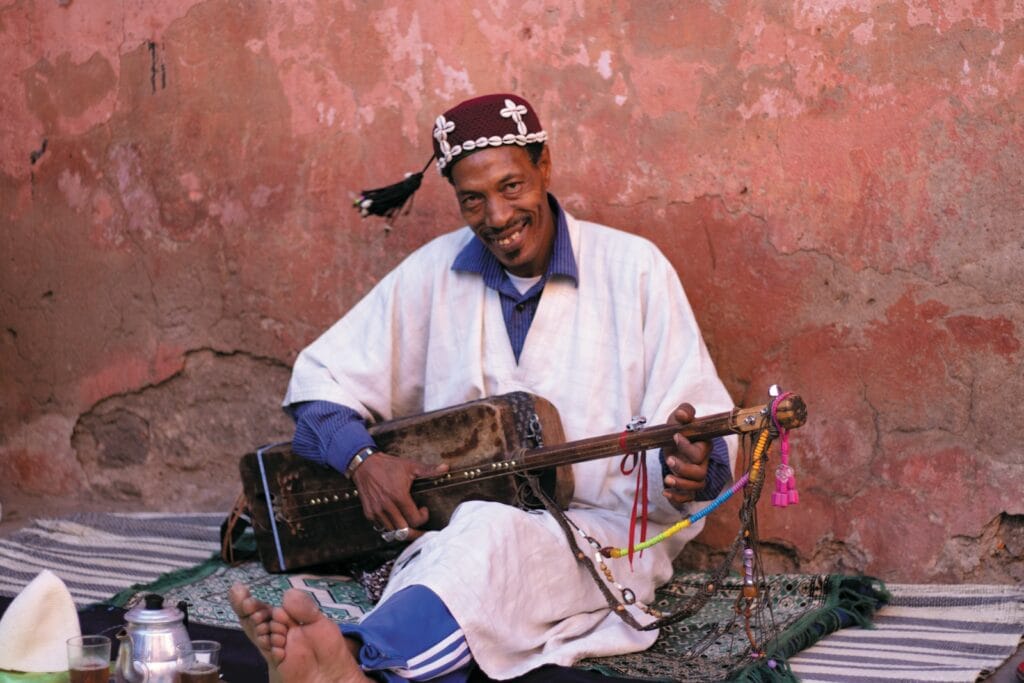
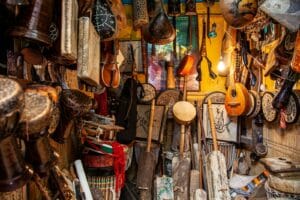
Morocco is not just a visual feast it’s a sonic treasure chest brimming with diverse musical traditions that reflect its rich cultural tapestry. From the hypnotic rhythms of Gnawa trance ceremonies to the spirited Celebrations in Jemaa el-Fna, the sounds of traditional Moroccan music instruments are an essential part of the country’s identity and a must-experience for any traveler. These instruments whether stringed, wind, or percussion tell stories of history, spirituality, community, and lifelong celebrations.
In this guide, we’ll explore the most iconic instruments you’ll encounter on the streets, in festivals, and inside the walls of ancient kasbahs and riads. You’ll discover how each instrument is made, how it’s played, and the role it plays in music styles like Gnawa, Chaabi, Andalusian, and Berber folk. Along the way, you’ll learn where to hear these instruments live on your Moroccan travels and gain insights into the craftsmen who keep these traditions alive.
Let’s embark on a melodic journey into Morocco’s heart and soul one rhythm, one string, one note at a time.
The Guembri (also called sintir, gimbri, or hejhouj) is arguably Morocco’s most emblematic traditional instrument and truly at the core of Gnawa music. It’s a three-stringed bass lute with a body carved from wood and often covered with camel skin, giving it a deep, earthy resonance.
Played by a maâlem (master musician), the guembri sets the foundational rhythm in Lila ceremonies spiritual gatherings meant to induce trance, healing, and communal unity. Its tones often resemble a double bass but with a texture unique to North African string instruments. The technique of plucking combined with rhythmic body strikes makes the guembri both melodic and percussive.
Travelers will most often encounter the guembri in coastal Essaouira during the celebrated Gnawa Festival, or in intimate street performances in Marrakech and Fes. It stands as a bridge between musical performance and spiritual experience that is central to Moroccan culture.
The Oud is a fretless, pear-shaped lute with a rich history across the Arab world, and in Morocco it plays a pivotal role in Andalusian classical music, Chaabi, and contemporary fusion.
With 10–11 strings typically plucked with a plectrum, the oud creates warm, expressive soundscapes that range from melancholic to joyful. Its versatility makes it a favorite in both instrumental solos and ensemble performances. Many Moroccan musical evenings feature the oud alongside percussion and wind instruments, making it a must-hear for travelers interested in classical North African music traditions.
The Rabab is an ancient, bowed string instrument with a sound that speaks to the soul. It has one or sometimes two strings and is played with a horsehair bow.
Used especially in rural and Berber music traditions, the rabab’s tone is raw and emotive, often accompanying vocal storytelling or poem recitation. It’s particularly significant in the Atlas mountain regions where music traditions are tightly interwoven with daily life and heritage.
The Loutar is a plucked lute often associated with Berber communities in Morocco’s Middle Atlas. While similar in concept to the guembri, the loutar has its own distinct tuning and melodic patterns that reflect Amazigh musical scales and rhythms.
Travelers exploring Berber villages will hear this instrument in folk festivities and home gatherings where it defines the musical heartbeat of local culture.
The Bendir is one of the most recognizable traditional Moroccan music instruments in the percussion family. It’s a large frame drum with a skin stretched over a wooden hoop.
What makes the bendir distinctive is its buzzing sound, thanks to strings or snares attached to the drumhead, and its rhythmic versatility. Common in Chaabi, Gnawa, and Berber music, it’s often played by hand in ensembles and provides rhythms that are both grounding and infectious.
In Morocco, you’ll hear the bendir at festivals, wedding celebrations, and in medina squares as local musicians showcase their percussive talents.
The Darbuka (or derbouka) is a goblet-shaped hand drum that delivers bright, crisp tones. Though common across North Africa and the Middle East, it has a strong presence in Morocco’s Chaabi and street music.
Its smaller cousin, the Taarija, is a clay-based hourglass drum used especially during festive occasions. Together, these drums drive foot-tapping beats and invite participation from listeners and dancers.
The Krakeb (also spelled qraqeb or qaragib) are large iron castanets that produce a metallic, clacking rhythm foundational to Gnawa ensembles.
More than just percussion, their sharp sound carries historical resonance symbolizing chains and the rhythmic pulse of ancestral memory in Gnawa traditions. Their energetic patterns are impossible to miss and instantly evoke the spirit of Moroccan street music.
The Rhaita or ghaita is a double-reed wind instrument similar to an oboe or shawm, known for its piercing and celebratory sound.
Often featured during weddings, parades, and rural festivities, the ghaita’s shrill, vibrant tones cut through crowds and complement rhythmic percussion beautifully. Travelers will recognize it instantly when it wails during joyful Moroccan celebrations
The Nay is a reed flute that adds soft, lyrical melodies to musical ensembles. Its airy tone evokes mysticism commonly heard in Sufi gatherings, Andalusian music, and weddings.
For visitors seeking a quieter, more meditative musical experience, the nay is worth seeking out in classical performances or cultural music evenings.
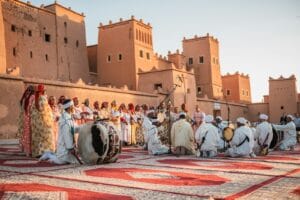
In Marrakech’s central square, live performances of bendir, oud, krakeb, and guembri fill the air every evening. Street musicians perform for locals and travelers alike, creating an immersive sonic experience.
Each year, Essaouira hosts the Gnawa Festival, a world-renowned gathering where traditional instruments take center stage. Travelers can hear master musicians (maâlems) play guembri, krakeb, and more against the backdrop of the Atlantic.
From traditional Andalusian music concerts in Fes to performance spaces in Casablanca, you’ll find formal showcases of Morocco’s musical instruments and ensembles.
Traditional Moroccan music instruments reflect centuries of cultural fusion and spiritual depth.
The guembri is central to Gnawa music, offering deep bass rhythms that induce trance.
Percussion instruments like bendir and krakeb provide driving rhythms in both rituals and celebrations.
The oud and nay bring emotive melody to ensembles across genres.
Morocco’s musical experiences are best heard live in places like Jemaa el-Fna and Essaouira.
Plan Your Perfect Moroccan Adventure
The traditional Moroccan music instruments you’ll encounter in Morocco are more than sound makers — they are cultural storytellers, spiritual channels, and communal heartbeat keepers. Whether you’re wandering through ancient medinas or attending vibrant festivals, these instruments offer a direct line to Morocco’s soul. Each rhythm and melody carries centuries of history, making them a must-experience for any traveler seeking authentic cultural immersion.
The guembri, oud, bendir, krakeb, and ghaita are among the most recognized traditional Moroccan instruments.
The guembri is central to Gnawa music’s hypnotic rhythms.
Head to Jemaa el-Fna in Marrakech, the Essaouira Gnawa Festival, or cultural venues in Fes and Casablanca.
Yes many instruments are handcrafted by local artisans who pass down their skills through generations.
Yes workshops and music schools in major cities offer lessons in instruments like the oud and bendir as part of cultural immersion experiences.