
What to wear in morocco
What to Wear in Morocco: Your Complete Travel Dress Code Guide Understanding the Morocco Dress Code: Culture, Modesty, and Respect...
Read More → When exploring the world of international cuisine, parents often wonder about the safety and suitability of different foods for their children. Moroccan cuisine, known for its rich flavors and diverse ingredients, can be a fascinating culinary journey. However, the question remains: can kids enjoy Moroccan dishes without any concerns?
Understanding the safety of Moroccan cuisine for children is crucial, especially for families who love trying new foods. The cuisine’s unique blend of spices, herbs, and ingredients can be both exciting and intimidating. Let’s explore the aspects that make Moroccan food a potentially great option for kids, while also considering any potential risks.
Key Takeaways
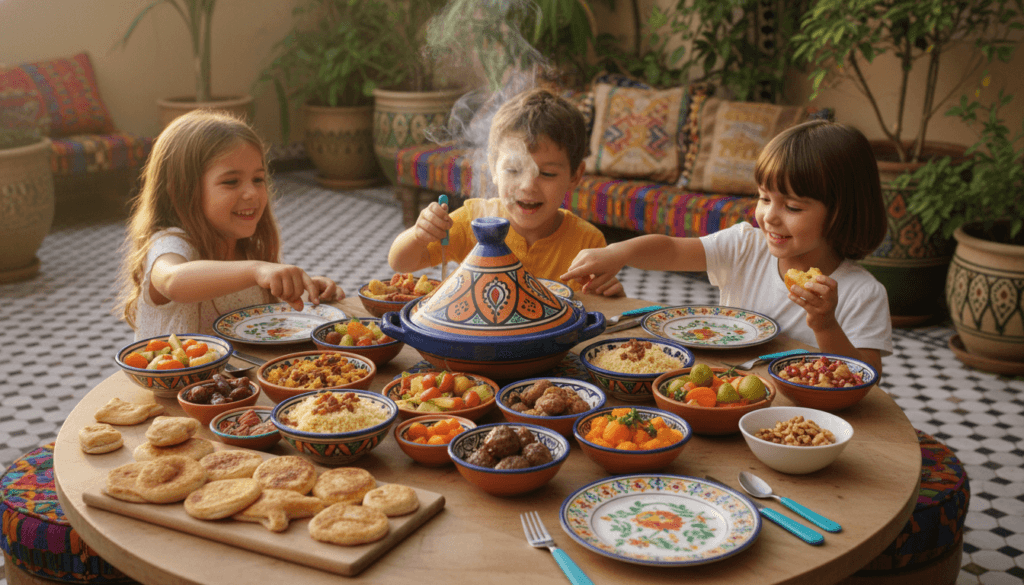
The vibrant world of Moroccan cuisine is not just about exotic spices; it’s also about hearty dishes that families can enjoy together. Moroccan food is a rich tapestry of flavors, influenced by the country’s strategic position at the crossroads of Africa, Europe, and the Middle East.
Moroccan cuisine is characterized by its bold flavors, combining sweet, savory, and spicy notes. Key ingredients include cumin, coriander, cinnamon, and ginger, which add depth to various dishes. The use of fresh fruits and vegetables, along with nuts and seeds, contributes to the cuisine’s complexity and nutritional value.
The blend of aromatic spices and the slow-cooking process involved in making tagines and stews creates a rich and satisfying flavor profile that is both appealing and comforting.
Some Moroccan dishes are particularly kid-friendly, such as chicken tagine, a slow-cooked stew named after the clay pot in which it’s cooked. Other favorites include couscous with vegetables, grilled meats, and b’stilla, a savory pie filled with meat, onions, and spices.
These dishes are not only delicious but also offer a fun and interactive dining experience, especially when served with traditional Moroccan bread.
Moroccan cuisine is rich in nutrients, thanks to its emphasis on fresh ingredients, whole grains, and lean proteins. Legumes, such as lentils and chickpeas, are staples, providing protein and fiber. The use of olive oil adds healthy fats, while a variety of fruits and vegetables ensure a broad intake of vitamins and minerals.
The nutritional benefits of Moroccan ingredients make it an excellent choice for families looking to introduce their children to healthy eating habits.
As parents explore the world of Moroccan cuisine with their children, understanding the safety considerations is crucial. Moroccan food, known for its rich flavors and diverse ingredients, can be a healthy and exciting option for kids. However, it’s essential to be aware of the potential allergens and safe cooking practices to ensure a pleasant dining experience.
Moroccan cuisine often includes ingredients that are common allergens, such as nuts, gluten, and dairy products. For instance, many traditional Moroccan dishes like tagines and pastries contain almonds or other nuts. It’s crucial for parents to be aware of these ingredients, especially if their child has a known allergy.
Some common Moroccan dishes that may contain allergens include:
The way Moroccan food is cooked can significantly impact its safety for children. Traditional Moroccan cooking methods, such as slow cooking in tagines, can help retain nutrients and kill bacteria, making the food safer. However, it’s essential to ensure that meat and poultry are cooked to the appropriate internal temperature to avoid foodborne illnesses.
Some key cooking practices to follow include:
For children trying Moroccan food for the first time, it’s a good idea to start with mild flavors and dishes that are less likely to cause allergic reactions. Some kid-friendly options include:
By introducing Moroccan food in a controlled and safe manner, parents can help their children enjoy the rich culinary heritage of Morocco while minimizing potential risks.

Introducing Moroccan food to kids can be a fun and rewarding experience with the right approach. By starting with mild flavors and involving kids in meal preparation, parents can help their children develop a love for this rich and diverse cuisine.
Mild Flavors First
Begin with dishes that have mild flavors, such as chicken tagine or vegetable couscous. These dishes are not only delicious but also gentle on young taste buds, making them perfect for first-time tasters.
Involve Kids in Cooking
Engaging kids in meal prep is a great way to get them excited about trying new foods. Let them help with simple tasks like washing vegetables or mixing spices. This hands-on approach can make mealtime more enjoyable and interactive.
Family-Friendly Recipes
Explore family-friendly Moroccan recipes that are easy to make and fun to eat. Dishes like beef or vegetable skewers with couscous are great options. These recipes are not only tasty but also visually appealing, making them perfect for kids.
By following these tips and introducing Moroccan food in a fun and engaging way, parents can help their kids develop a lifelong appreciation for this wonderful cuisine.
Moroccan cuisine can be spicy, but it’s not always. Many dishes can be adjusted to suit children’s taste preferences. You can ask for mild versions or omit the spicy ingredients. Popular kid-friendly dishes like chicken tagine or couscous are often mild and flavorful.
Yes, some common allergens in Moroccan cuisine include nuts (especially almonds), gluten (in couscous and some bread), and sometimes shellfish or fish in certain tagines. Always check the ingredients and ask your server or the chef about potential allergens.
To ensure food safety, choose reputable restaurants or cook at home using proper food handling and cooking techniques. Make sure the food is cooked thoroughly, and avoid undercooked meat or raw vegetables. When dining out, opt for busy, popular restaurants that likely have high food turnover and safe food handling practices.
Absolutely. Moroccan cuisine is very versatile. You can adjust the spice levels, swap out ingredients, or choose dishes that fit your child’s dietary needs. For example, you can opt for gluten-free alternatives to couscous or select vegetarian or vegan tagines.

Yes, many Moroccan dishes are nutritious. Tagines made with vegetables, lean meats, and dried fruits are rich in vitamins, minerals, and antioxidants. Couscous is a good source of complex carbohydrates, and when paired with vegetables and lean protein, it makes for a balanced meal.
Start with mild flavors and familiar ingredients. Engage your kids in meal preparation, such as letting them help with simple tasks like mixing spices or assembling ingredients. You can also explore Moroccan cuisine together as a family by trying new recipes and flavors.